******** FOR ENGLISH CONTENT PLEASE SCROLL DOWN ********
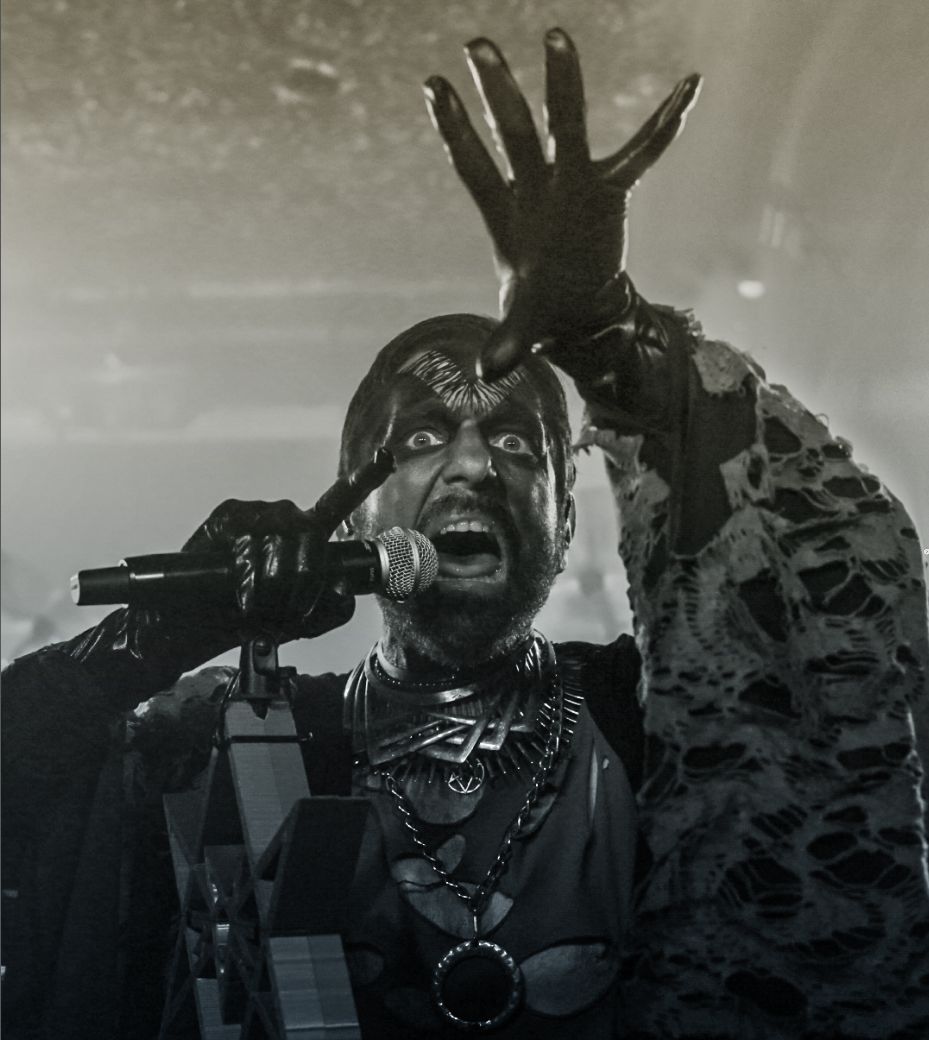
Vékony, alacsony emberke, aki választékosan, szép kerek mondatokban fogalmaz. Amikor a zenéről és annak szerepéről beszélünk, már folyamatosan mosolyog, és a távolba réved a tenyérnyi apró helyiségben. Az okkultizmus, a mágia és a mitológia témájánál tűz lobban a szemében – ő Proscriptor McGovern, akit Bécsben, a Trivax-szal és az Ancient-tel közös fellépése előtt kérdezgettünk.
Egy 18 állomásos turnén vesztek részt éppen, és ez a 11. fellépésetek zsinórban – hogy bírjátok?
A turné hatalmas siker, és óriási megtiszteltetés számunkra, hogy az Ancient-tel és a Trivax-szal turnézhatunk együtt. Most nagyjából a 60%-ánál járunk, és csak megerősíthetem: vitathatatlanul sikeres volt eddig. Csodálatos turné, nagyszerű emberek, pazar erők, fantasztikus energiák minden egyes tag esetén – az összes zenekarban, mindenkiben, aki ehhez a turnéhoz kapcsolódik. Néha kicsit furcsa érzés, mert ez egy nagyon hosszú turné, de az első órától kezdve teljesen őrült az egész, és nem is lehetnék elégedettebb. Nagyon-nagyon várom a mai estét.
Májusban és júniusban Dél-Amerikában turnéztatok, júliusban pedig az Egyesült Államokban. Összesen 44 koncert – miközben előtte gyakorlatilag semmi. Mi történt?
Alapvetően ez az év az Absu második nagylemezének, a The Sun of Tipharet megjelenésének a 30. évfordulója, és ennek méltó megünneplésében a Zemial tagjai mint ritmusszekció segítenek az Absu húzóerejéhez csatlakozva. Megpróbáltuk a lehető legjobban kihasználni az időnket, és a második album 30. évfordulóját minél szélesebb körben, az egész világon megünnepelni.
Hosszú szünet után, 2021-ben jelent meg a legutóbbi albumod, a Proscriptor McGovern’s Apsû. Milyen visszajelzéseket kaptál? Elégedett vagy velük?
Igen, összességében nagyon jók voltak a visszajelzések. Voltak nehézségek az előző kiadóval, a Candlelight Records-szal, ezért úgy döntöttem, hogy átszerződöm a lengyel Agonia Records-hoz. Emiatt kénytelen voltam az Absu helyett egy másik zenekarnevet használni, így lett ez Proscriptor McGovern’s Apsû. A jó hír az, hogy elméletileg ez még mindig egy Absu-album, és újra ki is fog jönni az Absu név alatt. A visszajelzések nagyon pozitívak voltak. Ez volt az első alkalom, hogy én magam voltam a hangmérnök és kevertem is az albumot – és őszintén szólva azt kívánom, bárcsak egy másik hangmérnök végezte volna ezt a munkát. Ezért azt tervezem, hogy folytatom és befejezem az album keverését, így amikor újra megjelenik, akkor már valóban és hivatalosan is egy rendes Absu-lemez lesz.
Van terv esetleg arra vonatkozóan, hogy a turné a későbbiekben Kelet-Európát is elérje, mondjuk Magyarországot?
Ó, igen, mindenképpen. Az Absu harmadik albumának, a The Third Storm of Cythrául-nak a 30. évfordulóját 2027-ben fogjuk megünnepelni. Nagyon várjuk már, hogy ez elkövetkezzen. Most ez lebeg a szemünk előtt. Jövőre dalszerzés, felvételek, a harmadik album 30. évfordulójának előkészítése, és egy újabb megemlékezés – ez a menetrend.
Dolgozol most valami új anyagon?
Igen, persze.
Mire számíthatunk?
A felvételek várhatóan valamikor jövő év végén kezdődnek. Négy dal már meg van írva az albumhoz teljes hangszereléssel, de a tagok névsora még nem nyilvános. Amikor meglesz a megjelenés dátuma, akkor bemutatjuk az új felállást is.
Ezen a turnén együtt lépsz fel a Zemial-lal, amelyik lényegében Dimitrios Dorian (Vorskaath) és zenésztársai zenekara. Dimitrios görög, de régebben Ausztráliában, Németországban, végül Athénban élt, te pedig az Egyesült Államokból származol – hogyan ismerkedtetek meg, és hogyan tudtok együtt dolgozni?
Nos, Vorskaath, a dobosunk és háttér-énekesünk nagyon régi harcostársam, egészen 1991-re nyúlik vissza a munkakapcsolatunk. Több mint 34 éve ismerjük egymást. Vorskaath végigkövette az Absu zenéjének fejlődését… ahogy én is sok zenei fejlődést és eredményt láttam a Zemial esetében. Amikor 1993-ban megkezdtük az album komponálását és hangszerelését, ő már megkapta az első demófelvételeket, így szinte olyan, mintha a zenekar szürke eminenciás tagja lenne. Nagyon hosszú, tartós kapcsolat ez.
Nagyon érdekel a dalszerzés folyamata, mert alapvetően te vagy az agy a zenekar mögött – dobosként. Hogyan születnek a dalok?
A dalok mindig az érdeklődésemből és az ismereteimből erednek, különféle okkult tudományok révén. Általában egy olyan metafizikai vagy mágikus téma szökken szárba, ami különösen érdekel, és azután születik meg a zene, hogy a dal témája már kialakult.
Maga a hangszerelés hogyan történik?
Ez változó. Vagy én találom ki az ütős részeket és a ritmusképleteket, vagy az aktuális gitáros áll elő az első dallamvázlatokkal, és így formálódnak a dalok.
Van közös munka, vagy inkább ötleteket küldözgettek egymásnak?
Mindig folyamatosan cserélgetjük az ötleteket.
Mennyire kötött ez a zene? Amit dobolsz, az kőbe van vésve?
Nem, folyamatosan változik és fejlődik, soha nem ugyanaz.
Van bármilyen formális zenei képzettséged?
A mostohaapám elég ismert zenész volt a 60-as évek végén, 70-es évek elején, én meg már négyéves koromban foglalkoztam zenével. Ez elég régen volt… később tanultam zeneelméletet és zongorát, az egyetemi éveim alatt pedig zeneszerzést és hangmérnöki ismereteket. De dobosként teljesen autodidakta vagyok, csak hangmérnöki végzettségem van.
Az elmúlt évben egyszerre doboltál és énekeltél élőben. Hogy érzed ezt most?
Élőben most már csak énekelek, és ezt jobban is szeretem. Tudod, van egyfajta küzdelem a dobolás és az éneklés között… és most, az ötvenes éveim közepén már élvezem a nyugalmat.
2002-ben volt a közismert Slayer-meghallgatás. Mi lett volna, ha Kerry King akkor azt mondja: rendben, Proscriptor, te vagy a Slayer új dobosa?
Abbahagytam volna az Absu-t. Ha a Slayer dobosa lettem volna, akkor az Absu-val még csináltam volna egy albumot, mielőtt vagy A) kirúgnak, vagy B) belefáradok abba, hogy Kerry King irányít és manipulál. Nem hiszem, hogy meg lett volna a szabadságom arra, hogy zeneileg úgy fejezzem ki magam, ahogy szeretném – mint az Absu-ban. De maga a lehetőség elképesztő volt. Már maga a meghallgatás is óriási élmény volt, és hálás vagyok érte… előtte még egy előszűrésen is át kellett essek.
Tényleg?
Igen. Ez nem egy nyílt meghallgatás volt. Bizonyítanom kellett, hogy egyáltalán magára a meghallgatásra méltó vagyok. És ahogy mondtam, rendkívül felemelő élmény volt… fantasztikus.
A mitológia nagyon meghatározó része a szövegeidnek és az Absu egész működésének, ugyanakkor a vallás is jelen van – például a The Sun of Tipharet címében, ahol a ‘tiferet’ szó a kabbalából ered, de itt van mondjuk Aleister Crowley hatszöge is… hogyan látod a mitológia mellett a vallás és okkultizmus szerepét az Absu-ban?
Az okkult érdeklődés mindig is lenyűgözött. Napi szinten gyakorlom az okkult tudományokat, a Thelema mágiáját és a gnoszticizmust is. Már nagyon fiatal korban elköteleződtem… tizenkét évesen. Az Absu neve is a sumér, mezopotámiai és asszír mitológiából származik. Emellett az ősi gyökereink a kelta mitológiához kötnek minket – Shaftiel, Equitant Ifernain [régebbi tagok – a szerk.] és én skót és ír származásúak vagyunk. A kettő jól kiegészíti egymást, és ebből alakult ki a saját irányzatunk, az úgynevezett mitologikus okkult metal.
Mi inspirál még téged?
Az okkultizmus, a ceremoniális mágia, Thelema mágiája, a gnoszticizmus – és a korábban említett mitológia. Zeneileg pedig hatalmas rajongója vagyok a ‘70-es évek progresszív rockjának.
Európában a black metal gyakran az egyház és a vallás ellenében határozza meg magát. Ebben a kontextusban hol helyezkedik el az Absu?
Az Absu egyedi entitás. A black metal hatása ránk soha nem volt meghatározó, és nem is lesz az. Mi egy teljesen egyedi innováció vagyunk – ez az én dogmám.
Két lényegi kérdésem maradt, remélem, nem fogyunk ki az időből. Mit jelent számodra a metal?
Életforma. Hívhatod black metal-nak, mitologikus okkult metal-nak, thrash metal-nak – a zene eufóniája maga az élet. Az okkult gyakorlatok mágikus és titkos lényege adja számomra a zene esszenciáját.
Ez egyfajta energia-csatornázás?
Igen. Kéz a kézben járnak.
Mit jelent számodra maga a zene?
Amióta a füleim képesek hangokat befogadni, a zene olyan számomra, mint az oxigén. Zene nélkül csak az üresség marad.
Ha jól értem, akkor az életed maga a megvalósult álom?
Igen, így van.
Örülök, hogy megélheted ezt.
Tudod, mi a vicces? A turné elején nagyon beteg lettem, tüdőgyulladásom volt. Torinóban egy doktornő jött hozzám a turnébuszra. Megkérdezte, hogy mivel foglalkozom, én meg mondtam neki, hogy hivatásos zenész vagyok. Erre azt mondta, hogy ő egyáltalán nem szereti a zenét. Nagyon ritka ilyesmit hallani – főleg olyasvalakitől, aki akár élvezhetné is azt, amit a zene ad neki. Azt mondta, hogy egyszerűen gyűlöli a zenét. Csak arra tudtam gondolni: hol nőhetett fel szegény, milyen körülmények között? Elég furcsának találtam… hát ennyi volt mára az én kis sztorim…
Nagyon köszönöm, nagyra értékelem az idődet!
Írta: Á
Szerkesztőségünk ezúton is köszöni a District19, az IHE és Bonin Ádám segítségét. A címlapképet a Viper Rooms Instagram-profiljáról vettük.
******** ENGLISH CONTENT ********
He is a thin, skinny man who expresses himself eloquently, in beautiful, well-rounded sentences. When we talk about music and its role in his life, he is already smiling continuously, gazing into the distance in the tiny little room. When the topic turns to occultism, magic, and mythology, a fire in his eyes starts to burn – he is Proscriptor McGovern, who we had the chance to interview before their gig with Ancient and Trivax in Vienna.
You are doing an 18-stops tour, and this one is your 11th gig in a row – so how are you guys doing now?
The tour is a grand success and we are very honored to be touring with Ancient and Trivax. And we just reached about the 60% completion mark on the tour, and it’s been very indubitably successful. Wonderful tour, grandiose people, opulent forces and energies with every member, in all bands that are associated with this tour. It’s been so insane since the first hour of the tour started, I couldn’t be more pleased. I’m really, really looking forward for tonight.
This year in May and June you did a South America tour, and later on in July you had a tour in the US, so we are talking about 44 gigs altogether – but basically nothing before. What happened?
Basically, this year marks the 30th anniversary for Absu’s sophomore release, The Sun of Tipharet, and I decided that it would be best to utilize the members of Zemial to be the rhythm section behind Absu’s driving force. So we’ve tried to utilize our time and spread the 30th anniversary of the second album as much as possible across the entire globe.
After a long break in 2021, your last album, Proscriptor McGovern’s Apsû came out. What about the feedbacks? Are you happy with them?
Yeah, it’s been pretty well. There were some difficulties with the previous record label, Candlelight Records, so I decided to switch over to Poland’s Agonia Records for the release. I had to utilize a different band name besides Absu, so that’s why the band moniker is Proscriptor McGovern’s Apsû. The good news is, theoretically it’s still an Absu album, and when it will be re-released under the Absu moniker. The feedback was really good. This is the first time that I actually engineered and mixed the album, so I wish that another engineer had the responsibility of mixing the album – therefore I plan on completing the mix of the album, so once it’s re-released, it will be truly and officially an Absu release.
Is there any plan to extend this tour at some stage to Eastern Europe, to Hungary pro example?
Oh, yes, yes, definitely. So, the 30th anniversary for Absu’s third album, The Third Storm of Cythrául, will be memorialized in 2027. So we are looking forward to a lot of people coming to visit us. That’s the goal for now. So, next year, writing, recording and preparing the 30th anniversary of Absu’s third album, and just a little bit more of a commemoration – that’s the main agenda.
Are you working now on any kind of new material?
I am, yes.
What can we expect?
The recording should take place sometime late next year. Four songs have been composed and arranged for the album, but the line-up of the band has yet to be revealed. Once there is a release date, there will be the revealing of the new lineup.
You are coming to this tour together with Zemial, who is basically Dimitrios Dorian (Vorskaath) and the musicians he is working together with. He used to live in Greece, later on in Australia, in Germany, and in Athens again, while you are from the US – how did you meet and how can you guys work together?
Well, Vorskaath, our drummer and backing vocalist, has been a long time comrade of mine, all the way back to 1991. So our relationship dates back to over 34 years now. Vorskaath has seen the growth and development of Absu’s music… and vice versa, I’ve seen a lot of musical developments and accomplishments with Zemial’s music. So, as we were composing and arranging the album all the way back in 1993, he received rehearsal sessions of the material, so it’s kind of he was a silent member of the band. So, we’ve had a very long, long term relationship.
I’m pretty curious about the way of the composition, because you are basically the brain behind the band, and your background is to play drums. So, how the songs are born?
Well, they come from my vast interest and knowledge in various occult sciences, so usually the seed is planted based on certain metaphysical and magical topics that I’m highly interested in. And then the music is actually generated after the theme of the song has been originated and orchestrated as well.
And how the orchestration happens?
Usually it just depends. Either I will come up with the percussion, the percussive pattern, or whoever the guitarist is in the band, will come up with the initial melody lines, and that’s how the songs are usually crafted.
Do you have the chance to work together, or basically you are sending different kind of ideas back and forth?
We are always exchanging musical ideas with each other.
How static this music is? What you play as a drummer, is carved in stone?
Yeah, it’s everlastingly changing and it is developing, never the same.
Do you have any kind of formal musical education or background?
Well, my stepfather was a very notorious musician back in the late 60s, early 70s, and I was, I would say, working on some stuff when I was four years old. So that’s quite a long time… Later on I had a course that actually involved music theory and piano, and then during my university years, I received a minor degree in compositional music and audio engineering as well. So as far as being behind the kit, I’m self-taught, but I’m educated in the field of audio engineering.
In the past years, you played drums and did the vocals actually at the same time – how do you feel about it now?
Live, I’m just doing singing, and I prefer it, actually. You know, there’s this fine battle between playing drums and singing… and now, being in my mid-50s, I’m enjoying it a little bit, I’m getting a little bit of peace.
There was a well-known Slayer audition which happened back in 2002. What happened if Kerry King says okay, now you are the new drummer of Slayer? Would you give up with Absu?
Yeah, I would give up with Absu. So, let’s just say if I were to be the drummer for Slayer, I would give up with Absu for the album before I was either A) terminated, or B) tired of being controlled and manipulated by Kerry King. I think that I wouldn’t have any liberty or freedom to musically express myself the way that I would want to, the way that I do in Absu. But hey, it was an opportunity! Just the audition itself was very worthy, and I was grateful to land the audition because I had to be pre-auditioned before the audition itself.
Oh really?
Yeah, I did, I did. It wasn’t just an open audition. I had to prove myself just to get the audition. And, like I said, it was a very grandiose experience… man, it was wonderful.
Mythology is a very dominant part of your lyrics and the whole activity of Absu, but religion is also present… like when I’m talking about The Sun of Tiphareth – which name is coming from the Kabbalah –, or when we talk about the unicursal hexagram of Crowley. So, how do you feel, along mythology, has the religion and occultism a role within Absu?
Well, you know, the occult interest has always fascinated me, and I’ve been a daily practitioner of occult sciences and Thelemic magic, ceremonial magic, also Gnosticism as well. That started at a very early age, actually, when I was 12 years old. Absu’s name derives from Sumerian, Mesopotamian and Assyrian mythology. So that, along with our ancestral attributions, some previous members, Shaftiel and Equitant Ifernain, and also I, come from Scottish and Irish lineage, and that blossomed into the vast interest of Celtic mythology as well. Combining the two seemed to kind of work and they complement one another, and that’s where the balance between mythology and occult science has led to our own craft and our own brand of extreme metal called mythological occult metal. So that’s where that comes from.
Okay, but what else is inspiring you?
The occult, ceremonial magic, the Thelemic magic, Gnosticism, and the aforementioned four mythologies. And I personally am a vast admirer of 70’s progressive rock music. So there you have it.
Black metal is something which is defined as something being opposite to the church and religion – so that’s how it in Europe has been started. In terms of that, how you feel Absu is working?
With Absu, we are our own entity. So as far as black metal influence, it’s not very prominent, it never has been nor will it ever be. We are absolutely an organization of innovativeness, and that’s my dogma behind the question.
Basically, there are two key questions on my list and I really hope I’m not running out of time. So all in all, what metal does mean to you?
It’s a way of life. I mean, call it black metal, call it mythological occult metal, death metal, thrash metal, it’s music. The euphony of music is a way of life. But the magic and the arcane essence of my daily lifestyle, of occult practices, is what drives the music for me.
That’s basically a channelization of your energies?
Yes, it is. They go hand in hand.
And in this case, how do you feel about music? So what music means to you?
Ever since my ears were able to obtain and acquire certain sounds and music, ever since I was introduced to music, at a very, very, very early age – it’s oxygen. It’s equivalent to oxygen. It really is. Without music, there’s so much emptiness.
In this case, your life is a dream come true.
Yeah, concurred.
I’m really, really happy to hear that.
You know what’s funny is… I became very ill at the beginning of this tour with an infection in my lungs. So I had a doctor visiting me on the bus in Torino, Italy. And she asked me what I did, what was my profession, and I said I’m a professional musician. And she told me that she doesn’t like music at all. It was very rare to meet somebody, especially if you can make those people enjoy the sounds that you can hear in the music. And she told me that she just despises music. And I just thought, where were you to hear something like that, being rejected out of her house? I just wanted to share that in this interview, that I find it rather odd and enigmatical to hear something like that. Anyway, that’s my cool story for today.
Many thanks for that, I really appreciate your time!
Written by Á
Our editorial team would like to take this opportunity to thank District19, IHE, and Ádám Bonin for their kind help. Main pic taken from Instagram profile of Viper Room, Vienna.