For English version please scroll down.
Vittorio-t, a Master Boot Record agyát közvetlenül a fellépésük előtt kérdezgettük a Fekete Zajon.
A legutóbbi albumotok az idén jelent meg, és ha jól emlékszem, az előző két évben három anyagot adtatok ki egymás után. Milyenek voltak a visszajelzések?
A visszajelzések nagyon jók voltak – mint általában (mosolyog). Rengeteg albumot készítettem 2016 óta; azóta hat év telt el, és 14 albumot írtam; persze minden anyagon kicsit fejlődött a hangzás. Ez a hangzás kvázi standard, mindig ugyanaz, és leginkább a zeneszerzésre koncentrálok. És az új album, azt hiszem, a MBR projekt legerősebb darabja. Szóval igen, jók voltak a visszajelzések.
Hogyan kategorizálnád a zenét, amit játszol? Mi a műfaj?
Szerintem egyszerűen synthesized metal – az albumon minden számítógéppel készült. Nem valódi gitárokkal vagy valódi hangszerekkel vettem fel a zenét; mindennek a MIDI az alapja. Aztán megtaláltam ezt a szintetizátorhangot, ami remekül helyettesíti a gitárokat. Igen, alapvetően synthesized metal, talán chiptune metal… rengeteg egyéb hatás is tettenérhető a zenében. De azt hiszem, a synth metal a legjobb kifejezés erre.
Kérlek, meséld el, hogy hogyan születnek a dalok?
Hát, először is van az alap hangszerkészletem; mindig ugyanazokkal a virtuális hangszerekkel dolgozom. Persze minden albumon fejlesztek egy picit, időnként hozzáadok néhány új hangszert, de alapvetően a dob, a gitár, a basszus és a főszólam a legfontosabb.
Cubase-t és VST-ket használsz?
Igazából csak egy VST-t, a Native Instrument Massive-ját, ez felelős hangzásért, a szólókért is, mindenért. Aztán a Superior Drummer 3-at használom a dobokhoz, és nagyjából ennyi… ennyi az egész. Ezen túl csak MIDI-vel dolgozom.
Oké, de mit is jelent itt a programozás…?
Cubase, Cubase Pro 11-et használok…
…tehát a zenét Te magad írod meg, vagy pedig fut valahol a háttérben egy véletlenszám-generátor, és az írja?
…szoftverrel készül, de ember alkotja (nevet). És csomószor élőben stream-elem, ahogy komponálok. Nem tudom, hogy hallottál-e erről…
…láttam a linket a weboldaladon, de nem találtam meg a felvételt a Youtube-csatornádon.
Ha van ihletem új anyagot írni, akkor a folyamatot stream-elem a Youtube-on és a Twitch-en. Ilyenkor egyszerűen csak leírok minden riffet, ami eszembe jut. Van egy ötletem, valami alapötletem, aztán csak elkezdek stream-elni, majd összedobálom az összes riff-eket és az összes ötletet, ami csak eszembe jut komponálás közben. Általában minden ilyen kör egy dal születését mutatja be; mármint csak a nyers részt persze, mert természetesen rengeteg utómunka van, később finomítok és kijavítok egy csomó dolgot, megcsinálom a keverést, és így tovább. De igen, az a helyzet, hogy mivel ez a zene gyakorlatilag teljesen programozott, emiatt megvan benne a potenciál arra, hogy nagyon gyorsan írjak dalokat… ez volt a legfontosabb ok, amiért így kezdtem el zenét írni. Azelőtt mindig „hagyományos” zenekarom volt, és rengeteg időbe telt felvenni az összes gitárt, dobot, miegyebet. Producer is voltam, és hangmérnökként is dolgoztam stúdiókban, így egy praktikus módszert szerettem volna arra, hogy egyszerűen csak megírjam, ami a fejemben van. Valójában, amikor új dalba kezdek, csak megnyitom az előző dal fájlját, és az összes beállítás meg hangzás máris konyhakész. Nem kell keverni, csak összedobálni a a dobokat, megcsinálni a basszust, a szintetizátort, a kiállásokat – csak komponálni kell. Olyan ez, mint a klasszikus zeneírás: fogod szálanként a hangjegyeket, és csak írsz, írsz…
Van valamilyen klasszikus zenei képzettséged? A MBR zenéjét hallgatva az a benyomásom, hogy alapvetően egyfajta neoklasszikus metálról beszélünk…
Igen és nem. Úgy értem, gyerekkoromban zongorázni tanultam. Nagyon fiatal voltam, négy vagy öt éves, és körülbelül három évig jártam zongoraórákra, de nem igazán volt klasszikus zenei nevelésem. Amúgy persze sok klasszikus zenét hallgatok.
Oké, azt már elmagyaráztad, hogy hogyan készíted a zenét, de hogyan lesz mindebből élő fellépés…? Betanuljátok a saját dalaitokat?
Igen. Rengeteg dalunk van, így ki kell választanunk azokat a számokat, amelyek a legjobban illenek az élő fellépéshez. Alapvetően azt csináljuk, hogy fogjuk a zenét, kivesszük a dobokat, így maradnak a szintetizátoros részek és a kiállások. Én a backing track-kel együtt játszom a kíséretet egy bariton gitáron (ami úgy van hangolva, mint egy nyolchúros gitár, de valójában hat húrja van: alapvetően egy Les Paul F-re hangolva), szóval így játszom a kíséretet. Eduardo, a szólógitáros, játssza az összes szintetizátor-szólamot, minden kiállást. Ez nagyon király a hangzás szempontjából, mert nagyon komoly teste lesz a hangnak. Az élő fellépés azért is buli, mert az eljátszott tételek mindig kicsit különböznek az albumon lévőktől, hiszen itt élő hangszereket is használunk. Természetesen ott van az élő dob, ami nem pontosan ugyanolyan, mint a lemezen… minden picit más. Még riff-eket sem pontosan ugyanúgy játsszuk, hozzáadunk néhány akkordfelbontást, pár apróságot… és a szólók sem pontosan ugyanazok. Szóval, ezt fogjátok látni este.
És mit keresnek a számítógépek a színpadon?
Azért teszünk számítógépeket a színpadra, mert néhány olyan részt is lehet majd hallani, amik eredetileg nincsenek rajta az albumon. Például, amikor nem gitározom, vannak olyan részek, amikor csak az elektronika szól. Szóval hozok egy Commodore 64-et és egy Amiga 500-at, amiket átalakítottam, hogy szintetizátorként használjam őket. A számítógép billentyűzetén játszom, így néhány olyan dolgot is el tudok játszani a fellépés közben, ami valójában kiegészíti az albumot. De ez inkább egy olyan dolog, ami a koncerteket fűszerezi meg… szeretem a számítógépeket és szeretem a C64-es hangzását. Igazából sem C64-es, sem Amiga nem szólal meg az albumon, így részint azért is hozzuk a gépeket, mert részei a koncepciónak.
Láttam a régi ASCII-designokat, az ICQ-hozzáférést és hasonló dolgokat. Ezek is a koncepció részei, vagy ezek igazi szoftverek, amiket még mindig használsz?
Nos, a számítógépekkel és a régi szoftverekkel kapcsolatos történetem hosszú múltra tekint vissza, mert gyerek voltam, amikor megkaptam az első C64-est. Apám valójában számítógépkalóz volt a kezdeti időkben, és volt egy számítógépboltunk, ahol gyerekként meg tizenévesként iskola után dolgoztam. Segítettem apámnak, javítottam a számítógépeket és mindenfélét… láttam, ahogy az internet megjelenik. Számítógépek között nőttem fel, ezért ez az élettapasztalatom része. Mindig is a számítógépes területen dolgoztam, miután ez a bolt a 2000-es évek elején bezárt. Továbbra is informatikusként, rendszergazdaként dolgoztam, mindig az informatika területén… világéletemben ezzel foglalkoztam. De a munkám soha nem keveredett a zenével. Ezzel a projekttel később úgy döntöttem, hogy megpróbálom házasítani ezt a kettőt: az élettapasztalatomat és a zenét. Újra elkezdtem hallgatni a keygen-ek és a számítógépes játékok zenéjét, videojátékokat és mindenféle demókat… szóval olyan projektet akartam csinálni, amiben benne vannak ezek a hatások, adtam hozzá egy kis metált, így jött össze a MBR projekt… alapvetően ez történt.
Érdekes, hogy azt mondod, hogy megpróbálod a dolgokat különválasztani. Mert ha megnézem a Master Boot Record projektet, az a zenéről szól. Ha a kriptográfiai gyakorlatokat nézem, amiket meg kell oldjak, hogy hozzáférjek a bonus track-ekhez, az egy másik történet, és ha a Keygen Church-öt nézem, az megint egy teljesen más harmadik valami. Nekem pont volt a benyomásom, hogy ezek az elemek szorosan kapcsolódnak egymáshoz.
Igen, kapcsolódnak, rajtam keresztül. Nagyon szeretek rejtvényeket készíteni. Nagyon szeretem a kirakósokat, és nagyon szeretem a videojátékokat is, szeretek videojátékokat készíteni is. Csináltam egy point-to-click kalandjátékot a barátaimmal… nagyon szeretem mindezeket a dolgokat. És az informatika is érdekel, ahol óhatatlanul találkozol a kriptográfiával meg ehhez hasonlókkal… és az albumaimat játékokká akarom alakítani. Azt akartam, hogy minden albumban legyen valami játék. Először voltak az egyszerűbb játékok: néhány bináris kódot kellett szöveggé alakítani, aztán néhány bináris kódot szöveggé, majd EXE-vé, vagy ASCII-vé, és így tovább. Minden albummal magasabbra kellett tegyem a lécet. Tehát egy bizonyos ponton ez olyan volt, mint egyfajta ARG játék. Az Internet Protocol volt az, amikor a dolog rendesen beindult, olyanok dalokkal, mint az FTP, HTTP, POP3. Én meg úgy voltam vele, hogy oké, akkor csináljunk egy szervert. Megcsináltam, IRC chat-tel, FTP-vel, HTTP tartalommal, POP3-klienssel, és aztán a szerverre dugtam el a rejtvény megoldásához szükséges kulcsokat. Ha megtalálod az összes karakterláncot a szerveren, az FTP-n, az IRC chat-en, a BBS-en… találsz néhány karakterláncot, összefűzöd őket, akkor megvan egy kódszó, amit elküldesz nekem e-mailben, és már küldöm is a bonus track-et.
Gondolom, a rendelkezésedre állnak a statisztikák, így pontosan tudod, hogy hány letöltésed van. Az hallgatók hány százaléka tudta oldani a rejtvényeket?
Eddigi 500 ember, csak az Internet Protocol esetében. De nem tudom, hogy összesen hányan vannak, egy idő után egyszerűen feladtam, hogy egyesével válaszoljak az e-mailekre, így automatizáltam a folyamatot. Ez az Internet Protocol dolog pár évig futott, és volt vagy 500 ember, aki megoldotta.
Az nem semmi!
Akik ilyen dolgokkal foglalkoznak, azok igazi kockák. Itt van például az IRC chat, amit csak a játék miatt indítottam. Úgy éreztem, hogy oké, ezt megtartom pár hónapig, aztán itt a vége. De ez szép csendben létrehozott egy közösségét, akik ott gyűltek össze; mindannyian nehézsúlyú kockák, hackerek, crackerek… az underground legmélye. Aztán ott van a BBS is, kapcsolatba léptem az Araknet-tel, ami egy underground BBS hálózat… de mindegy is, ez is egybetereli ezeket az embereket, akik nagyon underground dolgokkal foglalkoznak. És az a király dolog, hogy amikor streamelek, és írom a dalokat, kikapcsoltam a Youtube-on és a Twitch-en a chatet, ezért kénytelenek az IRC csatornát használni… és minden alkalommal, amikor streamelek, új emberek jönnek oda. Nem érdekel a hírnév – engem a dicsőség érdekel (nevet). Inkább a győzelemért csinálom, mintsem a népszerűségért. Ez az underground alapja: nem csak az underground zenéről beszélek, hanem a PC-s underground-ról is. Ki csinál IRC csatornát 2022-ben? Vagy egy BBS-t, amit senki sem használ? A kutya sem tudja manapság, mi az a BBS… Mindez azért van, mert beleillik a koncepcióba, így áll össze az egész. Ez egyfajta kapcsolatot is teremt bizonyos fajta emberekkel, akiket meg akarok szólítani – ők értik, miről is beszélek. És ez azért is jó, mert a fiatalokat talán elkezdi érdekelni ez a fajta kultúra. Sok fiatal van, akit érdekelnek a számítógépek meg a programozás, a kriptográfia, a crackelés-hackelés vagy bármi más, és ők azt mondják majd: mi a franc ez? Mi az a BBS, mi az az IRC csatorna? Így új internetes kibertereket fedeznek fel. A jelenlegi kiberterek, mint a Facebook meg ilyenek, szarok, nem szeretem… de nem akarok boomer lenni. Ez egy másfajta megközelítés. Az internet kezdete óta mindig mindenben benne voltam, mindent láttam. A legapróbb dolgoktól kezdve… te is láttál már IRC csatornát, chat-et, PHP-t, BB fórumokat és hasonlókat. Én meg ezekkel együtt nőttem fel, nem tudom azt mondani, hogy ez jobb vagy ez a rosszabb… mindegyik más. A zene – és a művészet – egyfajta módja annak, hogy kapcsolódhassunk másokkal, hogy egy hullámhosszon lehessünk velük. És persze van ebben egy kis nosztalgia is, mivel keverednek a modern dolgok mint a kriptográfia, és a saját dolgok mint a CRT monitorok, IRC csatornák, a C64, valamint az új dolgok, mint például a VST plugin-ok vagy a Cubase.
De hogyan lehet mindezt időbeosztás szempontjából kezelni? Ha jól gondolom, a Master Boot Record nem a fő foglalkozásod…
…jelenleg nincs munkám. A múltban IT technikus voltam, aztán elkezdtem ezt a projektet – mivelhogy munkanélküli lettem; azaz elkezdtem a zenével foglalkozmi, nem lévén más választásom. És elkezdtem videojátékokat is készíteni, van is egy videojátékunk, ami pár évvel ezelőtt jött ki… szóval most csak ezekre fókuszálok.
Fut egy másik projekt is a neved alatt, amit tavaly kezdtél, és ez a Keygen Church. Miért más ez, mint a Master Boot Record, vagy más szóval, hogyan kapcsolódnak össze?
Azért kezdtem el ezt a projektet, mert nemrég egy velencei templomban jártam, és ott volt egy fickó, aki orgonán játszott, és nagyon klassznak találtam. Természetesen imádom Bachot, és szeretem az orgonazenét is… és szerettem volna zenét írni templomi orgonára vagy zongorára, valami klasszikusabbat. Akkoriban a lemezszerződésem miatt várnom kellett volna vagy egy évet az újabb új album előtt. Furcsa helyzetben voltam: írni akartam, éreztem az ihletet, de nem tudtam MBR-ként zenét írni, és akkor azt mondtam: “Oké, akkor csináljunk egy másik projektet”. És valami mást akartam csinálni, persze olyat, ami még mindig a szinti-metal területén van, de hangzásában különbözik a MBR-tól. Szóval a Keygen Church-ben csak templomi orgona és a zongora van. Persze, vannak szinti-metál részek, mint például a gitár és a dobok… van tehát egy alap, ami hasonló az MBR-hez, és vannak a kiállások, amik teljesen mások. Nincs chiptune, nincsenek elektronikus hangok… sokkal klasszikusabb. És igen, nagyon népszerű lett. A második album nagyot ment, jelenleg a Youtube-csatornámon ez a legtöbbet játszott videó. És nem tudom miért… az emberek valószínűleg szeretik a klasszikus zenét. Ez egy olyan projekt, ami egyelőre nagyon sok időt elvisz… nincs hozzá se kiadó, se semmi. Megvárom, mi lesz belőle – talán egy nap zongorával vagy templomi orgonával állhatok ki a színpadra (mosolyog).
Mikor jött az ötlet, hogy élő fellépéseitek legyenek?
2018-ban kezdtünk el néhány élő koncertet csinálni; csak én és a dobos voltunk. Szóval volt egy szekvenszerünk, én játszottam a ritmust, meg ugye a dobok, és adtunk vagy 3-4 koncertet, mielőtt a járvány kitört volna. Ez akkor volt, amikor az első Metal Blade-es album kijött, és a projekt hirtelen elkezdett nagyot nőni… akkoriban voltak lekötött turnéink Amerikába és Európába, de aztán minden bedőlt, és most újra kezdjük – ez a harmadik koncertünk a járvány után. Közvetlenül a járvány előtt kezdtünk el Eduardo-val, a szólógitárossal dolgozni. Az élő műsor két emberrel is elment, de az elektronikus részekben nagyon sok a kiállás meg a szóló, a látvány meg furcsa volt, hogy én csak játszottam valamit a ritmusgitáron. Szóval az emberek hallgatták ezeket a klasszikus részeket, és nem értették, hogy ki is játssza ezeket? Ez egy kicsit kellemetlen volt így. Az én problémám meg az volt, hogy honnan akasztok le valakit, aki képes eljátszani ezeket a szólókat? Mindenki azt mondta, hogy igen, van ez a srác, egy fiatal srác – akkoriban 20 éves volt –, nagyon jó, ki kell próbálnod. Mondom, oké, és felvettem vele a kapcsolatot… vagy talán ő írt nekem, már nem is emlékszem. És akkor Eduardo azt mondta, hogy oké, küldd el nekem a Castlevania MIDI-jét. Elküldtem neki, ő egy pillanat alatt betanulta, aztán elkezdtünk próbálni, de két évig egyáltalán nem játszottunk. Toltuk a próbákat, készen álltunk a fellépésre – aztán beütött a járvány. Újrakezdtük, és most ez már a harmadik koncertünk zsinórban: voltunk a Resurrection Fest-en, volt egy másik koncert Hollandiában, most ez, aztán a következő az Euroblast Németországban, és még kötnek le egy párat remélhetőleg. A srácok nagyon jó fejek, és nagyon jól kijövünk egymással… tulajdonképpen három különböző generációból vagyunk, a szólógitáros 20 éves, a dobos 30, én pedig 40…
Egy utolsó kérdés: mit jelent számodra a metál és a zene?
Nos, a zene egyfajta… nem akarok túlságosan filozofikus lenni, de úgy gondolom, hogy a zene egy olyan út, ami elvezet minket az élet kérdéseire adott válaszokhoz, nagyon egyszerűen fogalmazva. Hogy részletesebben kifejtsem… amikor zenét írok, az később rezonál a hallgatók lelkében, és összeköti őket a valóság szövetével. Olyan ez, mintha a természet alapvető törvényeihez, az világ alapvető fizikai törvényeihez kapcsolódnának, egyszerűen azért, mert ez matematika, mert a frekvenciákról szól. És úgy gondolom, hogy a zene – mint minden más művészeti forma – egy módja annak, hogy a lényegi kérdésekre adott válaszokat művészi formába csomagoljuk, és hogy ezáltal az emberek kapcsolatba kerüljenek a valósággal, a valóság ismeretlen vetületével. Szóval ezt érzem… mert amikor zenét írok, nem érzem úgy, hogy létrehozok valamit. Inkább olyan, mintha olvasnék és írnék valamit, ami már eleve létezik. Tehát inkább csak kikódolok valamit, és nem a semmiből hozok létre valamit – ami egy teljesen más koncepció. Valamit létrehozni azt jelenti, hogy korábban nem létezett, és azt megalkotod. Ehelyett, amikor zenét írok, úgy érzem, hogy inkább lefordítok valamit.
Köszönjük, hogy időt szakítottál ránk!
Írta: Á
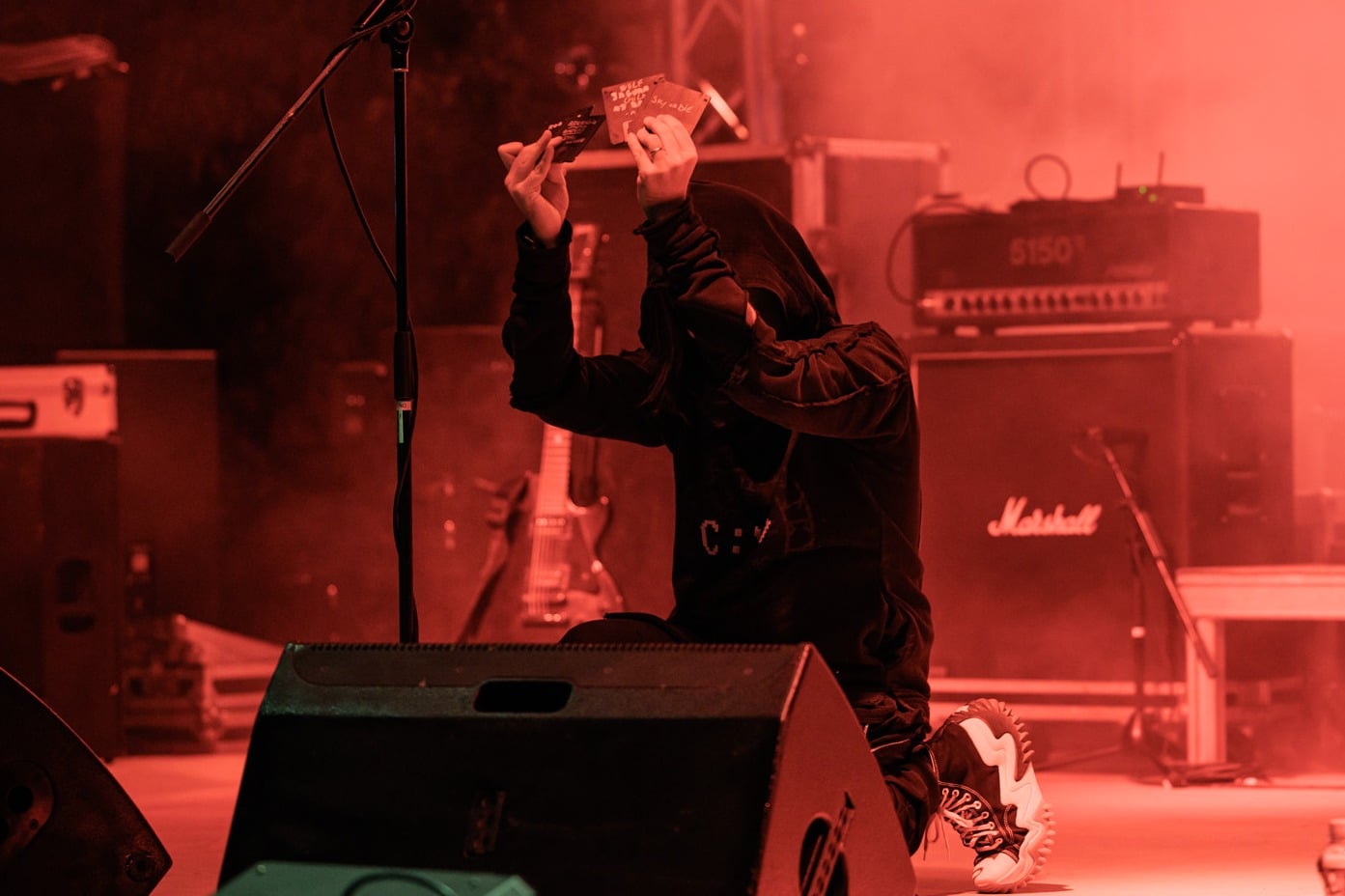
We had an outstanding opportunity to have an interview with Vittorio, the brain behind Master Boot Record, at ‘Fekete Zaj’, Hungary.

The last album came out this year, and you did release, I think, three ones in a row in the previous two years. So what about the feedbacks?
The feedback was okay, it was very good as usual (smiling). I’ve been doing a lot of albums since 2016, until now it’s six years, and I have been doing 14 albums, and every album are always improving the sound. The sound comes from a basic set of sounds – it is always the same, and I’m mostly focusing on composition. And this album, I think, is the most complete expression of the project. So yeah, it was very good.
Probably a very silly question, but how would you categorize your music that you play? What’s the genre?
I think it’s simply synthesized metal, because everything on the album is programmed. It’s not performed or recorded with real guitars or instruments. Everything is a MIDI, and I found this synthesizer sounds that is replacing the guitars. It’s basically a synthesized metal, or maybe chiptune metal… there are a lot of influences. But I think synth metal is the best way to say it.
Please tell me about the way of writing music, how the songs are born?
Well, I have this set of sounds, they are always the same. Every time in every album I’m improving, maybe I’m adding some new sounds, but basically there are the drums, the synth guitar, synth bass, and the main lead.
Cubase and VST’s?
Just one VST, actually. It’s Native Instrument’s Massive that is doing all the sounds, also the leads and everything. Then I’m using Superior Drummer 3 for the drums, and that’s pretty much it, and I’m just programming MIDI.
I’m sorry, but what programming means…?
Cubase, I’m using Cubase Pro 11…
…so are you creating the music itself with this software, or there is a ‘random number generator’ behind the software which is creating…
…it’s so done with the software, it’s man-made (laughing). And actually I’m live streaming while I’m composing. I don’t know you aware about that…
…I saw the link on your web page, but I wasn’t able to find the record on your Youtube channel…
Basically when I have the inspiration writing some new stuff, I’m just streaming it on Youtube and Twitch. And I just write down every riff that is coming in my mind. I maybe have an idea, a basic idea, I just start streaming, and I just write down all the riffs and all the ideas coming in my mind when I compose the songs. Usually every streaming session is for one song. I mean the rough part only, because, of course, there is a lot of work that is happening after I’m streaming off the records. I’m arranging it, fixing the details, making the mix, and so on. But yeah, the thing is that since this music is all programmed, this has a kind of potential to write stuff very fast… this was the first place why I started to do music this way. In the past I had all the ‘conventional’ bands, and it took a lot of time to record all the guitars, the drums, and so on. I have been a producer, also working as a sound engineer in studios, so I wanted a handy method to just write whatever was in my head and just make it real. In fact, when I’m starting a new song, I just open the project of the previous one, and all the settings and sound are basically there. You don’t need to mix it, just put the drums, make the bass, the synthesizer, the leads – just to compose. It’s more like… classical music composition, you just put the notes in… just write.
Do you have any kind of classical music education? You categorized your music, but my impression is that basically what we are talking about is a kind of neoclassical metal…
Yes and no. When I was a kid I was taking piano lessons. I was really young, I was four or five years old, and for like three years I was taking piano lessons, but I didn’t really have a classical music education. Of course, I listen to a lot of classical music anyway.
Okay, so you are creating your music this way as you explained before. And how are you doing a live performance, are you basically learning your own music?
Yeah, we have a lot of tracks, so we have to pick up the tracks that are suitable for life performance. And of course, with the live band… basically what we are doing is to take the music from the album and remove the drums. So we have all the synthesizer parts and leads, and then I’m basically doubling all the written parts with a baritone guitar, which sounds like an eight string guitar, but it has six strings actually, that’s a Les Paul with an F tuning, and that’s how I’m doing all the written parts. Eduardo, who is the lead guitarist, is doubling every synth parts, every lead parts. This is very cool on the sound perspective because it really gives a very big sound. The live show is cool because it’s different from the album as we are adding live instruments. Of course there are the real drums, which are not exactly the same as on the record, everything is slightly different. Even now, we are not doing exactly the same parts, we are adding some harmonies, and even the leads are not exactly the same. So, that’s what you’ll see tonight.
And what the computers are doing on the stage?
I’m bringing computers on stage because I’m adding some parts that are not originally on the album. For example, when I’m not playing the guitar, there are some parts that are just electronics. So I’m bringing a Commodore 64 and an Amiga 500, which I modified in order to use them as a synth. I’m playing with the computer keyboard, so I’m playing some stuff over, that are additional to the album actually. But it is something that I’m doing for the concert, that’s because I like computers and I like the sound of Commodore 64. There is neither a Commodore 64 nor an Amiga on the album itself, we are bringing the computers because it’s part of the concept.
I have seen the old style ASCII designs and also ICQ access and stuff like that. That’s also part of the concept, or those ones are true software that you are still using?
Well, my history with computers and old software goes a long way because I was a kid when I got my Commodore 64. My father was actually a computer pirate in the early days, and we had a computer shop where I was working as a kid, as a teenager, actually after school. I was helping my father, fixing all these computers and stuffs… I’ve seen the internet coming out… I’ve been growing up with computers, therefore it’s part of my life experience. I was always working in the computer field after this shop… my father closed in the early 2000’s… I continued to work as an IT technician, as a system administrator… I have always been doing this stuff. But I was never mixing these stuffs together with the music. I was doing other kind of music, but I was never mixing together. With this project later on, I decided to try to mix the concepts: my life experience with the music. I started to listen again to music of cracks and PC games, music and video games and demo scene stuff… so I wanted to make a project that includes these influences, and then I mixed it with metal music, and that’s how the MBR project came out… basically that’s what happened.
Yeah, but it’s really interesting that you mentioned to trying to do things to be kept separate. Because if I look at the Master Boot Record project, that’s about music. If I’m looking for the code cracking exercises what I can do to access extra tracks, that’s a different story, and if I look at the Keygen Church thing, that’s again a completely different story. So I had the impression that all of those ones elements are basically connected somehow.
Yeah, they are, of course, connected to my life experience. I really like to make puzzle. I really like puzzle games, I also really like video games, and I also like to make video games. I made a point-to-click adventure game with my friends… I really like to do these stuffs. And I am also into the IT field, where you are always encountered with cryptography and all these stuffs… so I always wanted to turn my albums into games. I wanted to make a game inside each album. So I started first with every album with simple games: converting some binary into text, then converting some binary into text, then into EXE, or into ASCII, and so on. With every album, I had to raise the bar. At some point it was like a kind of ARG game. The album was Internet Protocol, and the songs were like FTP, HTTP, POP3, and all that stuff. And I was like, okay, I can create a server. And I made the server with IRC chat, with FTP, with a HTTP site, with a POP3 client and then I put there things like keys to solve the puzzle. If you find all the strings on the server, on the FTP, on the IRC chat, on the BBS, you would find some strings and put them together, and then you have a code word what you would send me by email and then you’d get some bonus track.
I think you have some statistics, so you know very well how many downloads you have. How many percentage of people who are listening to your music, were able to solve your puzzles?
In order of 500 people so far, for this one only. But I don’t know how many they are altogether, because at some point, I just gave up answering there emails one by one, so I just automated the process. This Internet Protocol thing was running for a couple of years, and after that there were like 500 people who solved it.
That’s not too bad at all!
Yeah, because people that are interfacing this kind of thing, are really nerdy guys. Here is the IRC chat, for example, what I started just for the game. I felt like, okay, I will keep this for a few months and then it’s gone. But then it has created a community of people who gathering there… they are all very high level nerds, hackers, crackers, demo scene people, ASCII text guys… people from the very underground scene. There is also the BBS, and I’ve got in touch with Araknet, which is an underground BBS network… but anyway, it does gather all these people together who are into this very underground stuff. And the cool thing is that when I’m streaming and I’m doing the songs, I disabled the chat from Youtube and Twitch because they are forced to chat on the IRC channel. So every time I stream, there are new people coming. But when I stream, I never say them I’m streaming… so every time there are different people. I’m not interested in the fame – I’m interested in glory (laughing). It’s more like doing it for the win, not doing it for the popularity. It’s the basic of underground. It’s the basic of it: not underground music in general, but the underground scene of computers, demo scene and stuff. Who is doing an IRC channel in 2022? Or a BBS that nobody’s using? Nobody even knows what a BBS is… But it’s just done because it fits with the concept what I’m doing, that’s how the whole thing is merging together. It also created a connection with certain type of people who I want to reach actually, because they can understand what I’m talking about. And it’s cool also because the young guys maybe start to get interested in this kind of culture. There are a lot of people who were very young but are interested in computers and coding or cracking or whatever, hacking. And they say, what a fuck is this thing? It’s a BBS, what a BBS is, what an IRC channel is? And they discover new Internet cyberspaces. The current cyberspaces are shit like Facebook, I really don’t like thesem… but I don’t want to be a boomer. It’s a different kind of approach. I’ve been always into everything since the beginning of the Internet, I’ve seen everything. From the most little things… maybe also you have been seeing all these from the instant messaging, IRC channel, chats, PHP, BB forums, and all this kind of stuff. So I’ve been running all these stuffs, so I can’t say this one better or this is the worse, it’s just different. I’ve been growing up with all these things… music and art is a way to connect with other people to get synchronized, to be at the same wavelength. There is also a bit of nostalgia in these as it’s a mix of modern stuff like cryptography, and own stuff like CRT monitors, IRC channels, Commodore 64, and new stuff like VST instruments, or even Cubase.
But timewise, how can you manage it? Because you have a professional job, and I think Master Boot Record is not your main occupation…
…at the moment I don’t have a job. In the past I was doing this IT technician job until actually I started this project – because I lost the job. Then I started to focus on the music only because I don’t have another choice anyway. And I also started doing video games. There is a video game that was released for years after… so focusing on that right now.
There is also a project under your name which came out in the last year, and that’s Keygen Church. So why it is separated from Master Boot Record, or by other words, how they are linked together?
I started this project because I was going to a church in Venice and there was a guy who was playing organ music and I found it very cool. Of course I like Bach, and I also like organ music… and I would like to make something with the organ, with the pipe organ and piano, something more classical. At that time I had a record deal where I had to wait like a year or something before I could make another album on my own. I was in a situation where I wanted to write, I felt inspired, but I was not able to write as MBR, and I said myself ‘Okay, let’s make another project’. And I wanted to do something different, of course, what would be still in the synth metal area, but also different from it in terms of sound. So Keygen Church is focusing only on pipe organ and piano. Of course, there are synth metal parts, like synth guitar parts and drums… there is a base part that is similar to MBR, and there is the lead part, what’s different. For example, there is no chiptune, no electronic sounds, it’s more classical. And yeah, it worked out very well. Actually, when I did the second album, it was going very good… very, very good. At the moment, it’s the most played video on my Youtube-channel. I don’t know why… people like classical music probably. It’s a project that’s taking more time because there’s no label behind, that’s just a project on its own. I will wait until it grows, maybe one day I will be able to bring some piano and a pipe organs on stage (smiling).
Where the idea came from to have life performances?
Yeah, we started to make a few live shows in 2018; it was just me and a drummer. So we had sequencers, I was playing rhythm, we had the drums, and we did like 3-4 shows before the pandemic has stared. It was also when I was doing the first album with Metal Blade, and the project started to get really big. At that time we had tours scheduled to America and to Europe, but then everything has collapsed. And now we are restarting again, it’s just like the third show. In the meantime, right before the pandemic, we started to play with the lead guitarist, Eduardo. The live show was fine with two people, but there are so many leads and so many solo parts, and it was visually weird that I was only playing all the rhythm guitars. So people were listening to all these classical parts, and they just asked, where these are coming from? It was visually a bit awkward. My problem was where in the fuck can I find somebody who is able to play this stuff? Everybody was like, yeah, there is this guy, it’s a young guy, he was 20 years old at the time, he is very good and you have to give a try. And it was like, okay, I contacted him… or maybe he wrote me, I can’t remember. And he was like OK, send me the MIDI of Castlevania, and he was just playing along with it, and then we started to rehearse some stuff, but we never played for two years. We did all the rehearses, we were ready to play, and then the pandemic arrived. We restarted, and now this is the third show in a row: we did the Resurrection Fest, we did another show in the Netherlands, now this one, then the next is Euroblast in Germany, and they are fixing more shows hopefully. The guys are really cool, and are doing very good together… we are of three different generations, actually, the lead guitarist is 20 years old, the drummer is 30, and I’m 40…
One last question: basically, what metal and what music means to you?
Well, music is a way.. I don’t want to get too philosophic for the time… but I think music is a way that led us, people, connect to the answer of life, which is a very simple way to say it. To go more into the details… when I’m writing music, then people do listen to that specific music, and this is resonating in some people, and it’s making them connect to the fabric of reality. It’s like making them connect to the basic rules of nature, to the basic physics of the universe. And I think that music, like every other form of art, is a way to translate this answer into something that is artistic and let people connect with the reality. So I feel this because when I’m writing music, I don’t feel like I’m creating something. It’s more like I’m reading and I’m writing something that already exists. So I’m just more like decrypting something, and not creating something from nothing, which is a very different concept. Creating something means that it was nonexistent before, and you create it somehow. Instead, when I write music, I feel more like that I am translating something.
Many thanks for your time!
Written by Á