******** FOR ENGLISH CONTENT PLEASE SCROLL DOWN ********
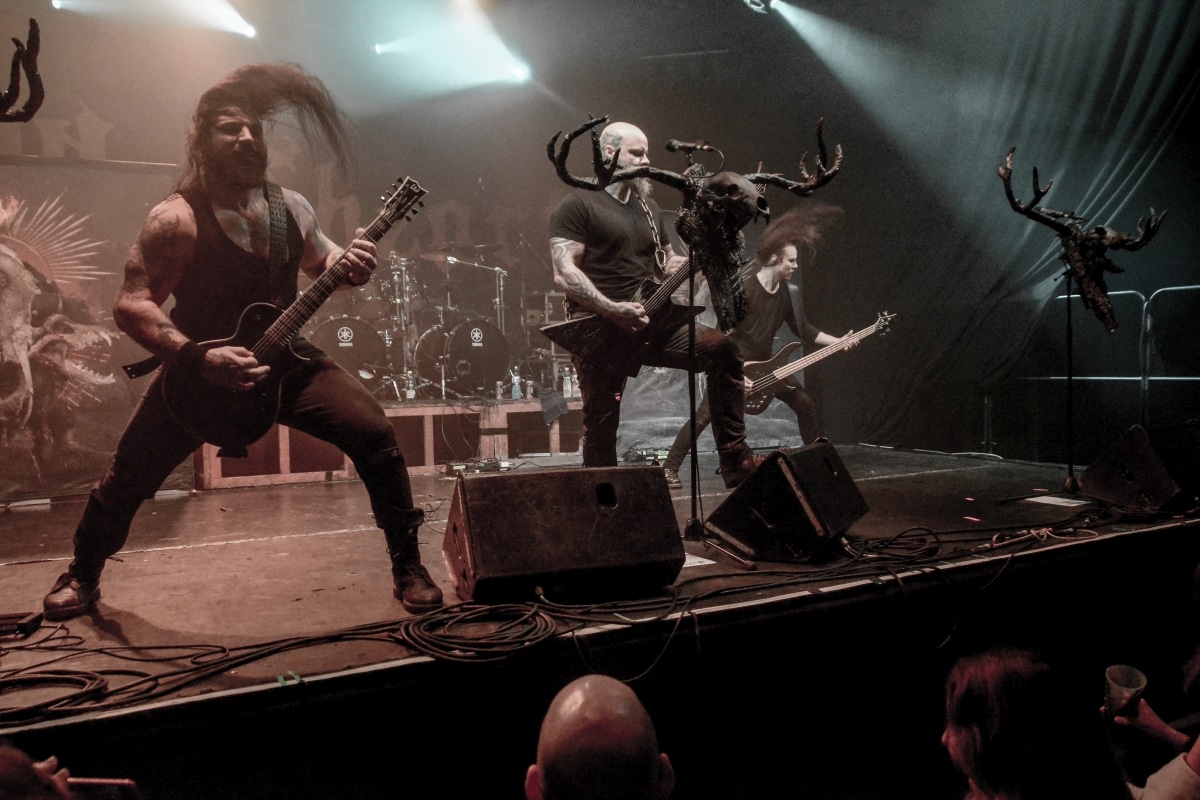
A Wolfheart budapesti fellépése előtt lehetőségünk nyílott egy hosszasabb beszélgetésre Tuomas Saukkonen-nel, a Wolfhearth, a Before the Dawn és a Dawn of Solace zenekarok agyával.
Ha jól számolok, akkor ez az ötödik alkalom, hogy errefelé jársz. Hogy tetszik Magyarország és Budapest?
Igen, legalább az ötödiknek kell lennie. Szerintem lesz az még több is.
Tényleg?
Azt hiszem, négyszer játszottam a Dürer Kertben, és ez a második alkalom itt a Barba Negrában. És volt egy utam ide, amikor helyi zenekaroknak segítettem producerként meg minden féle videós dolgokban. Szóval mindig nagyon szeretek ide jönni, és szerencsére elég sokat láttam a városból, amikor ezeket a munkákat csináltam. Általában, amikor turnézni mész, csak a fellépés helyszínéből látsz bármit is. Nem igazán látod a várost, az építészetet, a kultúrát, semmi ilyesmit, de Budapesten szerencsém volt, hogy elég sokat láthattam a városból.
Az nagyszerű. Volt ma lehetőséged elmenni valahova?
Nem, sajnos nem. Ez egy másfajta turné, mert két fellépésen is játszom esténként. Szóval már akkor tudtam, amikor eljöttem Finnországból, hogy nem igazán lesz szabadidőm. Dupla soundcheck, dupla rakodás, dupla koncert. Nincs velem dobtechnikus vagy gitártechnikus, így az összes hangolást és ilyesmit magam csinálom. A fennmaradó időben csak pihenek, vagy szundítok egy nagyot a koncertek előtt. Stresszes tud lenni, ha minden nap el akarsz menni városnézésre. Ez egy másfajta stressz. Tervezés, ütemezés…
Eddig 12 koncertetek volt ezen a turnén, hátra van további tizenkettő, tehát pont félúton jártok. Mennyire vagytok fáradtak?
Azt hiszem, most már mindenki jobban van. Elég durva volt a kezdés, mert az első néhány koncert mindig kaotikus az új napirend miatt. És legalább néhány éjszakába telik, amíg átállsz turné üzemmódba. Kevesebbet alszol, és határozottan kevesebb a minőségi alvás egy mozgó járműben, mint otthon. Először a testednek, majd az agyadnak is hozzá kell szoknia. Néhányan a srácok közül – köztük én is – a turné elején eléggé rosszul voltak. Néhány napig lázas voltam, és ez nem segített a fellépéseken. Szóval az elején volt egy kis túlélő üzemmód. Mostanra viszont kialakult a rutin, és nagyon gördülékenyen megy. Úgy gondolom, hogy most mindenki sokkal jobb feltöltődött energiával, mint az első héten.
Egyébként szeretsz egyáltalán turnézni?
Igen, igen (mosolyog).
Az elmúlt tizenkét napon napi két fellépésed volt, egy a Before the Dawn-nal és egy a Wolfhearttal. Hogy bírod? Ez rendkívül fárasztó lehet!
Nos, szerencsére a dob és az gitár plusz ének nem olyan fárasztó, és mivel hangszert is cserélek, ez sokat számít. Nem kell például dupla annyi dalt eljátszanom gitárral, az nehéz lenne. Az énekkel talán két bulit is le tudnék nyomni zsinórban. Két fellépés csak dobolva rettenetes lenne, de az egész dolog megváltozik, amikor dobról gitárra váltok. Persze a Wolfheart utolsó dalainál már fáradok, hiszen hosszú a kettő együtt, de annyira azért nem vészes. Könnyebb, mint amilyennek tűnik. Persze rengeteget edzettem, hogy ezt meg tudjam csinálni. Jó fizikai állapotban kell lenned ahhoz, hogy egy ilyen turnéra indulj. De ugyanilyen turnét már csináltunk Finnországban, jó bemelegítés volt ehhez, mert Finnországban csak hétvégén koncerteztünk, hétköznap nem. Szóval volt két dupla koncert, öt nap otthon, aztán megint két dupla koncert, újabb öt nap otthon, így simán fel tudtam készülni a napi két fellépésre, és ez egy jó edzés volt az európai turnéra.
A King of the North tavaly szeptemberben jelent meg. Mennyire vagytok elégedettek a visszajelzésekkel?
Nagyon elégedett vagyok, és a többiek is nagyon elégedettek az albummal. Azt hiszem, ez a legfontosabb, mert nem feltétlenül az a helyzet, hogy a zenekarban mindenki úgy érezze, hogy ez a legjobb anyag, amit valaha csináltunk – és ezt elérni a legfontosabb cél. Általában vagy tetszik a rajongóknak, vagy nem… mindig vannak rajongók, akik a régebbi anyagokat szeretik, sokan még mindig szereti az első albumot, a Winterborn-t, és gyakran kérdezik is, hogy „tudnátok-e valami hasonlót írni?”. Szóval mindig van némi megosztottság a rajongók között. De aminek a legjobban örülök, az az, hogy az egész zenekar büszke az albumra.
Van egy kislemezetek, amely idén szeptemberben jelent meg, Iku-Turso címmel. Milyenek erről a visszajelzések?
Az emberek szeretik ezt a dalt, és mi is szívesen játszanánk, de a dobosunkat Finnországban kellett hagynunk. Lett egy kisebb hátsérülése, és a felépüléshez időre van szüksége. Ha dobosként hátsérülésed van, az nagyon veszélyes egy turnén, mert a turné nem az a hely, ahol regenerálódni tudsz. Szóval nem sok dobos van, aki képes lenne ezt a dalt előadni, ezért nem szerepel a turné setlistjén. A turnén promóciónak szántuk, hogy be tudjunk mutatni egy új dalt, mielőtt elkezdjük írni a következő albumot – de sajnos nem került fel a setlistre.
Dolgoztok most valamilyen új Wolfheart-anyagon? Mire számíthatunk? Mikorra várható az új anyag megjelenése?
Szerintem jövő augusztus végén, szeptember elején… valamikor akkortájban. De még nem kezdtük el felvenni az albumot. Jelenleg hat dal előfelvételein vagyok túl, és ezt fogom folytatni, amikor visszamegyek Finnországba. De még nem tűztük ki a stúdiózás időpontját, szóval még hiányzik néhány elem a kirakósból, de már nagyon jó úton haladunk. Jövőre kell kijönnie, és azt hiszem, hogy őszig meg is tudjuk csinálni. A bakelitnyomás meg minden ilyesmi időbe telik, én meg nem akarok ezzel sietni. Sok zenekar ad ki úgy albumot, hogy a bakelit egy vagy akár két hónappal később jön – én nem akarok ilyesmit a mi anyagunkkal.
A Wolfheart-tal gyakorlatilag minden második évben új anyagot hoztatok ki, a Before the Dawn-nal pedig még gyakrabban. Hogyan lehetséges ez? Hogyan lehetséges, hogy gyakorlatilag évente egy vadonatúj anyaggal jelentkezzél, ráadásul különböző stílusokban?
Nem gyakorlok. Nem gyakorlok abban az értelemben, mint például Vagelis teszi, akit itt láttál a folyosón bemelegíteni. Minden nap eljátssza a skálákat és a bonyolultabb riff-eket, meg ilyesmiket. Persze ő szólógitáros. Én fiatalon gyakoroltam, de most már elég stabil a gitáros hátterem. És mindig, amikor egy hangszeren játszom – zongorán, gitáron vagy dobon –, mindig valami újat találok ki. Nem ülök le, és gyakorlok órákat – ehelyett megpróbálok valami újat kitalálni, abból felépíteni egy riff-et, majd keresni hozzá egy dallamot, és így próbálom meg felépíteni a dalokat. Ezt csinálom, amikor játszom, és ilyen elég gyakran van. Szóval egy héten nagyon sokszor vagyok ebben a kreatív állapotban, és ez vezet ahhoz, hogy folyamatosan valami új születik.
Tanultál gitározni, dobolni vagy billentyűn játszani?
Hétéves koromban két hónapig vettem gitárleckéket. Nagy szerencsém volt – ez nem egy profi zeneiskolában történt, hanem egy nagyon kis faluban, ahol éltem –, és időnként volt ott egy farmer egy másik faluból. Nagyon jó gitáros volt, és hetente egyszer eljött a falunkba, hogy gitárleckéket adjon. Én pedig nem akartam más dalait tanulni, eszméletlenül unalmasnak tartottam. Szóval megtanította nekem az alapokat: hogyan kell tartani a gitárt, mi a legjobb szög a csuklónak, hogyan kell tartani a pengetőt… csak az alapokat. Aztán elkezdtem írni a saját riff-jeimet, amik igazából nem is voltak riffek… ez úgy két hónappal a gitárórák után volt, amikor el kellett volna játszanunk valamit, amit ettől a tanártól tanultunk. Én meg eljátszottam az első dalomat… ami igazából nem is dal volt, hanem alapvetően az első négy akkord, amiket ismertem, véletlen sorrendben. De számomra ez egy dal volt, és úgy éreztem, hogy ez valami nagyon király dolog, amit én alkottam. Aztán azt hiszem, rájött, hogy ez az, amit csinálni akarok. Továbbra is oda jártam, de már nem vettem órákat, csak lógtam ott, csináltam a saját dolgaimat, és mindig, amikor látta, hogy valamit elbaszok – például rosszul játszom, rosszul áll az ujjaim –, akkor azt mondta, hogy „ne csináld ezt”, vagy „tedd ide az ujjad”, vagy „tedd ide a hüvelykujjad, mert ez jobb lesz így a jövőben”. Aztán elkezdtem dobolni, majd zongorázni, de csak úgy kíváncsiságból, mert egyszerűen jó móka volt.
El sem tudom képzelni, hogy milyen multi-instrumentalistának lenni, ez alapvetően haladja meg a képességeimet.
Mindig úgy tekintek a hangszerekre, mint a dalszerzés eszközeire. Ha ismered a dobolást, az alapvető fogásokat és a ritmusképleteket, akkor a gitárokat is másképp fogod hallani. Amikor komponálsz, máris másképp hallod az hangsúlyokat, mert tudod, hogy a dobok mit fognak kiemelni. És ugyanaz a riff nagyon sokféleképpen szólhat különböző dobbal a háttérben.
Héthúros húros gitáron játszol. Miért preferálod ezt, és nem egy hathúrosat?
Mostanában van egy hathúrosom. Azt hiszem, vagy 12 évig játszottam az előző egyedi építésű gitárral, az egy héthúros modell volt. Kezdett nagyon nehéz lenni a csuklómnak és a hüvelykujjamnak a fogása, ráadásul szükségtelenül széles volt a nyaka. Azért használtam a héthúrosat, mert lehetőségem nyílt arra, hogy megtervezhessem meg a saját hangszeremet úgy, ahogy én akartam, és akkoriban ez volt az ésszerű. De később rájöttem, hogy nincs szükségem a magas E- húrra, így aztán készíttettem egy új hathúros bariton gitárt.
Hogyan születnek a Before the Dawn vagy a Wolfheart dalai? Egyszer csak van valami ötleted, aztán összerakod egyedül a gitárokat, a basszusgitárt, a szintetizátorokat, a dobokat, mindent?
Alapvetően minden egy dallammal vagy riff-fel kezdődik, és eköré építem a dalt. Néha ez egy versszak, néha a refrén, néha az átkötés. Mindig egyszerre csak egy dalon dolgozom, és az elejétől a végéig megírom. Nem is értem azokat, akik riff-gyűjteményt készítenek… például Kirk Hammett azt mondja, hogy vagy 100 millió riff-et vett fel… és ez számomra furcsa… ha csak egyedi részeket írsz, amik nem kapcsolódnak semmi máshoz, akkor hogyan tudod később összerakni őket? Ez mondjuk valahogy megmagyarázza a Metallica néhány dalát… néha, még az új albumon vagy a kedvenc dalaimnál is előfordul, hogy egy bizonyos ponton megkérdezem: „mit csinálsz, miért játszod ezt a riff-et itt?”. De mindig szeretek az elejétől a végéig építkezni, és a dal szerkezete nagyon gyorsan megvan. Mostanában a hangmérnök Saku [Moilanen] – aki az előző albumot készítette – írja a billentyűs részeket. Hiszek abban, hogy ha hagyod, hogy másoknak is legyen saját részük, az olyasmit ad hozzá a dalhoz, amire te egyedül nem lennél képes. Szerintem hülyeség lenne, ha egyszer csak úgy döntenék, hogy mindent magam csinálok, csak mert korábban is ez volt. Meg persze a gitár- és dobtudásom egyfajta korlát is – soha nem leszek olyan jó dobos, mint Juuso [Raatikainen], a beugró dobosunk, aki több mint elképesztő. És soha nem leszek olyan jó gitáros, mint Vagelis, mert ő meg folyamatosan gyakorol, én meg nem, és ez bizonyos szempontból mindig korlátokat szab. Vannak olyan gitár- vagy dobrészek, amiket soha nem tudnék felvenni, mert nincsenek meg hozzá a képességeim. Szóval, ha mindent én kontrollálnék – a billentyűsöket meg minden ilyesmi –, akkor szerintem annak a zene minősége látná kárát.
Tehát összességében azt csinálod, hogy összerakod a dalok vázát vagy alapját, és később a többiek kidolgozzák a részleteket?
Igen, természetesen. Ha ez egy zenekar albuma, akkor szerintem úgy is kell hangzania, mint egy zenekarnak – a zenekar minden egyes zenészének a keze nyomát magán kell viselnie. Mert így fogunk szólni a színpadon is. Ugyanannak a zenekarnak kell lennünk az albumon és a színpadon is.
Alapvetően jammeltek, amikor dolgoztok a dalokon, vagy demókat küldözgettek ide-oda? Analóg módon dolgoztok, vagy VST-ket használtok?
Nem igazán jammelünk. Mostanában nagyon keveset próbálunk, mert a gitárosunk Athénban él, a srácok meg ugyan Finnországban, de nem ugyanabban a városban. Szóval általában, amikor kész a dalötlet, a stúdióba megyek… nem is szeretem magam felvenni, szerintem a zenei munkáknak ez az része rettenetesen unalmas. Ismerem az alapokat, csináltam már, segédkeztem más zenekarok felvételeinél is, és szerintem borzasztóan unalmas. És nem akarok otthon egy számítógép mögött ülni és felvenni a cuccokat. Inkább elmegyek a barátom stúdiójába, ahol minden sokkal gördülékenyebben megy: csak ülök ott a gitárommal, gyorsan elmondok néhány iránymutatást, hogy hogyan kellene programozni a dobokat, meg ilyenek. Aztán amikor megvan az dal szerkezete és a dobok, a basszusgitár és a gitár vázlata, akkor elküldöm a dalt a többieknek, hogy hallgassák meg, hogy elég jó-e, szeretnének-e változtatni rajta.
Oké, de ez azt jelenti, hogy három okból is rendkívül hatékony vagy: mindent egyedül is össze tudsz rakni, nem igazán gyakorolsz, és nem babrálsz a számítógépekkel.
Az időt, amit felhasználok, elsősorban magára a dalszerzésre fordítom. Az is segít, hogy nagyon hatékony vagyok, mert szerintem sok dolog mind-mind eltereli a figyelmet. Ha van egy ötletem, aztán négy napot várok, hogy eljussak a próbahelyre, és utána jammelünk, akkor már ötödik napja ülök azon az ötleten. Vagy ha két napot töltesz otthon azzal, hogy tökéletesítsd a dal demóját, ahelyett, hogy elmennél a stúdióba és ott két óra alatt felvennéd, akkor csak elpazarolod az órákat, amiket a tényleges alkotásra szánhatnál.
Igen, de ehhez az kell, hogy a hangszeren megfelelően tudj játszani, amire Te képes vagy.
Észrevettem egy furcsa gyakorlatot – különösen a gitárosoknál. Úgy tűnik, manapság egyre több időt töltenek a legjobb VST-k, a legjobb hangzás megtalálásával. Megveszik ezeket a sound-packeket mindenféle cégektől, és elfelejtik, hogy saját hangzást kell létrehozniuk. Én nem gyakorolok… Nem kell gyorsabbnak vagy technikásabbnak lennem. Viszont rengeteg időt töltök a legjobb hangzást megtalálásával. Mint ahogy a lefelé pengetés is: nem olyan egyszerű, hogy a stúdióban megfelelően szóljon. Szóval sok időt töltök az anyag begyakorlásával is, hogy a stúdióban úgy játszhassam el, hogy a legjobban szóljon. Sokan kihagyják ezeket a lépéseket, előbb futnak, minthogy járni tudnának. Ha megtanulod, hogy gitárosként hogyan szolgálhatod a legjobban a zenét, akkor nem számít, hogy milyen a hangzás – a riff jól fog szólni. A legolcsóbb erősítő is jól fog szólni, de ha ezt kihagyod, és csak felveszel valamit, aztán megpróbálod kijavítani a VST-kkel és mindenféle beállításokkal, vagy duplázod a sávokat és összevissza kevergeted, akkor szerintem az már régen rossz.
Honnan merítesz ihletet? Az olvasmányokból, a zenéből, vagy bármi ilyesmiből?
Alapvetően a megfigyelésből. Bárhová mész, bármit csinálsz, csak tartsd nyitva a szemed és a füled. Sok időt töltök a természetben, nyáron horgászom, télen lékhorgászom. A barátnőmmel nagyon gyakran megyünk különböző faházakba, olyan helyekre, ahol mondjuk nincs áram – kilépünk a civilizációból. Tehát amikor négy napot töltesz meleg víz nélkül, hacsak nem forralsz magadnak, nem tudod feltölteni a laptopodat, tüzet kell raknod, hogy ételt főzz – nos, azt hiszem, az nagyon jól helyre teszi a lelkedet, és hagyja, hogy a gondolataid a helyes irányba kalandozzanak. Nincsen közösségi média meg a modern kor alapvető „vívmányai”, és így teljesen másképp tudsz megnyugodni és koncentrálni. Számomra ez nagyon inspiráló.
Melyik zenei ötleteket használod a Wolfheart-hoz, és melyeket a Before the Dawn-hoz?
Nem akartam ezt korábban belezavarni, de az új Dawn of Solace-albumot is írom, elkezdtem felvenni néhány demót ahhoz is… de ez nagyon egyszerű, csak egyetlen egyszer fordult elő, hogy el kellett döntenem, hogy az adott riff a Wolfheart-ba vagy a Before the Dawn-ba kerüljön… ez csak egyszer fordult elő. Számomra ez az ötlet megszületése után teljesen egyértelmű. Persze sok ötletet kicsit másképp is meg lehet valósítani, például elvenni a blast beatet, csökkenteni a tempót… és akkor egy adott riff nagyon jól működhet a Before the Dawn-ban, de általában az első ötlet nagyon könnyűvé teszi a döntést.
Egyszerre három zenekart vezetsz, van családod, barátnőd, barátaid, munkád, aludni is akarsz, vásárolsz is… szóval hogy a fenébe tudod ezeket a dolgokat együtt kezelni?
A kertészkedést idén félretettem. Annyi fesztivál volt a nyáron mindkét zenekarral… egy észak-amerikai turnét már lenyomtunk idén, a Wolfheart-tal most itt van ez a turnét, szóval túl sok lett volna a heti 40 óra meló mindemellett, és ez sokat segített. Csak a zenei dolgokkal rakom tele a naptárat, és még mindig van néhány szabadnapom. És szerencsére a legtöbb barátom vagy stúdióban dolgozik – ahová heti rendszerességgel járok –, vagy velük turnézom. Szóval ez mindent sokkal könnyebbé tesz. Mindenki barát: mi nem csak zenekari tagok vagyunk, és nem azért vagyunk itt, hogy elvégezzük a munkát. Még a nehezebb időkben is sokkal egyszerűbbé teszi a dolgokat, hogy mindenki a barátom. Más a kémia, amikor ez nem csak egy munka. A munka feladása volt a legfontosabb döntés; persze anyagilag jó lenne, ha meglenne ez a biztonság. A zenei biznisz nagyon bonyolult tud lenni, amikor a pénzről van szó – de most január óta heti négyszer tudok dobon gyakorolni, ami elég fontos dolog. Nem akarok olyan turnézó dobos lenni, aki az egész zenekar leggyengébb tagja. Bár nem célom, hogy a legjobb zenész legyek, van egyfajta ambícióm. Szóval el kell végeznem a munkámat. És a Before the Dawn-nak voltak nagyon jó dobosai a múltban, nem akarok én lenni a legrosszabb.
Ez azért kihívást jelent, nem?
Ez egy kihívás, de szerencsére meg tudtam felelni ennek – eleget tudtam gyakorolni a dobot, tudtam a koncertekre és a stúdiómunkára koncentrálni… szóval egyáltalán nem volt megterhelő. Azt hiszem, ez az oka annak is, hogy ennyire kreatív voltam: 25 év óta ez az első év, amikor egyáltalán nem dolgozom nyáron. Már 27 éve kertészkedem, így ez egy természetes körforgássá vált, de most már csak a zenére és az ahhoz szükséges időbeosztásra figyelek.
Nem hiányzik a munkád? Kertésznek lenni azt jelenti, hogy a zöldben és a szabadban vagy, a friss levegőn…
…ezt is jelentheti – ez az idealizált kép erről a munkáról. Meg azt is jelentheti, hogy egész nyáron egy nagy autópályakereszteződésben dolgozol, karban tartod a zöld területet, és ennek már semmi köze a természethez. Csak aszfalt, beton, és ez nagyon ipari jellegű is lehet. Olyan régóta csinálom ezt, vagy negyed évszázada, hogy már mindent láttam, amit ez a munka nyújtani tud. A nyár közepe nagyon szép, de a tavasz Finnországban elég rettenetes. Hideg és esős, és amikor vége a nyárnak, akkor jön egy újabb hideg és esős, időnként havas időszak. Fákat ültetni, amikor fél méteres hó van… ezt minden évben eljátszom, és elég nagy szívás. Most már nem hiányzik. A jövőben talán hiányozni fog, és bízom benne, hogy a jövőben is találok munkát, ha kell… de valószínűleg valami mást fogok csinálni.
Valamelyik tónál bármikor találhatsz egy szép faházat…
… vagy megépíthetem a saját kertemet… huszonöt éve kertészkedtem, és alig volt időm nyáron horgászni menni, mert annyira fárasztó volt a munka meg a fesztiválok. Most viszont heti háromszor járok horgászni, ezért többet vagyok a természetben – mégha nem is a természetben dolgozom.
Mit jelent számodra a zene?
Ez egy nehéz kérdés. Azt mondanám, olyan, mint a levegő, amit belélegzek… nélkülözhetetlenül fontos. Annyira fontos, hogy ez egy olyan furcsa kérdés is számomra, mert a zene a mindennapi életem szerves része. Olyan, mintha azt kérdezném, hogy szereted-e a levegőt? Hogy szeretsz-e lélegezni? Nem igazán tudok megfelelő választ adni, mert nem tudom összehasonlítani azzal a helyzettel, amikor nem lenne zene az életemben. Ez egyszerűen paradoxon. Milyen lenne az?
És az utolsó kérdésem, hogy mit jelent számodra a metál?
Azt hiszem, a zene ereje. Szeretem a különböző típusú zenéket, és minden, aminek jó a dallama, megragadja a figyelmemet. De a metálzenében az agressziónak és az erőnek van egy olyan szintje, ami sehol máshol nem létezik. Rabja vagyok a mély hangolásnak és az éneknek. Azt hiszem, ez a csúcs számomra, előadóként a színpadon: jó a hangzás, jó a show, árad az energia, és a gitár mellett még énekelek is. Az agressziót, ami belőlem árad, érzem az ujjbegyeimben, érzem a gerincemben, majdnem megfogható – de a negatív oldal nélkül. Nincs benne frusztráció – csak tiszta energia az, amit a metálzene ad. A gőzt semmilyen más zenében nem tudom így leereszteni. Nagyon ősi dolgokhoz kell nyúlni, és igen, ez az, ami a metál zenében megvan. Nem hasonlítható semmilyen más zenéhez.
Köszönöm!
Írta: Á
******** ENGLISH CONTENT ********
In the afternoon before the gig of Wolfheart in Budapest, we had the opportunity to have a nice chat with Tuomas Saukkonen of Wolfhearth, Before the Dawn and Dawn of Solace.
If I’m right, then that’s your fifth time here. So how do you like Hungary and Budapest?
Yeah, it has to be at least the fifth. I think it’s even more.
Really?
I think I played four times in Dürer Kert, and this is my second time in Barba Negra. And I did one trip also here when I was doing some production helping local bands and video stuff. So I always really like to come here, and I luckily got to be also see the city quite much when I did the production thing. Usually when you go on tour, you only get familiar with the very basic surroundings of the venue. You don’t really get to see the city or the architecture, the culture, anything like that, but in Budapest I’ve been lucky to be able to actually see quite much of the city.
Yeah, that’s great. So today have you had any chance to go out?
No, no. This is a different kind of tour because I’m playing two shows a night. So already when I left Finland, I knew that I don’t really have spare time. Double soundcheck, double loading, double gigs. I don’t have a drum tech or guitar tech with me, so I do all the string chasing and stuff myself. In the rest of the time I just kind of relax or have a long nap before the shows. It can be stressful if you try to go out every day and see something. That’s another stress. Planning, scheduling…
You basically had 12 gigs done and 12 ones left, so you’re on half way. How tired you guys are?
I think everybody is better now. It was quite a rough start because always the first few shows are the chaotic ones with the schedules the gears and stuff. And it takes a few nights at least when you get into this tour mode. You always sleep less, and it’s definitely less good sleep on a bunk in a moving vehicle than at home. First your body and brain needs to get used to that. Some of the guys, including me, were quite sick in the beginning. I had some fever for a few days, and that doesn’t help with the gigs. So there was some survival mode in the beginning. And now the routine is really good and everything is rolling very smoothly. So I think everybody is now in a lot better energy and spirit than in the first week.
By the way, do you like touring at all?
I do, I do (smiling).
Ok, but today and in the past 12 gigs, you had 2 gigs per day with Before the Dawn and Wolfheart. How is it possible to do that? That can be extremely tiring!
Well, luckily the drum and vocal part is not that tiring. It’s pretty straight forward, and since I get to change the instrument, that is a big factor. I don’t need to play a double amount of songs with guitar for example. That would be hard. With the growling I wouldn’t even be able to do two shows that I would already know. Two shows with drums would also be really bad, but the whole environment changes when I change from drums to guitar. So of course I can feel it in my body in the last few songs of Wolfheart as it’s been a long day, but it’s not that bad. It’s easier than it would seem on paper. Of course I did a lot of training to make this happen. You need to be in good physical condition also to start this kind of a tour. But we did the same tour already in Finland, and that was a smooth landing for this one because in Finland you only tour on weekend, you don’t do weekdays. So that was like 2 double shows, 5 days at home, and again 2 double shows, 5 days at home, so I got a smooth landing for the whole double gig scenario, and it was a good training already for the European your.
King of the North came out last September. What about the feedbacks? How happy you guys with the feedbacks are?
I’ve been really happy with the feedback. Mainly the band has been super happy about the album. I think that is more important because it’s not always the case that everybody in the band feels that this is the best we’ve ever done, and to achieve that, is the biggest goal. Then fans like it or they don’t. There are always fans who like the older ones, some fans still like the first album Winterborn, the often they ask ‘can you do something similar?’. So there’s always some division with the fans. But what I’m the most happy about is how the whole band is still proud of the album.
There is a single which came out this September, Iku-Turso. What about the feedbacks of that single?
People really love that song, and we would really love to play the song, but we had to leave our drummer in Finland. He has some minor back injury but the recovery needs time. When you have a lower back injury as a drummer, that can be very tricky to be on a tour. Tour is not the place where you heal your body. So there’s not many drummers who can pull that song off, therefore it’s not on the set list of this tour. It was designed to be the promo tool for the tour to be able to present one new song before we start writing the next album, but sadly it’s not on the set list.
Probably the next question is unfair but I have to raise it. Are you working now on any kind of new Wolfheart material? What can we expect? When can we expect the new material to come out?
I think it’s gonna be late August, early September, October… something in that period of time next year. But we haven’t started recording the album yet. I have pre-production done for six songs at the moment, and I’m gonna continue that when I go back to Finland. But we haven’t set the studio time yet, so there are some pieces missing in the puzzle, but it’s really well on the way already. It has to come out next year, and I don’t think we will make it out until autumn. Vinyl press and everything takes time, and I don’t want to hurry with that. A lot of bands have been releasing albums when the vinyl comes a month or even two months later, and I don’t want to have that kind of issues with our material.
With Wolfheart you came out with a new material basically every second year, and with Before the Dawn it was even more frequent. So how is it possible to do that? How is it possible to come out basically every 12 months with a brand new material in different styles?
That’s the thing I do, I don’t rehearse in that sense. I don’t practice the same way like Vagelis for example, you saw him practicing here on the corridor. Every day he does the scales and he does the techniques and stuff like that. Of course he’s a solo player. I did my training when I was young, and I had my rhythm guitar skills pretty much like solid as concrete. But always, when I play an instrument, piano or guitar or drums, I’m always figuring out something new. I don’t sit down and do one hour of basic rehearsals. I sit down and try to come up with something new and start building a riff from that and then adding the melody and that’s just building songs. That’s what I do when I play. And I do play quite often. So I’m in this creative mode so many times in a week, and it leads to this constant motion of coming out with music.
Have you learned either playing guitar or drum or synthesizer, or your are a natural born talent? How it is working?
I took guitar lessons for two months when I was seven years old. But I was super lucky. It wasn’t like a professional music school, it was in a very small village where I was living, and there was a farmer from another village. He was a really good guitar player, and he came to our village once a week to give guitar lessons. And I didn’t want to learn anybody else’s songs, I thought it was super boring. So he taught me the basics: how to hold the guitar, what is the best angle for the wrist, how to hold the pick… just the basic ones. And then I started writing my own riffs which really weren’t riffs… it was like two months after the guitar lessons when we were supposed to play something we learned at that time from the teacher. And I played my first song… which wasn’t really a song, it was basically the first four chords I knew, in a random order. But to me it was a song, I felt like this is something really cool that I created. And then I think he realized this is what I want to do. I kept going there, but I didn’t take the lessons anymore. I was just there hanging out, doing my own stuff, and always when he saw I was fucking something up like bad fingering, bad position with fingers, then he was like ‘don’t do that’, or ‘put the finger here’, or ‘put the thumb there because it’s gonna be better in the future’. And then I started drumming and then I started playing piano just out of curiosity because it was just fun.
Being a multi-instrumentalist that’s something which is basically beyond me. That’s absolutely crazy.
I always see them as tools for the songwriting. Being able to know the drumming, basic drumming stuff and the drum patterns, you’ll hear the guitars differently also. When you compose with the guitar, you already hear the accents differently because you know what the drums will underline. And the same riff can sound so many different ways with the different drumming in the background.
You are playing a 7-string guitar. Why do you prefer that? Why not a 6-strings one?
Nowadays I have a six-strings one. I think I played 12 years with the previous custom guitar. That was a 7-string model. It started to be very heavy for my wrist and thumb to hold the grip. And it was unnecessarily wide. I took the 7-string because I had the opportunity to design my own custom the way I wanted, and it made sense at that time. But later on I realized I had no use for the higher string. So then I just made a new one with the 6-string baritone.
So how can I imagine, how the songs either with Before the Dawn or with Wolfheart are compose? You just have some idea and you are putting the guitars, the bass, the synthesizers, the drums, everything together on your own?
It basically always starts with one melody or riff, and I start just building the song around that riff. Sometimes it’s the verse, sometimes it’s the chorus, sometimes it’s the bridge. I always work on one song at a time and just make it from start to finish. I don’t understand that you just make a collection of riffs. Like Kirk Hammett, he tells that he has like 100 millions of riffs recorded… and that’s weird to me… if you just write individual pieces that are not connected with anything else… then how can you make them connect by just shuffling them around? Which kind of like explains some of the Metallica songs… sometimes, even the new album or some of my favorite songs, at some point I just ask: ‘what, why are you playing this riff here’? But I always like to build from the beginning to the end. And the basic structure of the song comes super quickly. Nowadays I let the sound engineer Saku [Moilanen], who did the previous album, to do the keyboards. I do believe that when you let other people have their own layer, it brings something that you wouldn’t be able to do. I think it would be stupid to just make a decision and do everything yourself, because that’s what you did before. Because, of course, with the guitars and drums I’m somehow limited. I will never be as good a drummer as Juuso [Raatikainen], the session drummer, who is beyond amazing. I will never be as good guitar player as Vagelis because he’s there training and I’m not. And that always makes limits in a certain way. There are some parts with guitar or drums that I would never be able to record because I don’t have the skills for that. So if I keep all the strings in my hands, even with the keyboards and stuff like that, I think that would just narrow the quality of music.
So at the end of the day, what you are basically doing, is to put the skeleton or fundament of the songs and riffs together, and later on the other guys can elaborate and polish their details?
Yes, of course. If it’s a band album, I think it needs to sound like the band, it needs to have the handprint of each musician of the band. Because that’s what we’re gonna sound on the stage. We need to be the same band on the album and on the stage also.
Are you basically jamming together when you are polishing, or you are sending demos back and forth? Are you working on an analog way, or are you using VST’s? Which is your preferred way?
We don’t really jam at all. We rehearse nowadays very less, because our guitar player lives in Athens, and the guys in Finland, but not in the same city. So usually, when I have the song idea ready, I always go to the studio… I don’t even like to record myself, I think that side of the music creation is super boring for me. I know the basics, I’ve done it, I’ve been recording other bands too, and I think it’s horribly boring. And I don’t want to sit behind a computer at home recording stuff. I’d rather go to my friend’s studio where everything goes so much smoother: I just sit there with my guitar and shout some guidelines on how to program the drums and stuff like that. And then, when I have the basic structure and arrangement for drums, bass and guitar, then I send the song to the other guys to check out if it’s good enough, if they would like to change.
Okay, but it means that you are extremely effective for three reasons: you can put everything together on your own, you don’t really practice, and you don’t tamper with computers.
The time that I use is mainly for the songwriting itself. It also helps to be very creative, because I think all of these are distractions. If you have an idea, and then you wait four days to get to the rehearsal place, and then you jam, you spend five days sitting on the idea already. Or if you spend two days at home perfecting the demo of the song, instead of going to the studio and doing it in two hours, you are just wasting the hours of the actual creative process.
Yeah, but it requires the capability to be able to play the instrument in a proper way, what you are able to do.
I’ve noticed this weird pattern, especially with guitar players. They seem to spend more and more time nowadays finding the best VST’s, the best sound. They are buying these soundpacks from companies and they forget that they need to create their own sound. I don’t practice… I don’t need to be any faster or more technical nowadays. I do spend a lot of time to rehearse to be able to produce the best sound. Just like a downward picking: the way it sounds the best in the studio, it’s not as simple as you might think. So I spend a lot of time for rehearsing my material, so I can play it in the studio, so it sounds the best. A lot of people are skipping the steps, they are running before they can walk. If you teach yourself to be the best tool for your music as a guitar player, no matter what the sound is, the riff will sound good. The cheapest amp will make you sound good, but if you skip that, and you are just record something and then trying to fix it with the VST’s and settings, or doubling the tracks and mixing, I think that’s the wrong way to go.
What is influencing you regarding landscape, readings, music, anything else? Where do the inspiration is coming from?
I think it’s just basically observing. Wherever you go, whatever you do, just keep your eyes and ears open. I do spend a lot of time in nature with fishing in the summer, ice fishing in the winter. I go really often with my girlfriend to different cabins, so we can be really off the grid, no electricity and stuff like that. So when you spend four days with no hot water unless you boil it, you can’t charge your laptop, you need to make a fire to cook some food, I think that sets your mind in a really good place, and lets your thought wander in a good way. You don’t have this social media, basic modern day triggers every day, but you get to calm down and focus in a completely different way. To me that is very inspiring.
Which musical idea goes to Wolfheart, which goes to Before the Dawn? How are you splitting the ideas?
I didn’t want to put that in the mix earlier, but I’m also writing the new Dawn of Solace album. I started to record some demos for that also, but to me it’s super easy, it’s only happened once, where I had to decide, should this riff go to Wolfheart or Before the Dawn… that only happened once. To me the first idea is very clear. Of course you could arrange many ideas in a little bit different way, like take the blast beat off, drop the tempo, and it could work really well for Before the Dawn, you could make any idea work for it, but usually the initial idea leads the way really easy. To me the first idea sets it really easy.
You run three bands at the same time, you have, I think, family members, girlfriend, friends, job, you want to sleep, you have to go to shopping, so how in the earth you manage those things together?
I took the gardening off from the table for this year. We had so many festivals in the summer with both bands, we did the North American tour already this year, with Wolfheart now we are doing this tour, so it would have been too much to do 40 hours a week, and that helped a lot. I can divide my weeks only with the music stuff and still get some day-offs. And luckily, most of my friends are either studio engineers where I go on a weekly basis, or I tour with them. So it makes everything so much easier. Everybody is a friend, it’s not just we are band members and we are here to get the job done. Even in the rougher times it makes things much smoother because everybody are already friends with each other. It’s a different chemistry when it’s not just a job. So friends come really easy with that. The job was the main decision. Financially it would be nice to have this security. Music business can be very complicated when it comes to how money moves around, but now I’m able to rehearse drums four times a week since January, which is quite a mandatory thing. I don’t want to be a touring drummer who is the weakest item of the whole package. Even though I don’t aim to be the best musician in any of the instruments I play, I do have an ambition. So I need to get the job done. And Before the Dawn has had really good drummers in the past, so I don’t want to be the worst one.
That means a challenge.
It is a challenge, but luckily I was able to meet the challenge because I’ve been able to rehearse with the drums, I’ve been able to focus for the gigs and the studio stuff, so it hasn’t been overwhelming at all. I think that’s the reason why it’s been so creative also. This is the first summer in 25 years that I don’t do any work at all during the summertime. I’ve been a gardener for 27 years, so that became a natural cycle. But now I’ve been only focusing on my schedule, based on music.
You don’t miss your job? Gardener means being in the green and working outdoors in the fresh air…
…it can mean that. That’s the ideal picture of the job. It also can mean that the whole summer you work in one big intersection of a motorway, doing the green stuff on that area, and that has nothing to do with nature anymore. It’s just tarmac, concrete, and it can be very industrial. I’ve done it so long, like a quarter of a century, and I’ve seen everything this job can offer. In the middle of the summer it’s a really nice, but spring in Finland is pretty horrible. It’s cold and rainy, and when the summer is done, it’s another period of cold and rain with snow. Planting trees when it’s half a meter of snow… that’s something I do every year, and that sucks so bad. I don’t miss it now. I will miss it in the future perhaps, and I’m confident I can get a job in the future… but probably I will do something else.
You can find a nice cabin anytime at one of the lakes…
I can build my own yard… For example, I did gardening for 25 years already, and I could barely have time to go fishing twice a summer, because I was so tired of the job and the festival shows. So now I’ve been going fishing three times a week, therefore I get to be more in the nature, but I don’t work in the nature.
What music means to you?
That’s a difficult question. I would say like air I breathe. It is insanely important. It’s so important, there it’s such a weird question to me, because it’s a regular part of my everyday life. It’s like asking how do you like air? How do you like breathing? I can’t really give a proper answer, because I can’t compare that to a situation where I wouldn’t have music in my life. That’s just a paradox. How would that be?
And the last one, what metal means to you?
I think that’s the power of music. I do like different types of music, and everything with a good melody strikes a chord. But with metal music there’s a different level of aggression and power that doesn’t naturally exist anywhere else, and I am so addicted to low tuning and growling vocals. I think that’s the peak for me as a performer on stage, when I have a good monitoring, it’s a good show, good energy, and I get to do growling on top of my guitar playing. The aggression that I feel coming out from me, I can feel it in my fingertips, I can feel it in my backbone, it’s just like the whole physical aggression without the negative side of it. There’s no frustration, it’s just pure energy that you get with metal music. You don’t get that steam out in any other music. You need to go to very primal things, but yeah, that’s what metal music has. It doesn’t compare to any other music.
Many thanks for your time, much appreciated.
Written by Á