******** FOR THE ENGLISH CONTENT PLEASE SCROLL DOWN ********
Mi a közös K. K. Downingben, a Judas Priest legendás egykori gitárosában, a Napalm Records-nál megjelent Tailgunner lemezben és a borítón vibráló neon-sötét világban? Egy magyar női fotós: Valiszka Tünde, a Dystopian Romanticism megalkotója. Valiszka Tünde nemzetközileg elismert fotográfus és vizuális storyteller; munkái reklámkampányokban, márkakollaborációkban, fesztiválokon és lemezborítókon jelennek meg. Képeinek neon-noir világa azonnal felismerhető, saját, következetes vizuális nyelvet beszél. Hogy hogyan vezetett a tinédzserkori zenei újságírástól és az első streetfotóktól az arthouse filmek hatásán át a Dystopian Romanticism megfogalmazásáig, majd olyan zenekarokig, mint a Tailgunner, arról maga a fotográfus mesélt részletes interjúnkban.
Üdvözletem! Fiatal korodban hogyan kerültél kapcsolatba a képzőművészettel (a fényképpel mint médiummal)? Honnan jött az impulzus, hogy „nekem márpedig fotóznom kell”? Volt valaki a családodban, vagy egy művész, aki mély benyomással volt rád?
Úgy emlékszem, nagyjából négyéves lehettem, amikor először fényképezőgép volt a kezemben. Anyukám hobbi fotós volt, én pedig (mint a legtöbb négyéves) ott sertepertéltem mellette a sötétkamrában, és segítettem előhívni a negatívokat. Aztán sokáig nem foglalkoztam komolyabban a fotózással. Úgy 26 éves koromban jött vissza, amikor már Londonban éltem, és újságírás-média szakra jártam. Mindig zenei újságíró akartam lenni, ezért koncertekről írtam egy londoni magyar magazinnak, és elkezdtem magammal vinni a fényképezőgépet is. Nagyon gyorsan kiderült, hogy a fotóim erősebbek, mint az írásaim.
Közben elkezdtem egyedül utazgatni, részben azért, mert kinek van arra ideje, hogy másokra várjon, vagy hogy másoknak pont ahhoz legyen kedvük, amihez nekem. Nekem nincs. Bejártam Havannától Katmandun és Bangkokon át Ausztráliát, fél Európát és a Közel-Keletet Szaúd-Arábiától Kuvaitig. Egyedül, rengeteg időt töltve azzal, hogy csak az utcákat fotózzam. Így húzott be igazán a streetfotó: emberek, város, fények, semmi beállítás. Azóta is ez a kedvenc műfajom, és már kifejezetten zavar, ha utazás közben másokhoz kell igazodnom: a legtöbb ember nem tudja megélni a jelent.
A fényképészeten belül egészen egyedi stílust képviselsz, amely a Dystopian Romanticism néven fut. Mit jelent ez pontosan?
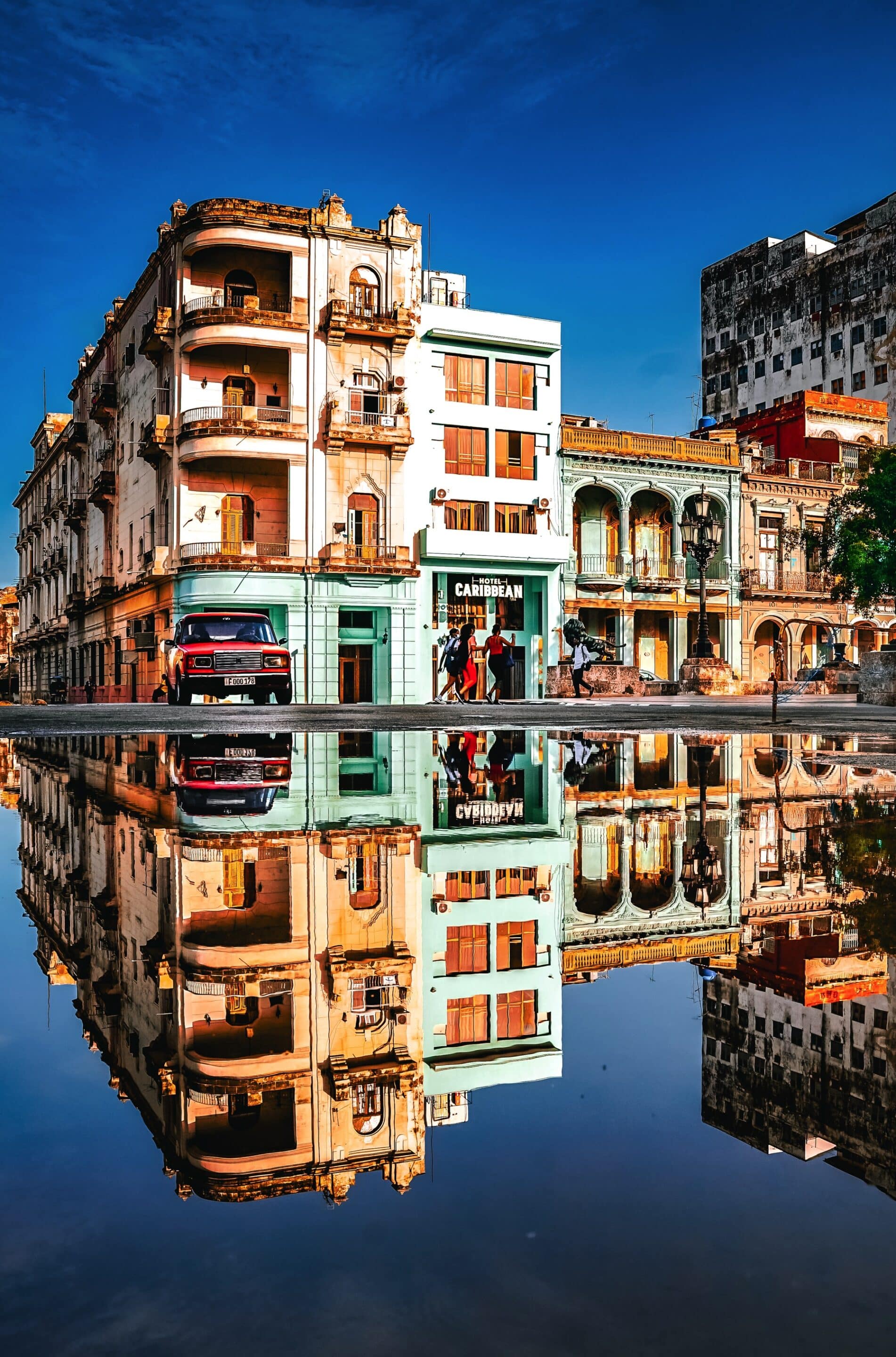
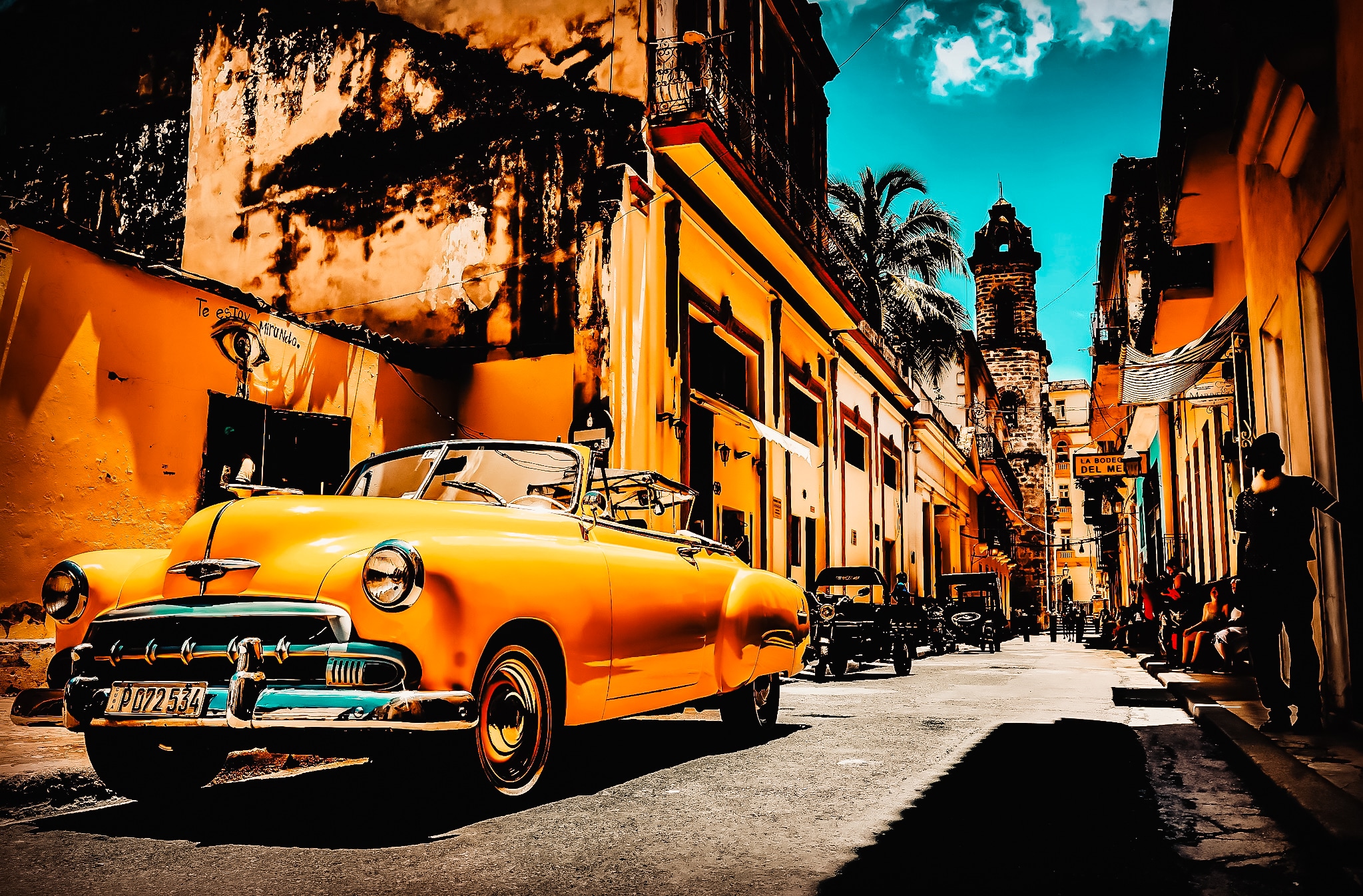
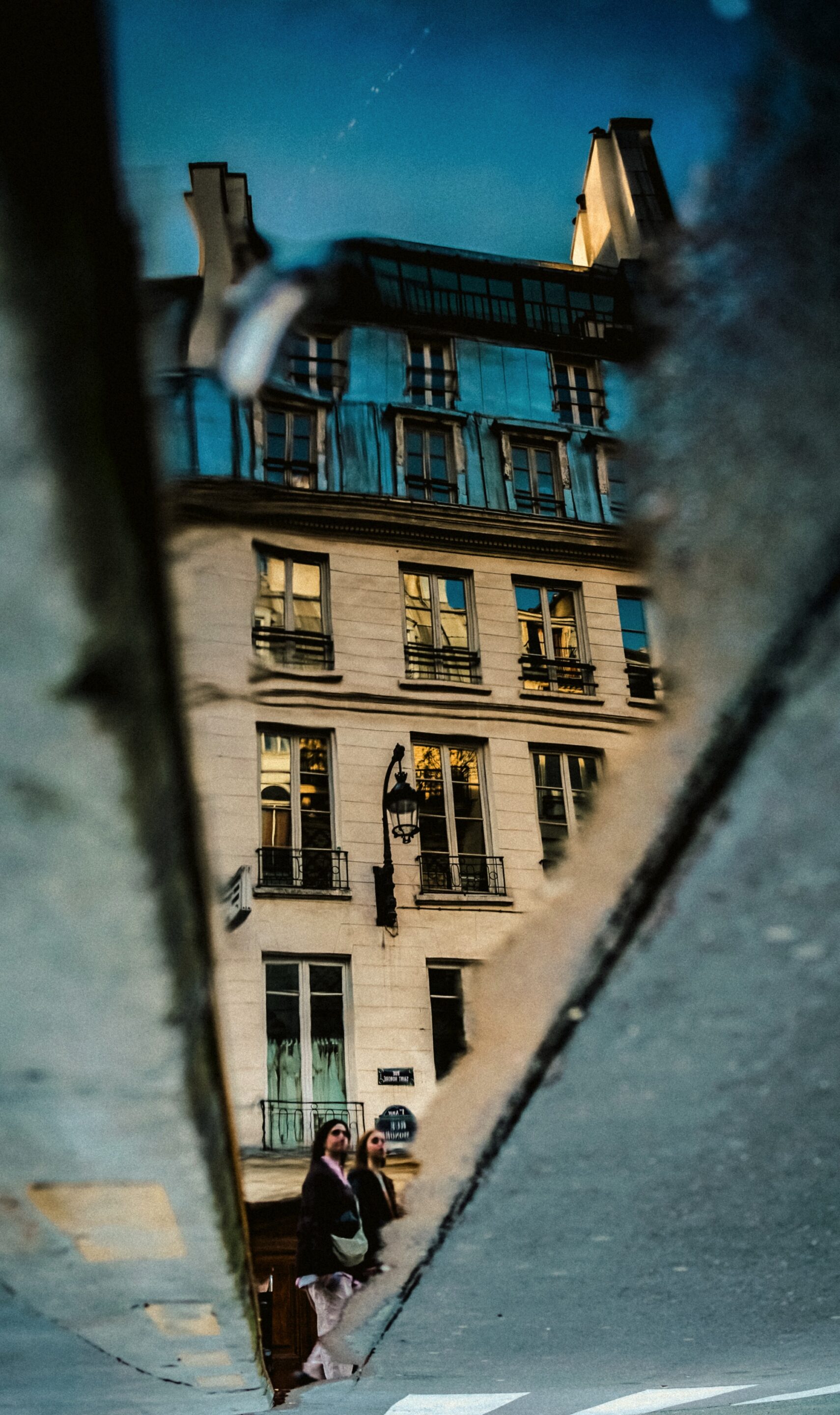
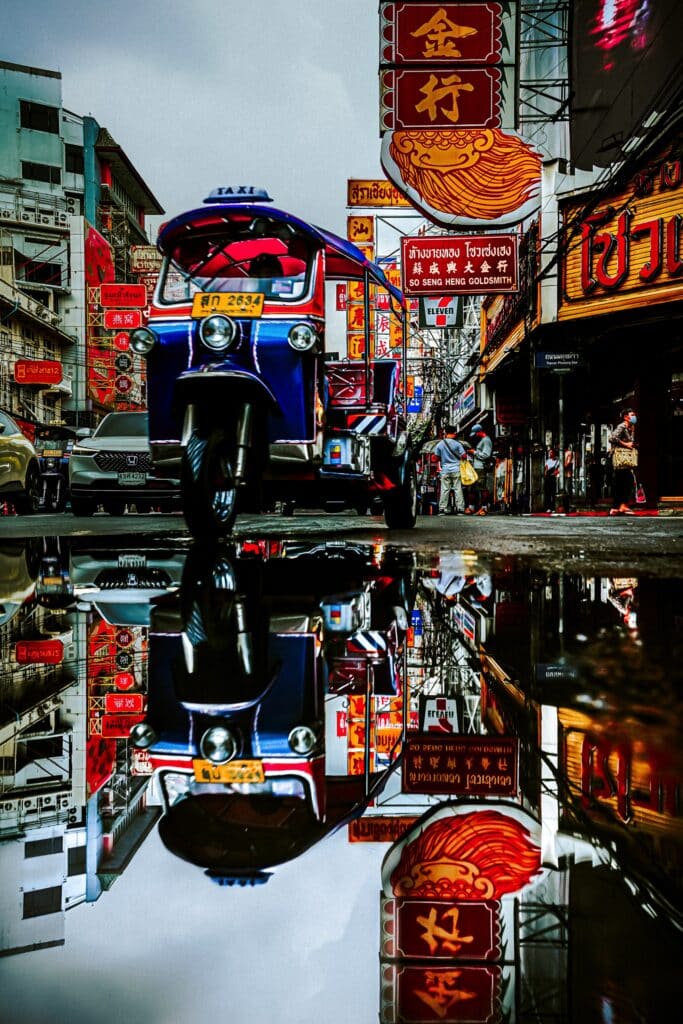
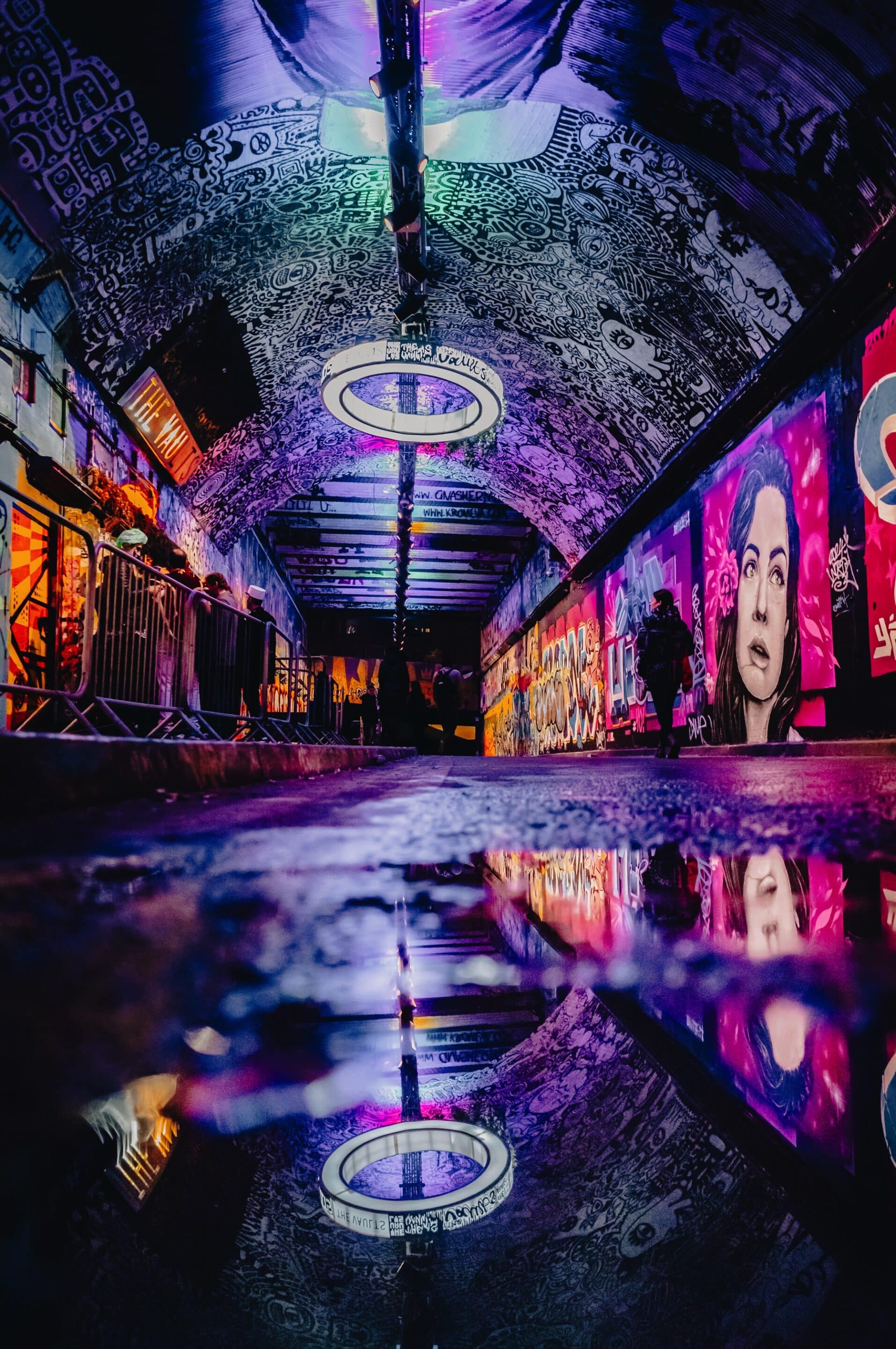
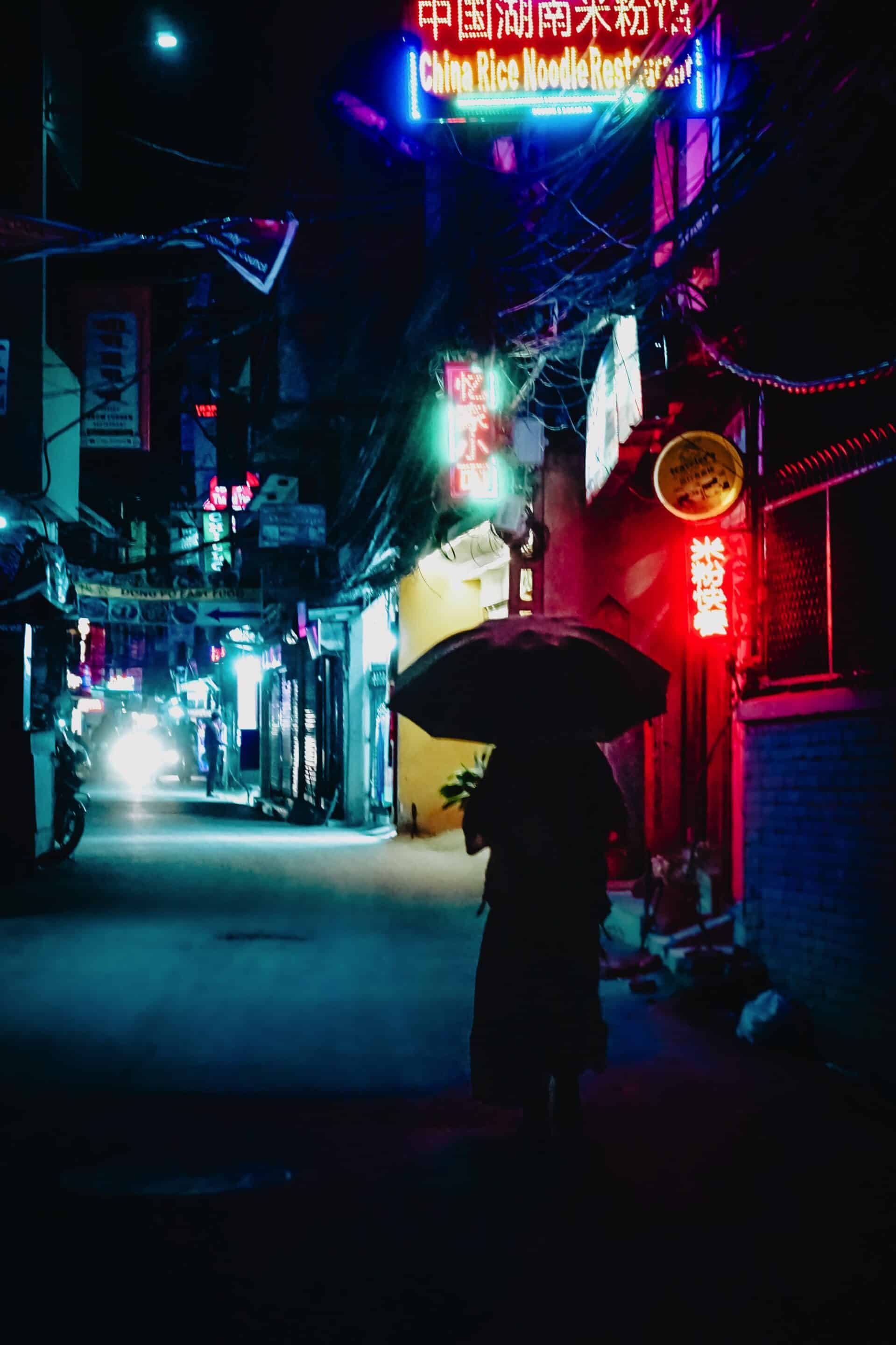
A Dystopian Romanticism egy nagyjából tíz év alatt felépített, folyamatosan bővülő body of work. A nappali streetfotózásból idővel átváltottam az éjszakaira. Nagyon megtetszett, ahogy éjszaka a vizes felületeken megduplázódik a fény, és milyen szép szimmetriákat lehet kihozni a pocsolyákból, főleg, ha színes neonok vannak az utcán. A fordulópont 2018 volt, amikor Katmanduban is kimentem éjszaka, esőben, neonfényben fotózni. Ez volt az első olyan anyagom, amire mások elkezdték mondogatni: „Ez nagyon Blade Runner…”.
Innen kezdtem tudatosan az éjszakai, esős városi jelenetekre építeni: Chinatown és Soho Londonban a „játszóterem”, éjszakai utcák Ázsiában, magányos alakok neonfényben. Sokan kérdezték, hogy „jó, de pontosan mit is csinálsz?” Eleinte csak félmondatokban tudtam körülírni: „80-as évek old school cyberpunk / Blade Runner / retrofuturisztikus neon-noir éjszakai streetfotó” ami nyilván nem volt egyszerűen megemészthető.
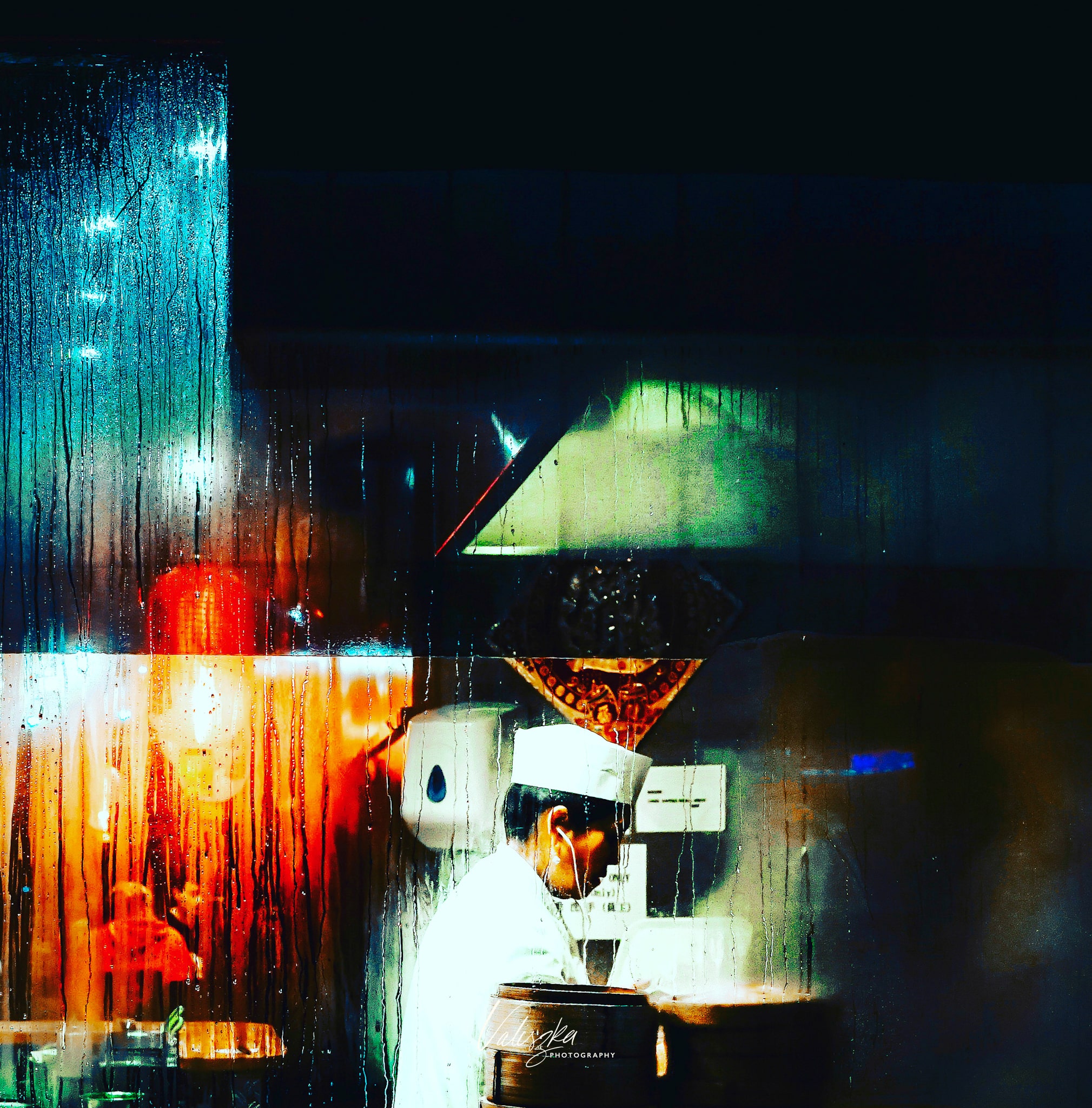
Idővel összeállt, hogy esztétikailag ez egy háromszög: Blade Runner, Edward Hopper magányos figurái, és Wong Kar-wai lírai, melankolikus világa. Leggyakrabban egyedül álldogáló, cigiszünetet tartó szakácsokat, várakozó, elgondolkodó, egyedül sétáló embereket fotózok, miközben körülöttük zakatol a város. Definícióként így foglalnám össze:
„A disztópikus romanticizmus egy neon-noir vizuális nyelv, amely a modern nagyváros melankolikus szépségét keresi a megfigyelésre épülő kapitalizmus és a mindennapi elidegenedés közegében. A képeken gyakran hétköznapi emberek jelennek meg futurisztikus, cyberpunk hangulatú fények között, mintha már egy disztópiában élnénk. A romantika pedig abban rejlik, hogy ezekben a repedésekben mégis felvillan a sérülékeny emberi lét.”
Ez nem esztétika, hanem állítás: a disztópia nem valami távoli jövőkép, hanem a jelenünk és én ebben a jelenben keresem a szépség repedéseit.
Technikailag mik voltak a fő irányvonalak, amikor megalkottad ezt a sajátos világot, illetve kik inspiráltak leginkább? Itt filmrendezőkre is gondolok.
Nem úgy történt, hogy egy este leültem teával a kezemben, és azt mondtam: „na, most kimegyek az utcára, és úgy fotózok, ahogy Ridley Scott rendezne”. Sokkal organikusabb folyamat volt. Sokáig „csak” utcát fotóztam, aztán egyre jobban elkezdett érdekelni az éjszakai fény. Idővel rájöttem, hogy a városi neon, az eső, a pocsolyák, az üvegfelületek és a füst / köd adják meg azt a filmes, kicsit szürreális hangulatot, ami igazán közel áll hozzám, és egyszerűen ebbe az irányba fordultam.
Alapélmények voltak filmek, mint A Holló (Brandon Lee), Jodorowsky: A szent hegy, a Blade Runner, Kill Bill, meg olyan videók, mint a Tool klipjei. Később jött be tudatosabban Wong Kar-wai világa és Edward Hopper festészete. Ezekből raktam össze azt a nyelvet, ami ma Dystopian Romanticism néven fut.
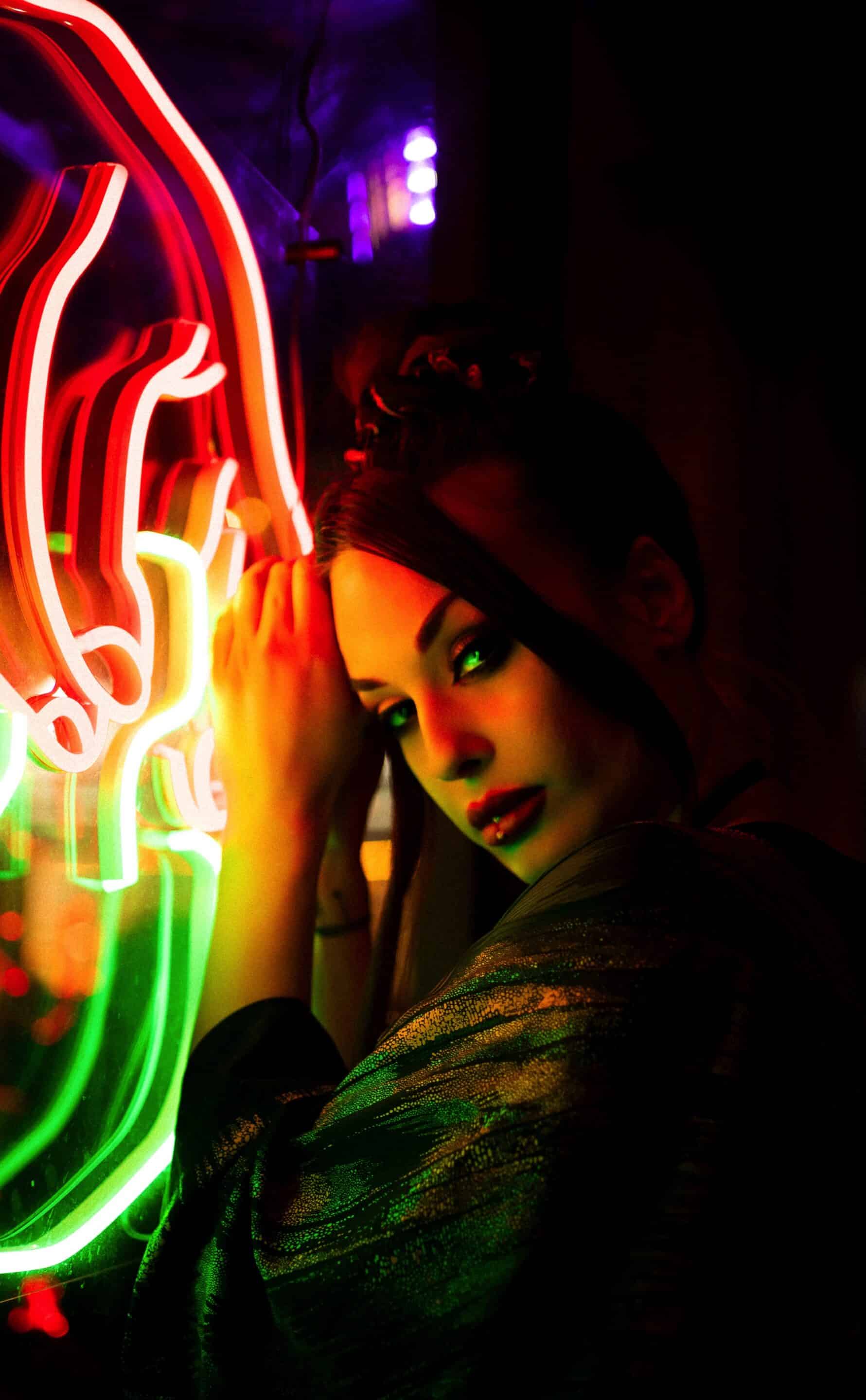
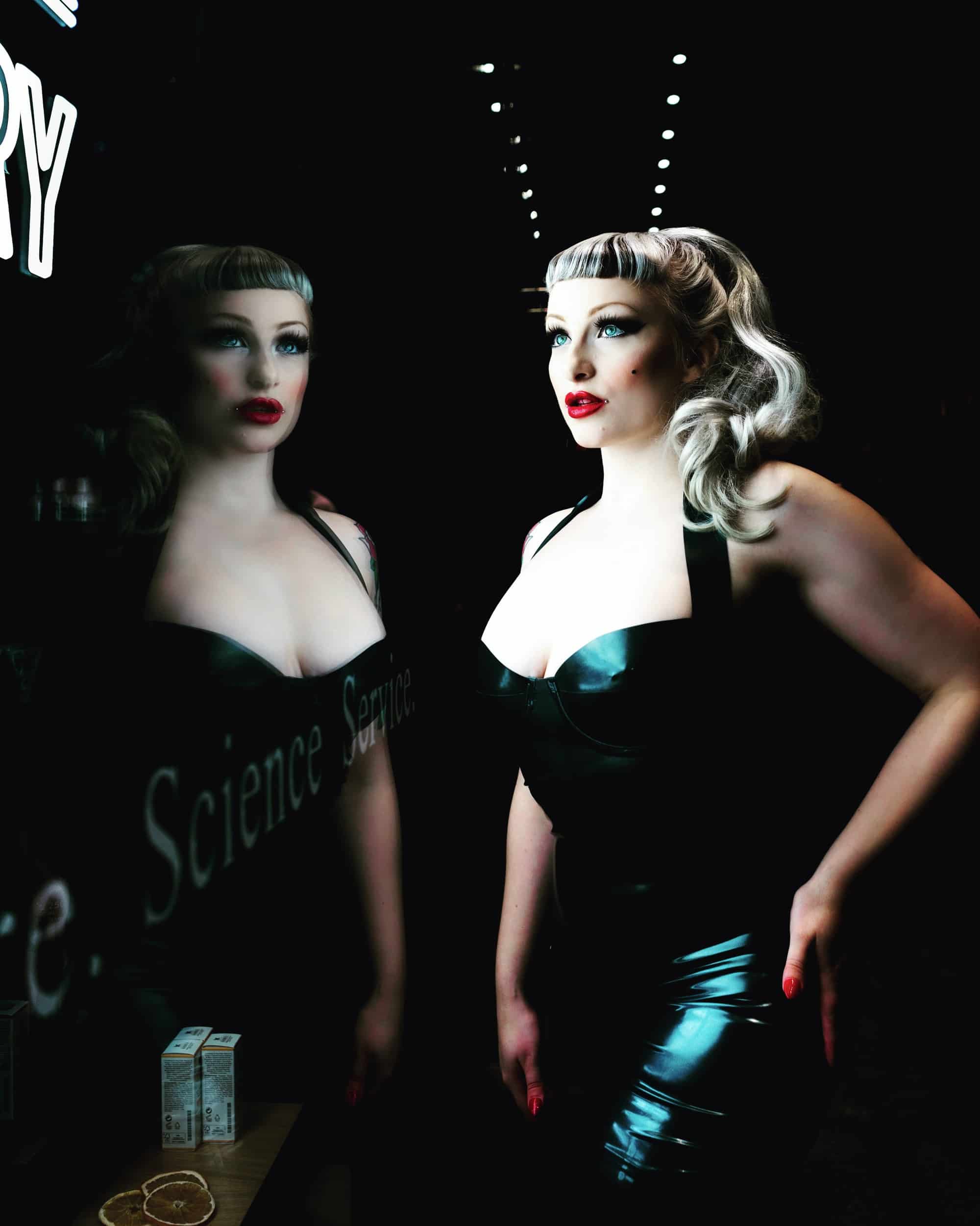
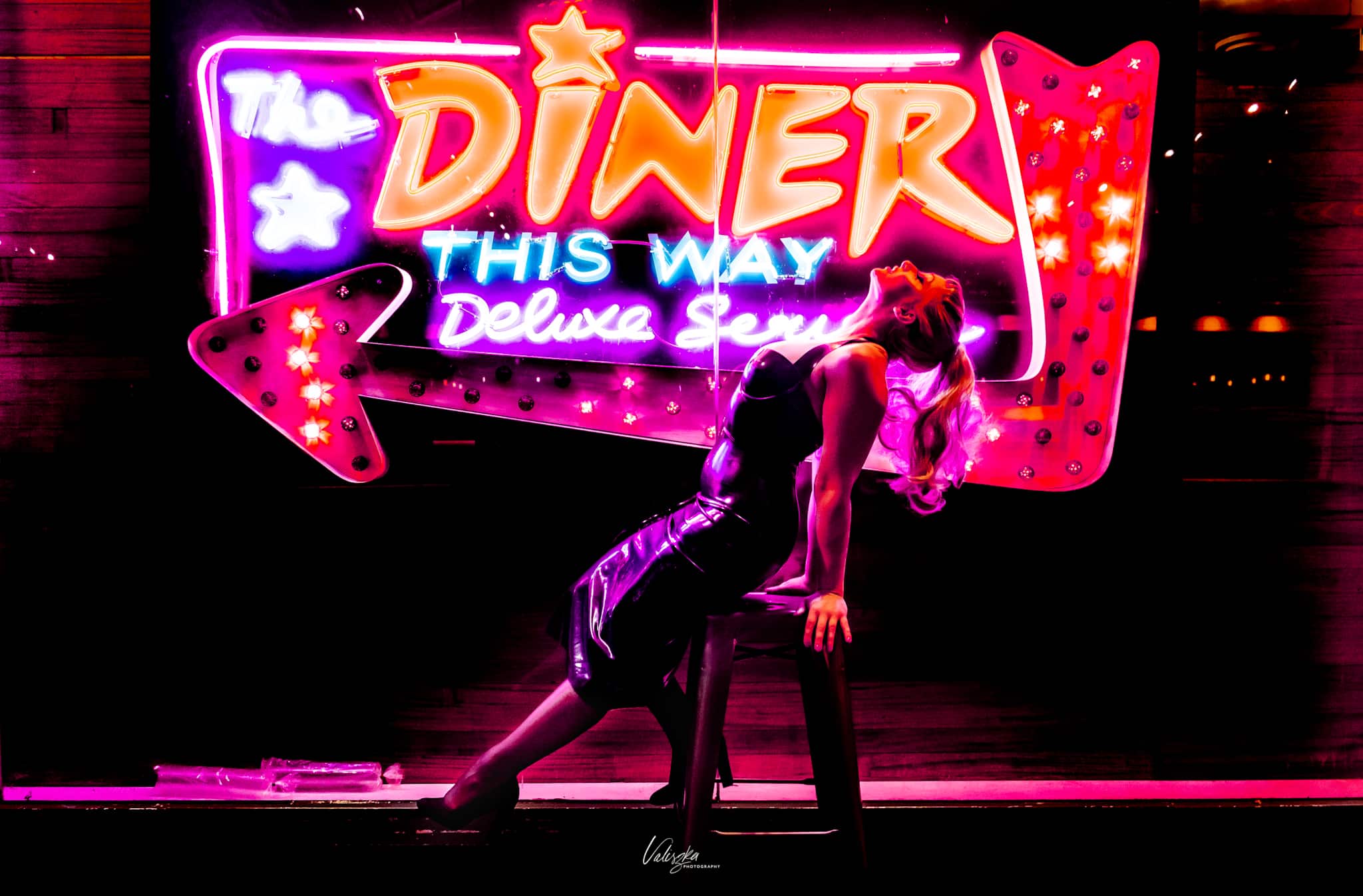
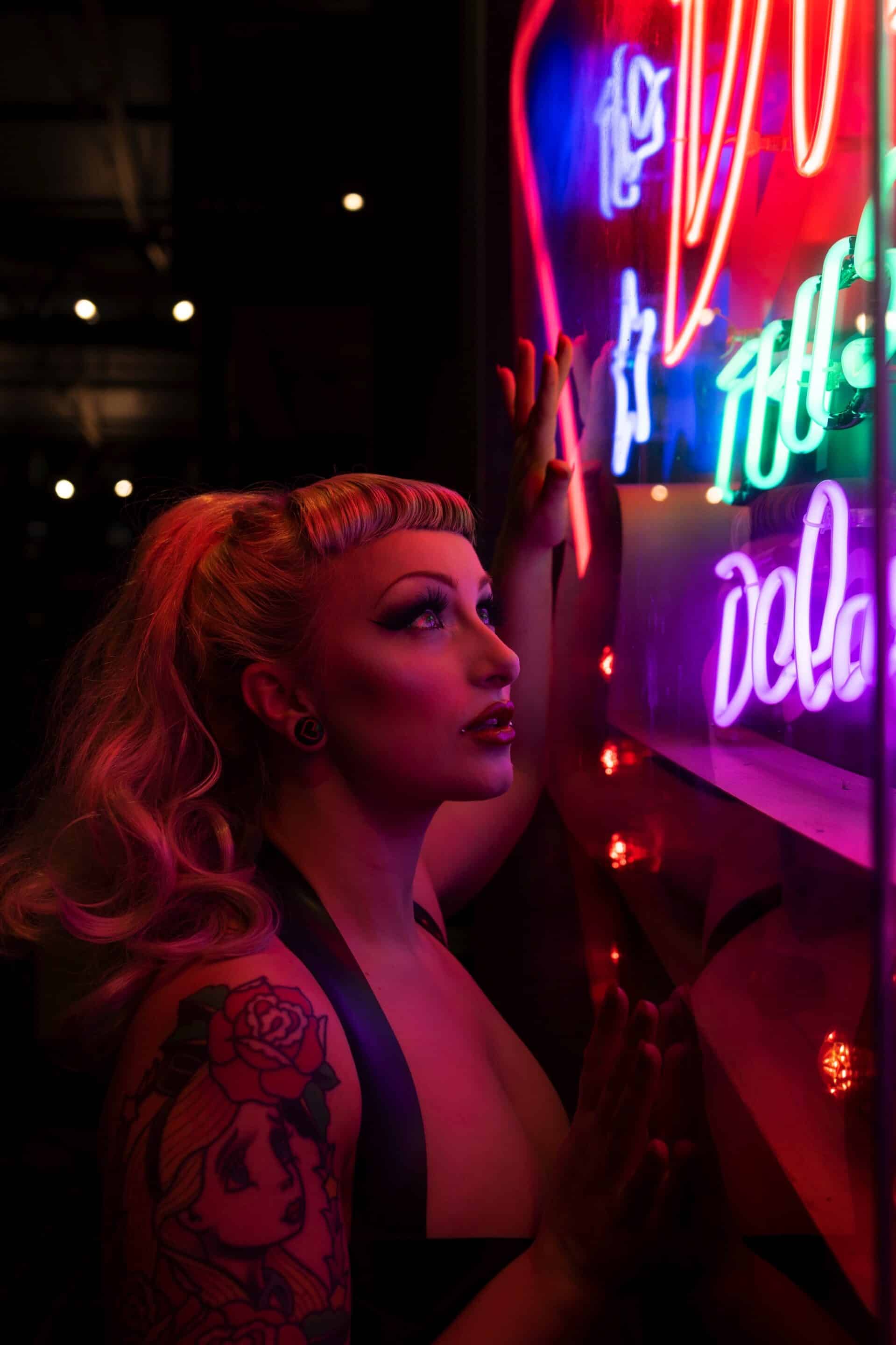
Különös kettősségre épülnek a munkáid: az erős karakterábrázolások / szcenáriók mellett jó adag cyberpunk életérzés árad a fotókból. Élénk színek az éjszakában, vibráló neon, tükör és füst. Melyek a kedvenc filmjeid / alkotóid ebből a műfajból? A japán vonalat mennyire szereted?
Érdekes, hogy ma sokan automatikusan Japánt azonosítják a cyberpunkkal, miközben a jelenkori japán vizuál gyakran inkább „new age neon noir”, vagy popkulturális mashup. Klasszikus cyberpunk filmes értelemben azért még mindig a Blade Runner az alap, ami ezt a vizuális nyelvet megteremtette. A kedvenc filmjeim ebből a világból: Blade Runner (mindkét verzió), Mad Max, és Wong Kar-wai-tól a Fallen Angels és az In the Mood for Love, plusz rengeteg videóklip, különösen a Tool és más sötétebb, konceptuális zenekarok munkái.
Nekem Japán kicsit utópia: minden rendezett, tiszta, fegyelmezett, még a fények is. Amíg olyan városok, mint Katmandu vagy Havanna na, azok sokkal inkább adják azt a „Blade Runner-es” disztópiát. Tokiót persze szívesen fotóznám, de most nem a listám élén van. Jelenleg Kína érdekel inkább, és alig várom, hogy eljussak az igazi cyberpunk városba, Chongqingba.
Hol érkezett el az a pont az életedben, amikor a zene egyre szervesebben kezdett hozzákapcsolódni a disztópikus romanticizmussal átitatott képeidhez?
A zene elég régóta szervesen kapcsolódik a munkámhoz. Dolgoztam DJ-kkel, zenészekkel, előadókkal elég széles spektrumban. Voltak nálam arcok a New York-i Broadway-ről, fotóztam rockzenészeket (például a New Medicine basszusgitárosát), teljesen véletlenül lencsevégre kaptam Peter Andre-t egy dubaji koncerten, dokumentáltam fesztiválokat, például a Dark Malta-t, ahol olyan nevek léptek fel, mint Combichrist vagy Aesthetic Perfection, de fotóztam a Hocico-t is. Szerintem az industrial nagyon beleillik a világomba, sőt: beleégett a vizuális DNS-embe.
Emellett fotóztam reggae előadót is, például Alborosie-t, és dolgoztam psytrance fesztiválokon is. Kiderült, hogy ez a neon-noir látásmód több zenei műfajhoz is jól kapcsolódik. A legnagyobb ugrás viszont 2025-ben jött a Tailgunner-rel, ahol már egy komplett albumkampány vizuális világát raktuk össze közösen.
Nekik készítettél nemrég illusztris fotósorozatot az új albumukhoz, és a lemezborító vizuális koncepciójában is aktívan részt vettél. Honnan jött ez az egész kollaboráció? Hogyan találtak meg téged?
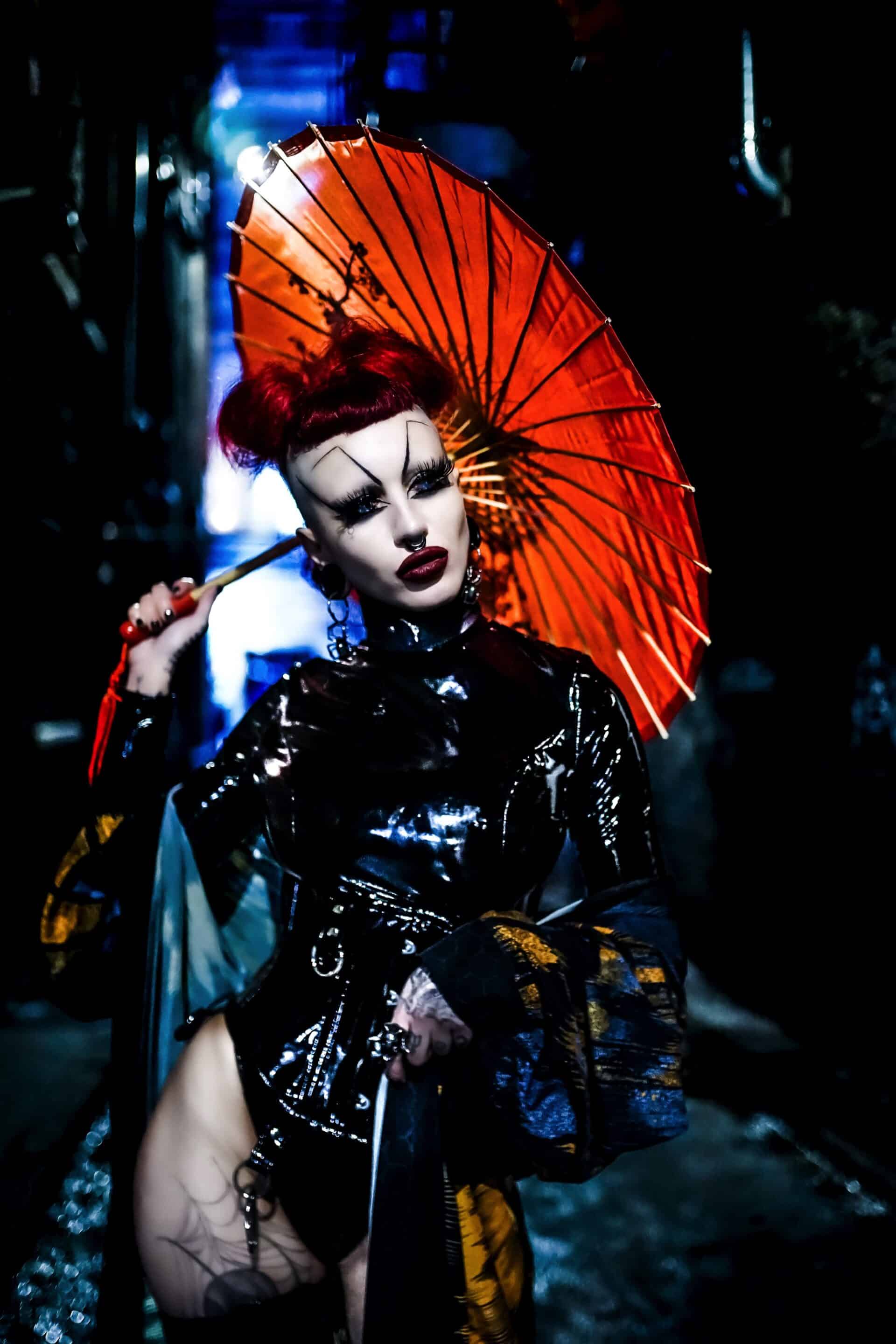
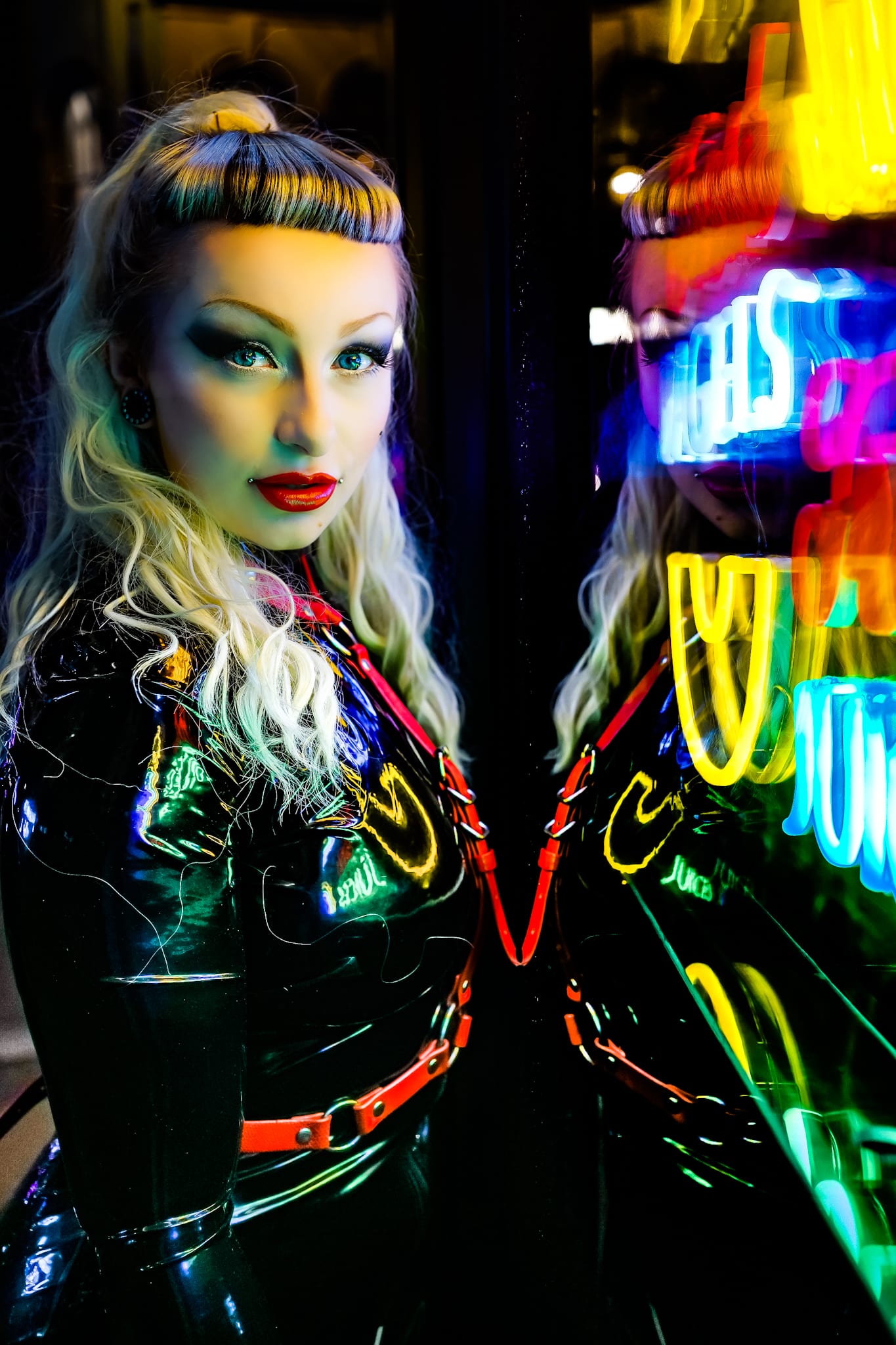
Ennek a történetnek a gyökere nagyjából hét évre nyúlik vissza, amikor elkezdtem éjszaka cyberpunk portrékat fotózni Londonban. A kísérletezős fázisban felkértem egy burlesque művésznőt, Polly Anther-t, hogy fotózzunk latexben, neonfényben, az utcán: kicsit Blade Runner-hangulat, kicsit filmesebb világ. Aznap este olyan anyag született, amiből aztán kinőtt a Cyberpunk Photoshoot London, a saját kis „vállalkozásom”. Polly karrierje is szépen beindult, 2025-ben például a Steel Panther fellépésén táncolt a Download fesztiválon. Közben a Tailgunner basszusgitárosával, Tom-mal régóta ismerték egymást, és Tom rátalált a Polly-ról készült fotóimra Instagramon, majd írt egy e-mailt.
2026 februárjában jött ki az új albumuk, frissen szerződtek a Napalm Records-hoz, az album producere pedig K.K. Downing, a Judas Priest alapító gitárosa volt. A lemez egyik kulcsdala a „Tears in Rain”, ami közvetlen utalás a Blade Runner ikonikus monológjára: „All those moments will be lost in time, like tears in rain.” (Egyébként több fotómnak is ez a címe.) Ők a 80-as évek heavy metalját hozzák vissza modern formában, én pedig a 80-as évek cyberpunk világát fotózom modern streetfotós szemmel. Elég egyértelmű volt, hogy ez egy „match made in heaven”.
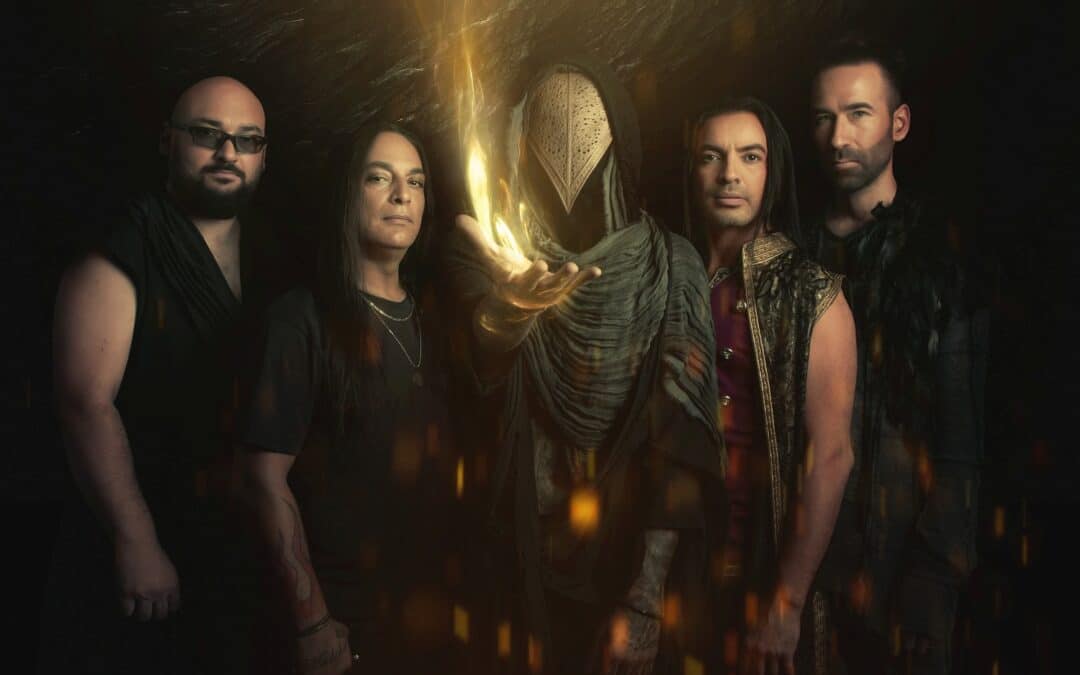
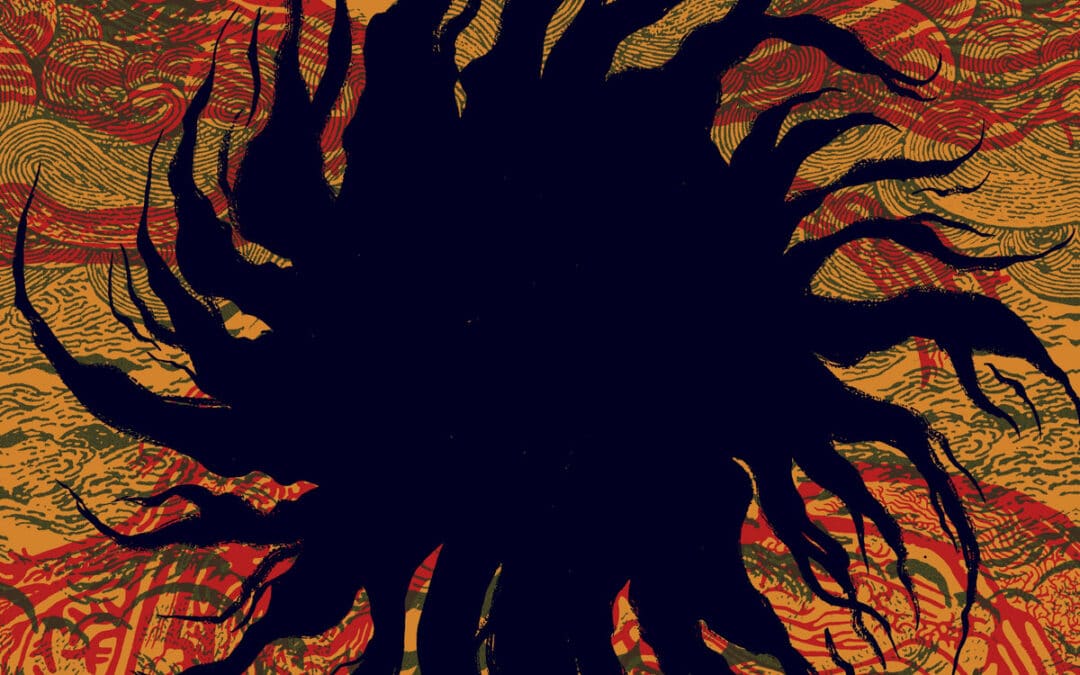
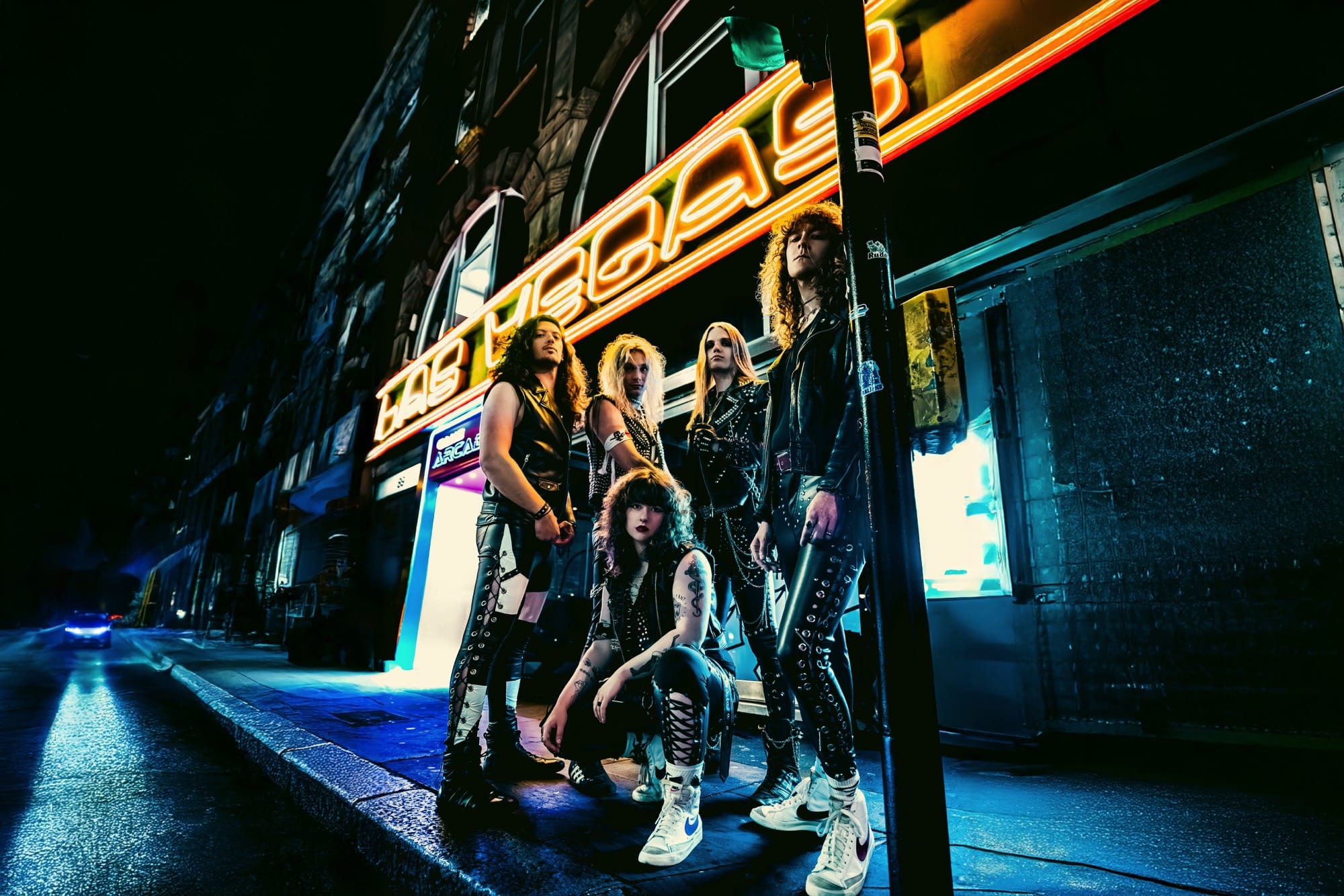
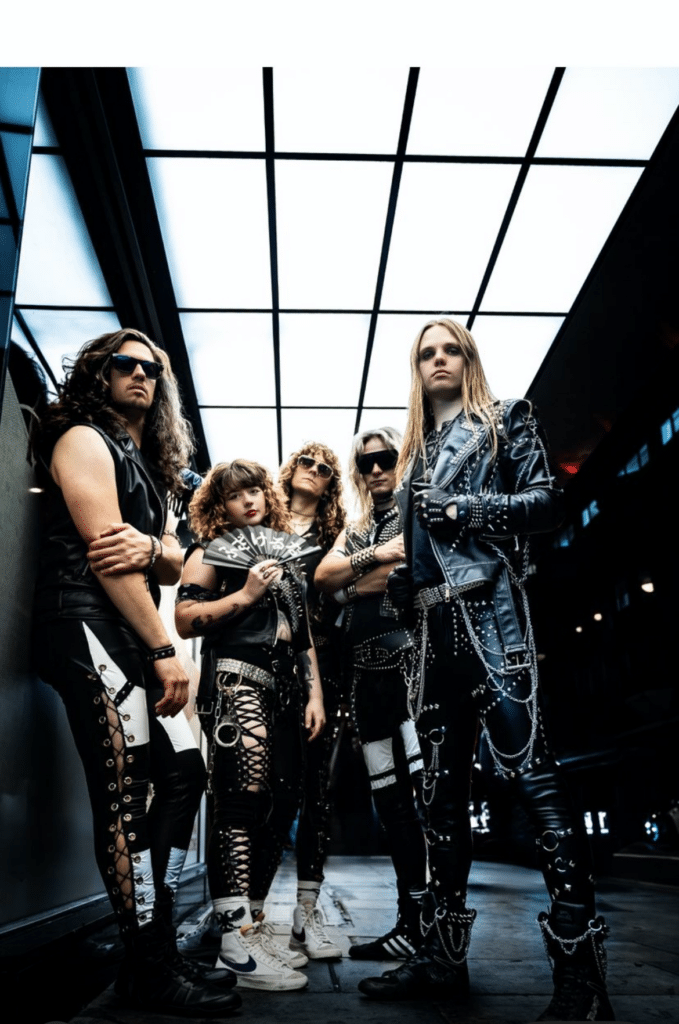
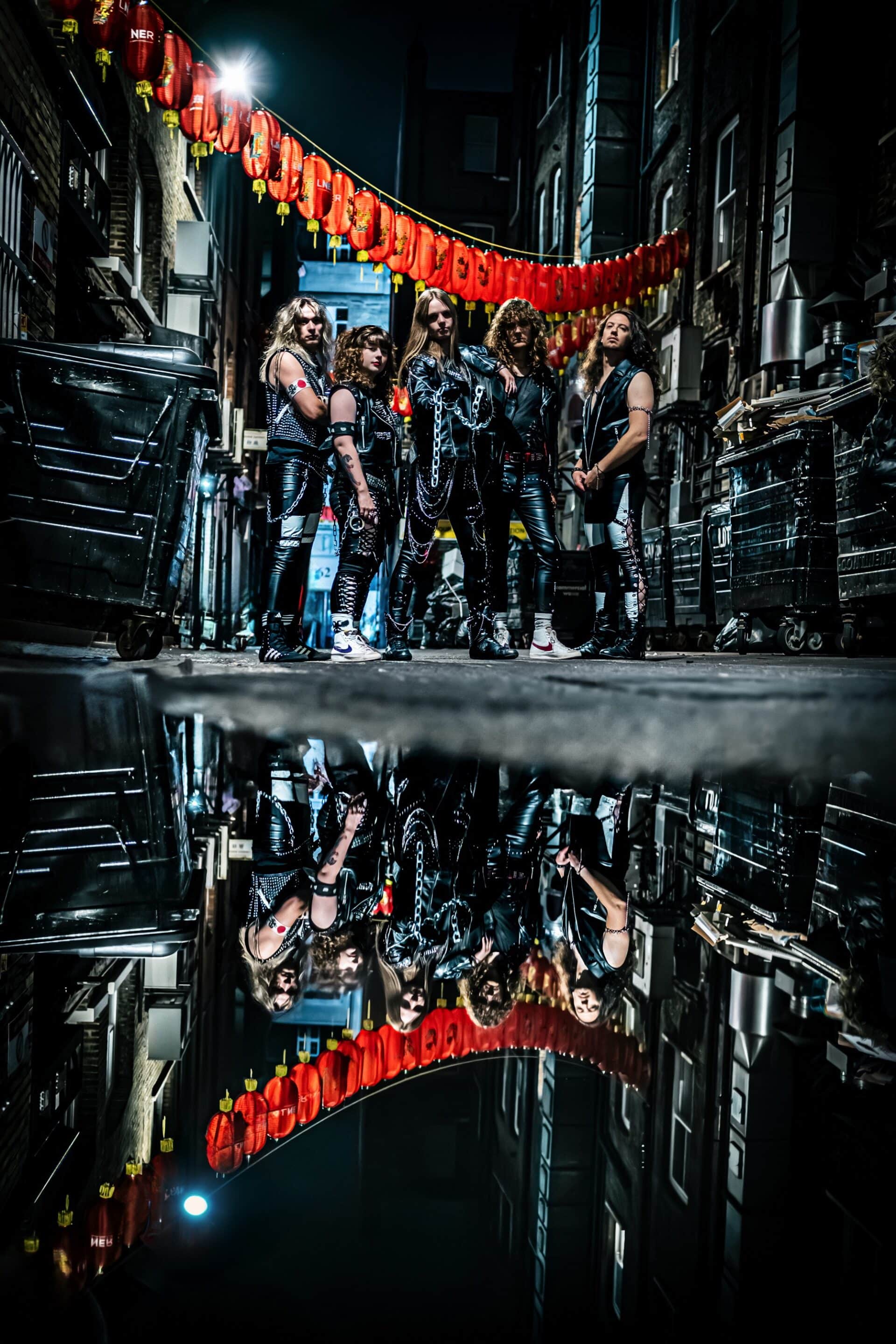
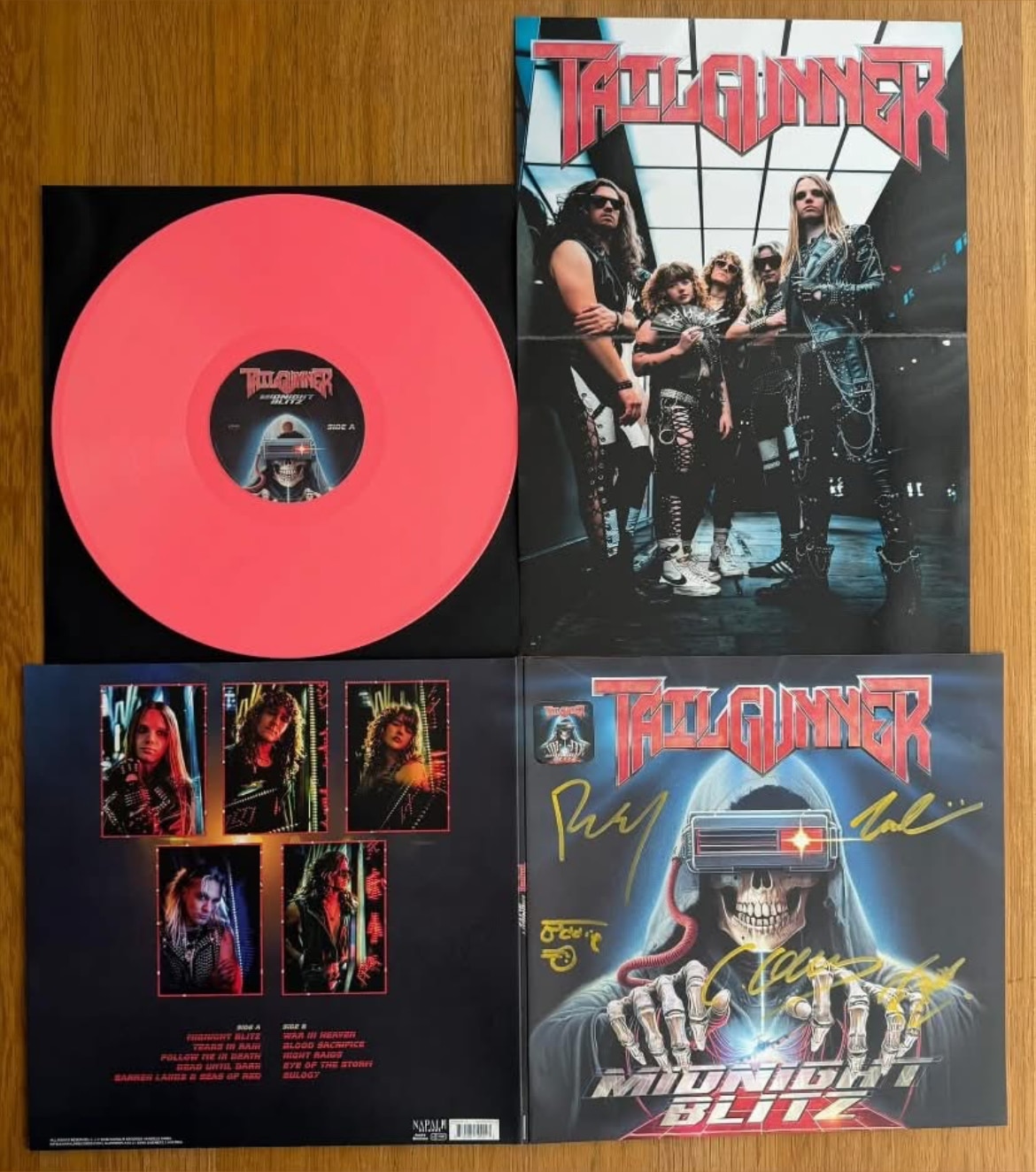
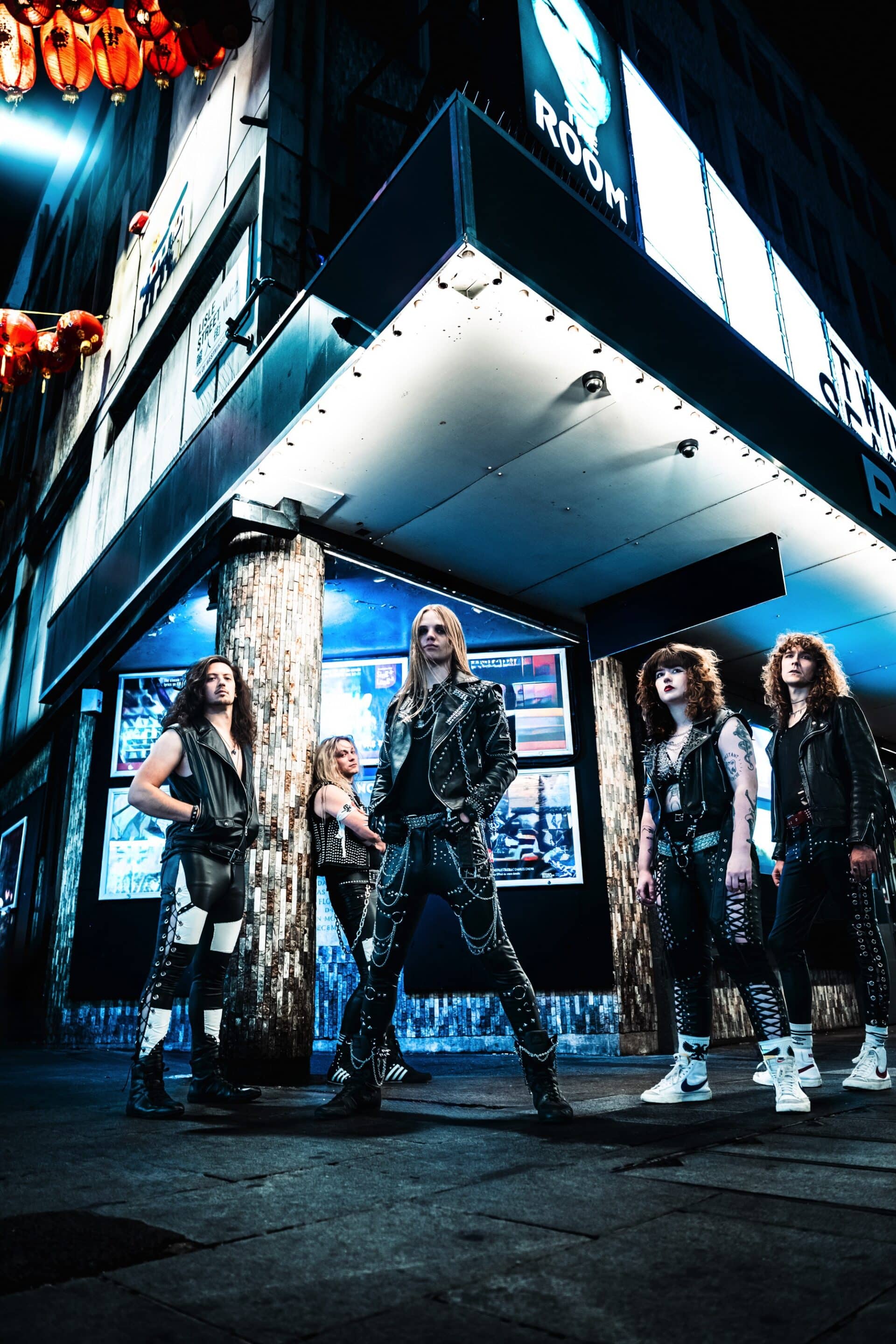
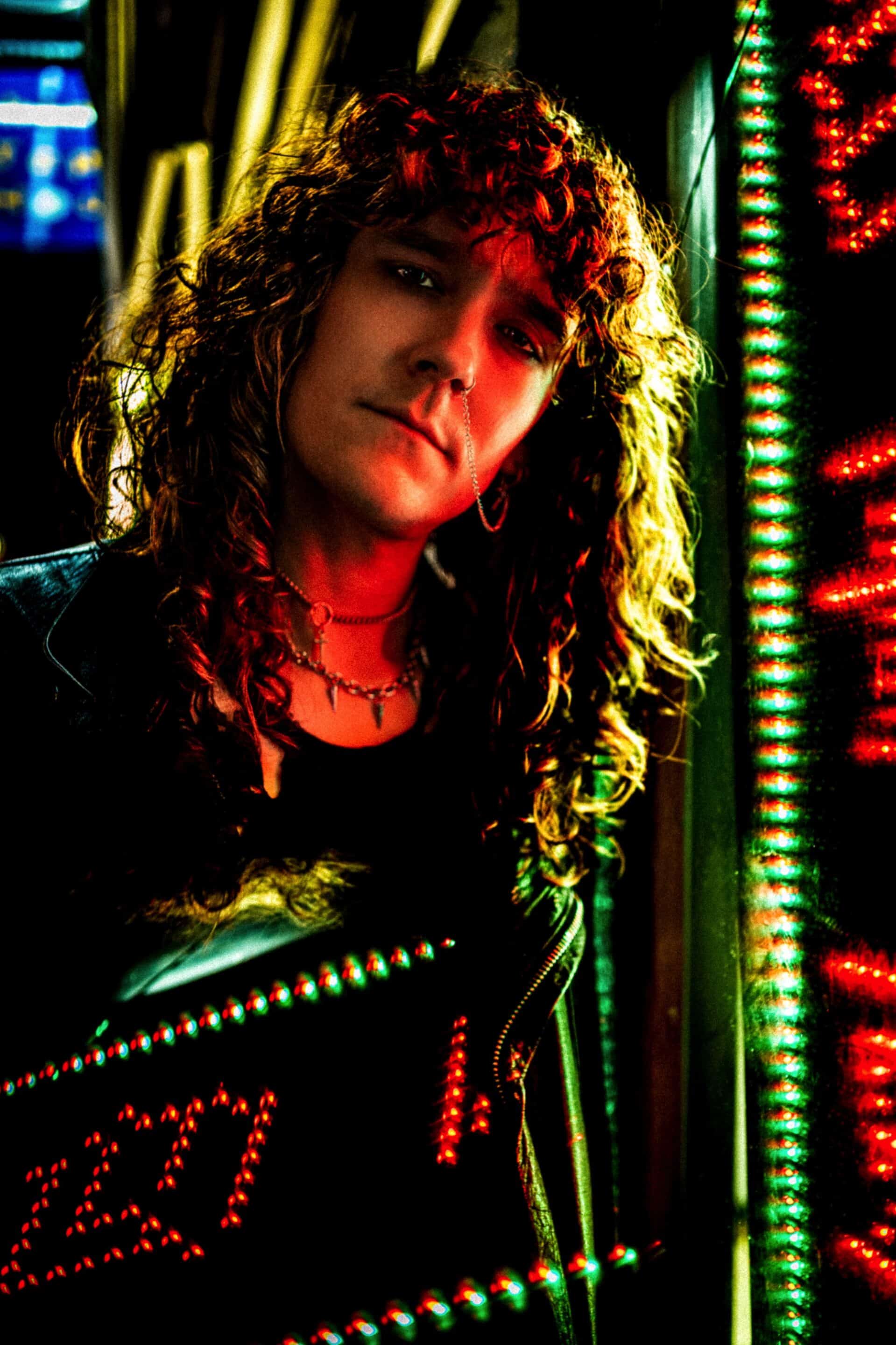
Innen már közös munka volt: kivittem a srácokat az utcára – Sohóba, London Chinatownba, a Banksy Tunnelbe – hogy ők is megkapják azt az élményt, amire én a saját brandemet építettem. A végeredmény az album teljes fotóanyaga lett: a hátsó borító, a booklet és a kampányképek ezekből a sorozatokból épülnek, míg a frontborító külön designmunka. A fotók már ott vannak a nemzetközi rock- és metalsajtóban.
“Nem „csak lefotóztam őket”, hanem vizuális identitást adtam a bandának: Hölgyeim és uraim, így néz ki a modern heavy metal.”
Ez volt az első ilyen komolyabb zenekaros session-öd, vagy régebben is dolgoztál együtt bandákkal?
A vicces az egészben: nem vagyok klasszikus értelemben vett zenei fotós, aki bandákat fotóz”. Én streetfotós vagyok saját világgal és filozófiával, és azokkal dolgozom szívesen, akik képesek magukat brandként vagy művészként ebbe a világba belehelyezni. Nagyon sok techno DJ-vel dolgoztam, mert a cyberpunk hangulat jól működik a techno szcénában. Fotóztam olyan brandeknek, mint a Jägermeister, és rengeteg tetoválóművész jön hozzám.
Sok ügyfelem jön a Szilícium-völgyből is: Google, Discord, Apple, Reddit és más cégek dolgozói jöttek már cyberpunk portréra, mert valamiért ez a látványvilág jól rezonál a digitális kultúrával. Volt például egy komplett csapat a Google-től, akik egy belső prezentációhoz kértek cyberpunk csapatfotókat, és fotóztam az Apple egyik kameradesignerét is. Szóval nem „zenekari fotós” vagyok, inkább egy vizuális rendszer, amihez bizonyos zenék és szcénák köztük a metal is nagyon jól tudnak kapcsolódni.
Hogy tetszik amúgy a Tailgunner zenéje? Gyerekkorodban gondoltad volna, hogy ismert együtteseket fogsz fotózni? Mely rock / metal bandák a kedvenceid?
Nem klasszikus heavy metalos háttérből érkezem, de a srácokkal való közös munka megszerettette velem ezt a vonalat. Tizenévesen inkább punk korszakom volt: az első kazettám a Prosectura Szép az élet volt, aztán jött a Sepultura Roots album, majd a Type O Negative October Rust-ja. Innen csúsztam át a black metal és a goth felé: The Cure, Cradle of Filth, Dimmu Borgir. Aztán bejött az industrial (Hocico, Laibach), utána egy Deftones / Korn / Tool-időszak, majd évekig szinte csak jazzt hallgattam. Közben végig ott volt a psychedelic trance, amit máig imádok, mellette reggae (Alborosie), tribal zenék (Hilight Tribe), magyar vonalon VHK és Korai Öröm. Imádom a hetvenes éveket is – The Doors, Janis Joplin –, mostanában pedig nagyjából 0–24 -ben Monolink és Tool szól nálam.
Metal fesztiválon pont annyira jól tudom érezni magam, mint Ozorán vagy egy reggae fesztiválon és a Burning Man-re is szívesen mennék. Szóval tág a zenei horizontom: mindent hallgatok, ami inspirál, vagy képes megmozgatni bennem valamit. Gyerekkoromban nem gondoltam, hogy ismert zenekarokkal fogok dolgozni de titokban tudtam, hogy így lesz…
A neves Napalm Records-szal is együtt dolgozol, ami az egyik legnagyobb osztrák keményzenei kiadó. Ez miben nyilvánul meg leginkább?
A Napalm Records-szal ez az első projektem, a Tailgunner-en keresztül. De már ez az egy együttműködés is elég komoly csapatot hozott össze: az album producere K.K. Downing, a hangzásért Jacob Hansen Grammy-jelölt producer és mixing engineer felelt, az egyik friss single-ben pedig Adam Wakeman Grammy-díjas billentyűs játszik. Én a vizuális világért feleltem: a borítóért, a kampányképekért, a promó anyagokért vagyis azért, hogyan „néz ki” ez a lemez majd a világ előtt.
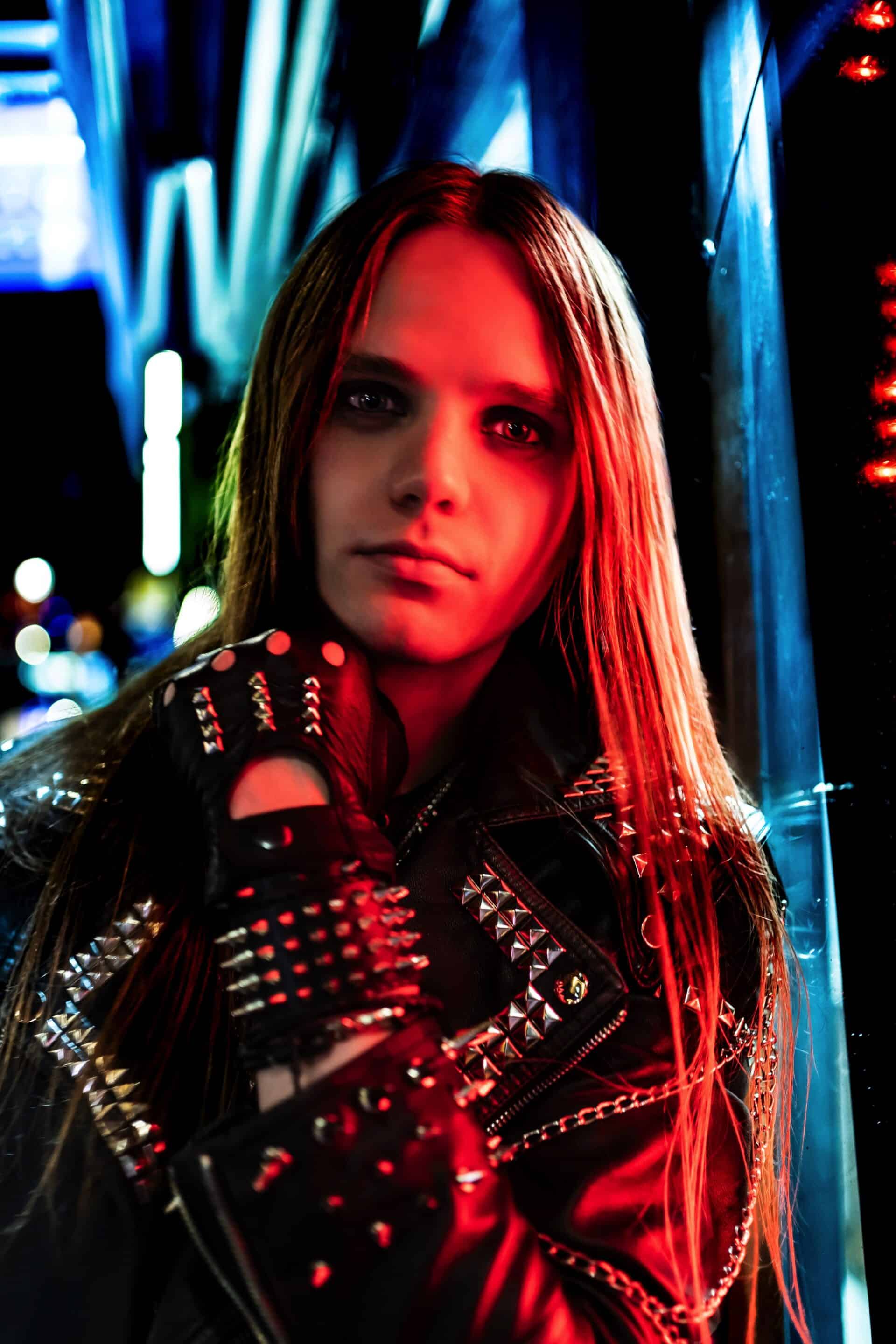
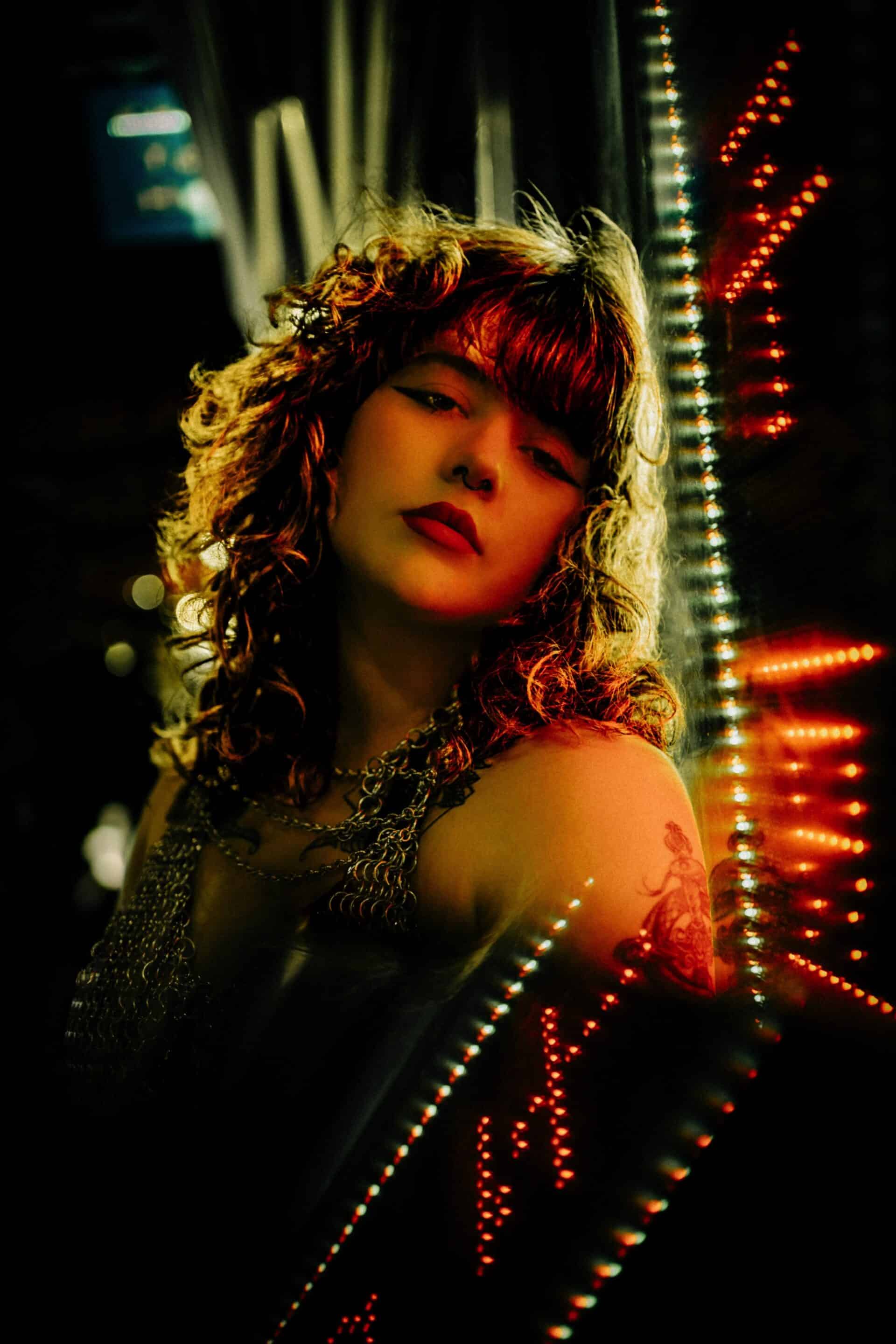
Nemrég K. K. Downinggal, a Judas Priest egykori gitárosával dolgoztál egy Guitar World-projekten. Hogyan jutott el hozzád ez a felkérés, és milyen volt a közös munka?
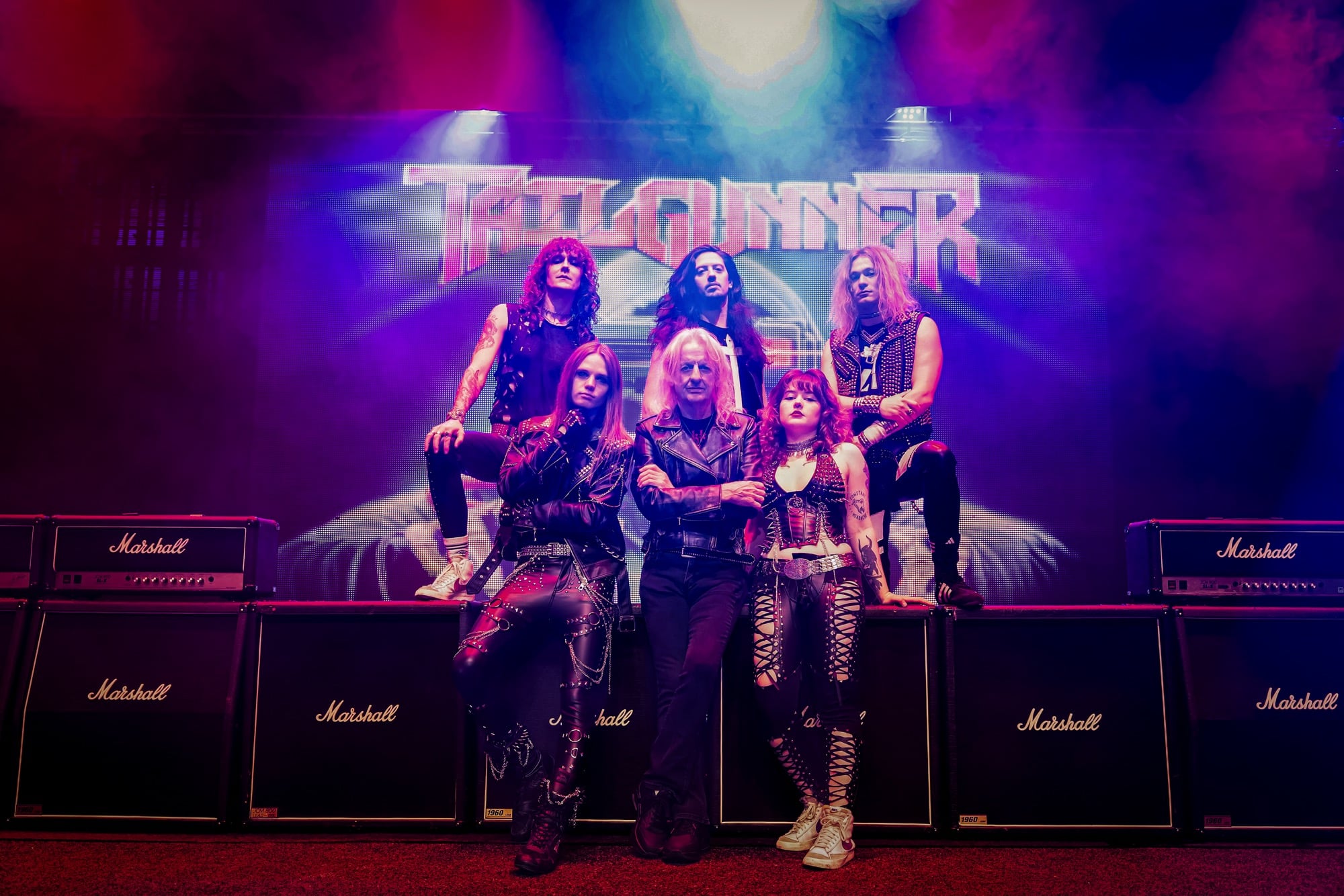
A sztori technikailag elég egyszerű. A Tailgunner új videóklipet forgatott, én pedig vittem az album vizuális világát, ezért megkértek, hogy fotózzam a forgatás BTS-anyagát is. A klipforgatás alatt készült egy sorozat a Guitar World-nek Rheá-ról és Zach-ről, ehhez a fotózáshoz pedig K. K. Downing-nak is csatlakoznia kellett. Tom megkérdezte, lenne-e kedvem ezt a fotóanyagot is megcsinálni – nyilván nem mondtam rá nemet 🙂
A fotózás a saját klubjában, a KK’s Steel Mill-ben volt Wolverhamptonban. Vasárnap, üres helyszín, csak a zenekar, mi, és a fényeket rakosgató stáb. Nyugodt, fókuszált hangulat volt. Mivel valamit hangoltak a technikusok, a Guns N’ Roses Sweet Child O’ Mine-ját kb. százszor hallgattuk meg azon a napon. Úgy mentem be, hogy „ezt az embert már az összes ikonikus rockfotós lefotózta, nekem ehhez valami mást kell hozzátenni”. Hogy ez mennyire sikerült, majd eldönti a közönség, de az első kampányanyag már kint van, a többi kép pedig egyelőre még a drive-on várja a maga pillanatát. Sok mindent lőttünk azon a napon.
Hogy érzed, merre fog vinni most az utad? Milyen projekteken dolgozol jelenleg?
Úgy érzem, most zárul le egy tízéves fejezet, és kezdődik egy új. A Tailgunner × K.K. Downing projekt nem „véletlen szerencse”, hanem annak a bizonyítéka, hogy ez a vizuális nyelv működik a nemzetközi zenei színtéren is. Épp most tervezem, hogy kicsit hazaköltözöm. Húsz éve jöttem el Magyarországról, és megmondom őszintén: honvágyam van. Szeretnék több időt tölteni a családom körül, és Budapesten is, amit imádok.
Szeretném továbbépíteni a Dystopian Romanticism-et mint önálló művészeti irányt. Tervezek önálló kiállításokat, fotókönyvet, és szeretném tovább építeni azt az elméleti hátteret is, ami a stílus mögött van: város, elidegenedés, digitális korszak, spiritualitás.
Hidat szeretnék építeni a művészeti világ és az úgynevezett „valódi” világ között. Az érdekel, hogyan tud találkozni a galériatér és a klubkultúra, a metal és a fine art. Úgy érzem, a következő években egyre több olyan projekt születik majd, ahol egy lemezborító, egy installáció, egy immersive művészeti élmény, egy videóklip és egy kiállítás tulajdonképpen ugyanannak a történetnek a különböző fejezetei lesznek.
Fotók: Valiszka Tünde
Oldalak: Hivatalos honlap /// Instagram /// Facebook
Írta: MZ
******** ENGLISH CONTENT ********
‘Blade Runner in the Real World’ – An interview with Photographer TÜNDE VALISZKA
What do K. K. Downing, the legendary former guitarist of Judas Priest, the new Tailgunner album: Midnight Blitz, released by Napalm Records, and the vibrant neon-dark world on its cover have in common? A Hungarian photographer: Tünde Valiszka, creator of Dystopian Romanticism. Valiszka is an internationally recognised fine art photographer and visual storyteller whose work spans advertising campaigns, brand collaborations, festivals and album covers. Her neon-noir imagery is instantly identifiable, a coherent, cinematic visual language that transforms modern cities into emotional landscapes. In this in-depth conversation, she traces her journey from writing about music as a teenager and wandering the streets with her first camera, through the influence of arthouse cinema, to the creation of Dystopian Romanticism and her collaboration with bands such as Tailgunner.
Hi Tünde! How did you first get into photography when you were younger? What sparked that feeling of “I have to take photos”? Was there someone in your family, or an artist, who really influenced you?
I was about four years old when I first held a camera. My mom was an amateur photographer, and like most four-year-olds, I hovered around her in the darkroom, “helping” her develop negatives. For years, photography was just something in the background. Then, at 26, living in London and studying journalism and media, it pulled me back in. I wanted to be a music journalist, so I reviewed concerts for a Hungarian magazine and started taking my camera with me. It didn’t take long to realise my images were saying more than my words.
Not long after that, I began travelling alone. I don’t enjoy waiting for other people to match my energy, so I just went. Havana to Kathmandu. Bangkok to Australia. Across Europe and the Middle East, from Saudi Arabia to Kuwait. Always solo, always shooting. That’s where it truly began: people, cities, light, no staging. Street photography is still my first love, and it’s also why I find travelling with others hard; most people struggle to stay present.
You represent a very unique style within photography, known as Dystopian Romanticism. What exactly does that mean?
Dystopian Romanticism is a constantly evolving body of work I’ve been building for about ten years. Over that time, I moved from daytime street photography into the night. I fell in love with what happens when light hits wet surfaces, how reflections multiply, and how puddles create these perfect, accidental symmetries, especially under neon.
The turning point came in 2018 in Kathmandu, which I visited in May. It was raining there from day to night, so I had no option but shoot the streets in the rain. Kathmandu is full of old-school neon signs across the city. That was the first time people started saying, “This feels very Blade Runner.”
From there, I started shooting more consciously: rainy night cityscapes, Chinatown and Soho in London as my playground, night streets across Asia, solitary figures caught in neon light. People kept asking, “OK, but what exactly is it that you’re doing?” At first, all I could offer was a messy list of references: ’80s cyberpunk, Blade Runner, retro-futuristic neon-noir night street photography, which isn’t exactly an easy definition to digest. Eventually, I realised the aesthetic sits in a triangle: the cinematic vibes of Blade Runner, Edward Hopper’s lonely figures, and Wong Kar-wai’s lyrical melancholy. Most often, I photograph chefs alone on cigarette breaks, people waiting, thinking, walking by themselves, while the city rushes around them.
If I had to define it:
„Dystopian romanticism is a neon-noir visual language that seeks the melancholic beauty of the modern metropolis amid surveillance capitalism and everyday alienation. The images often feature ordinary people in futuristic, cyberpunk-style lighting, as if we were already living in a dystopia. The romanticism lies in the fact that, despite these cracks, fragile human existence still shines through.”
This is not aesthetics, but a statement: dystopia is not some distant vision of the future, but our present, and it is in this present that I seek in the cracks of beauty.
From a technical perspective, what were the main guiding principles when you were shaping this distinctive visual world? And who inspired you most along the way? I’m thinking particularly of film directors.
It didn’t happen like I sat down one evening with a cup of tea and said, “Right, I’m going out to shoot as if Ridley Scott were directing me.” It was a much more organic process. For a long time, I simply photographed the streets, and gradually I became more and more drawn to night-time light. Over time, I realised that urban neon, rain, puddles, glass surfaces, and smoke or fog create that cinematic, slightly surreal atmosphere that feels closest to me. So I naturally leaned in that direction.
Some of my foundational influences were films like The Crow with Brandon Lee, Jodorowsky’s The Holy Mountain, Blade Runner, and Kill Bill, as well as music videos, especially Tool’s. Later, I became more consciously aware of Wong Kar-wai’s world and Edward Hopper’s paintings. Out of all of that, I pieced together the visual language that is now known as Dystopian Romanticism.
Your work is built on a striking duality: alongside strong character-driven scenes, there’s a powerful cyberpunk atmosphere running through your images, vivid colours at night, vibrating neon, reflections, and smoke. Who are your favourite filmmakers or creators in this genre? And how much do you connect with the Japanese aesthetic?
It’s interesting that many people today automatically associate cyberpunk with Japan, when in reality contemporary Japanese cityscapes feel more like a “new age neon-noir” pop-cultural mash-up. If we’re talking about classic, cinematic cyberpunk, Blade Runner remains the origin point. It created the visual language that everything else still references, and it doesn’t even take place in Tokyo, but in a fictional Western metropolis. My favourites from this universe are both versions of Blade Runner, Mad Max, and Wong Kar-wai’s Fallen Angels and In the Mood for Love, along with countless music videos, especially those by Tool and other darker, conceptual bands.
For me, Japan feels almost utopian: everything is ordered, clean, disciplined, even the lights. Cities like Kathmandu or Havana, on the other hand, feel much closer to that “Blade Runner” dystopia. I’d love to photograph Tokyo, of course, but it’s not at the top of my list right now. At the moment, I’m more drawn to China. I can’t wait to visit what I consider the real cyberpunk city: Chongqing.
When did music begin to connect more organically with your Dystopian Romanticism images?
Music has been deeply connected to my work for quite a long time. I’ve worked with DJs, musicians and performers across a wide spectrum. I’ve photographed Broadway performers from New York, rock musicians, including the bass player of New Medicine, and I once accidentally captured Peter Andre at a concert in Dubai. I’ve documented festivals such as Dark Malta, where acts like Combichrist and Aesthetic Perfection performed, and I’ve also photographed Hocico. Industrial music, in particular, fits naturally into my visual world. It’s almost embedded in my visual DNA.
At the same time, I’ve photographed reggae artists like Alborosie and worked at psytrance festivals. What became clear is that this neon-noir vision connects surprisingly well across multiple genres. The biggest leap, however, came in 2025 with Tailgunner, when we built the complete visual world for an entire album campaign together.
You recently created a major photo series for their new album and were actively involved in shaping its visual identity. How did this collaboration begin?
The roots of this story go back about seven years, when I started shooting cyberpunk portraits at night in London. During that experimental phase, I invited a burlesque artist, Polly Anther, to shoot in latex under neon lights on the street, part Blade Runner, part cinematic fantasy. That evening produced material that eventually evolved into Cyberpunk Photoshoot London, my own little business. Polly’s career also took off; in 2025, she performed during Steel Panther’s set at Download Festival. She had known Tailgunner’s bassist, Tom, for years. He discovered my photos of Polly on Instagram and reached out via email.
In February 2026, Tailgunner released their new album after signing with Napalm Records. The album was produced by K. K. Downing, founding guitarist of Judas Priest. One of the key tracks, “Tears in Rain,” directly references the iconic Blade Runner monologue: “All those moments will be lost in time, like tears in rain.” (Incidentally, that phrase also titles several of my photographs.) They are reviving 1980s heavy metal in a contemporary form. I reinterpret 1980s cyberpunk through a modern street photographer’s lens. It was clear that we were a match made in heaven.
From that point on, it became a shared creative process. I took the band into the streets, Soho, London Chinatown, the Banksy Tunnel, so they could step into the world I had built my brand around. The result became the album’s full photographic material: the back cover, booklet and campaign visuals all came from these series, while the front cover was a separate design work. The images are now circulating in the international rock and metal press.
“I didn’t simply photograph the band. I gave them a visual identity: Ladies and gentlemen, this is what modern heavy metal looks like 😉”
Was this your first major band session, or had you worked with bands before?
The funny thing is, I’m not a traditional music photographer who simply documents bands. I’m a street photographer with my own philosophy and visual world. I prefer working with artists or brands who can position themselves within that world. I’ve worked with many techno DJs because the cyberpunk atmosphere resonates strongly within that scene, too. I’ve created campaigns for brands such as Jägermeister, and many tattoo artists come to me.
A surprising number of clients also come from Silicon Valley. Employees from Google, Discord, Apple and Reddit have commissioned cyberpunk portraits because this visual universe resonates with digital culture. For example, an entire Google team once asked for cyberpunk team portraits for an internal presentation, and I’ve also photographed one of Apple’s camera designers.
So I’m not a “band photographer.” I’m more like a visual system that certain genres and scenes, including metal, can plug into seamlessly.
How do you personally connect to Tailgunner’s music? Did you ever imagine as a child that you’d photograph well-known bands? Who are your favourite rock or metal artists?
I don’t come from a classic heavy metal background, but working with the band made me genuinely fall in love with the genre. I started as a punk as a teenager. My first cassette was Szép az élet by Prosectura. Then came Sepultura’s Roots, followed by Type O Negative’s October Rust. From there, I drifted into black metal and goth: The Cure, Cradle of Filth, Dimmu Borgir. Later came industrial, Hocico, Laibach, then a Deftones, Korn and Tool era, followed by years of almost exclusively listening to jazz. Psychedelic trance has always been part of my life, as has reggae (Alborosie), tribal music (Hilight Tribe), and Hungarian bands like VHK and Korai Öröm. I love the seventies, The Doors, Janis Joplin, and lately I’ve had Monolink and Tool on repeat.
I feel just as at home at a metal festival as I do at Ozora or a reggae festival, and I’d love to go to Burning Man one day. My musical horizon is wide: I listen to anything that moves or inspires me. As a child, I didn’t consciously think I would photograph well-known bands. But somewhere, quietly, I always knew I would.
You also work with the renowned Napalm Records, one of Austria’s largest heavy metal record labels. How does this manifest itself most?
This is my first project with Napalm Records through Tailgunner. But even this collaboration brought together a serious team: the album was produced by K. K. Downing, the sound handled by Grammy-nominated producer and mixing engineer Jacob Hansen, and Grammy-winning keyboardist Adam Wakeman plays on one of the singles. I was responsible for the visual world, the cover materials, campaign imagery and promotional visuals, essentially how this album presents itself to the world.
You recently worked with K. K. Downing, former guitarist of Judas Priest, on a Guitar World project. How did this opportunity come about, and what was it like working together?
The story is quite simple. Tailgunner were filming a music video, and since I had created the album’s visuals, they asked me to shoot the behind-the-scenes material as well. During the shoot, a photo series was being created for Guitar World featuring Rhea and Zach, and K. K. Downing also needed to be photographed. Tom asked if I would take on that session, too. I didn’t hesitate. The shoot took place at his own venue, KK’s Steel Mill in Wolverhampton. It was a Sunday. The club was empty. Just the band, me, and technicians adjusting lights. Calm and focused. At one point, while they were fine-tuning equipment, we listened to Guns N’ Roses’ “Sweet Child O’ Mine” about a hundred times, which set the mood, haha… I walked in thinking: „Every iconic rock photographer has already photographed this man. I have to bring something different.”
Whether I succeeded is for the audience to decide. The first campaign images are already out, and the rest are waiting patiently on my drive. We captured a lot that day.
Where do you feel your journey will take you now? What projects are you currently working on?
It feels like a ten-year chapter is closing and a new one is beginning. The Tailgunner × K. K. Downing project wasn’t luck. It’s proof that this visual language works internationally within the music world. I’m planning to spend more time at home. I left Hungary twenty years ago, and honestly, I’m homesick. I want to be closer to my family and to Budapest, a city I love.
At the same time, I want to continue developing Dystopian Romanticism as an independent artistic movement. I’m planning solo exhibitions, a photobook, and further building the theoretical framework behind it: the city, alienation, the digital age, spirituality. I want to build a bridge between the art world and the so-called “real” world. I’m interested in how gallery spaces and club culture, metal and fine art can intersect.
I believe the coming years will bring more projects, where an album cover, an installation, an immersive art experience, a music video and an exhibition are simply different chapters of the same story.
Photos: Tünde Valiszka
Sites: Official /// Instagram /// Facebook
Written by: MZ