******** FOR ENGLISH CONTENT PLEASE SCROLL DOWN ********
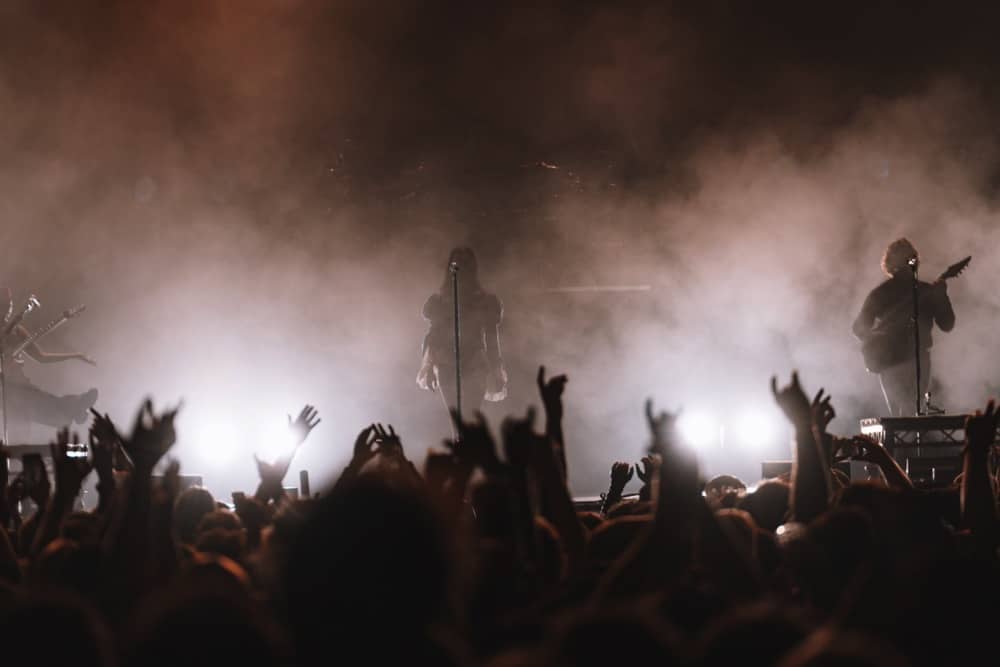
Tavaly télen került a kezeim közé a Non Est Deus utolsó előtti albuma, az Impious, amelyiknek a Flagellation című számát annyiszor végighallgattam, hogy szerintem az már a Youtube-nak is feltűnt. Ezt követte a legfrissebb Legacy rongyosra hallgatása, majd következett a felismerés: ezt ugyanaz az ember csinálja, aki a Kanonenfieber-t. Mindez pár hónappal a pesti Kanonenfieber fellépése után történt, így vettem egy mély levegőt, átrágtam magam a Leipa anyagain is, és a 2024-es budapesti koncert bejelentésekor interjút kértem Noise-tól, a zenekarok mögött álló művésztől. Kérésére írásban beszélgettünk.
A szülővárosod neve, Bamberg, az ott főzött Rauchbier miatt ismerősen cseng. Szereted ezt a sört?
Noise: A Schlänkerla – és különösen a Spezial – benne van a top 10-ben (és ez egy elég hosszú lista, hidd el).
Abban a szerencsés helyzetben leszünk, hogy az év végén újra láthatjuk a Kanonenfieber-t Budapesten, valamint tavaly novemberben is láttunk titeket a Batjushka-val. Az eseményről itt írtunk. Volt akkor lehetőséged körülnézni Budapesten?
Noise: Hogy őszinte legyek, egy másodperc sem. Az emberek mindig azt gondolják, hogy egy világkörüli turné azt jelenti, hogy annyi mindent láthatunk. Biztosíthatlak, hogy semmi mást nem látsz, csak autópályákat, benzinkutakat és a színpadokat. Ezzel együtt, tavaly voltam Budapesten a haverjaimmal. Valóban gyönyörű város! Elég meredek út volt, úgyhogy nem emlékszem túl sok mindenre.
A turnézás igazából egy buli a haverokal, vagy ez egy véget nem érő meló? Nem mellékesen – szeretsz egyáltalán turnézni?
Noise: Egyszerre gyűlölöm és imádom a turnézást. Egyrészt imádok a zenekar tagjaival és a csapattal lenni. Mivel én választottam a tagokat az élő fellépésekhez, és mi, a zenekar találtuk meg a többi résztvevőt, így az egész turnézás olyan érzés, mint egy legénybúcsú. Pia, mindenféle alkohol, ami eszedbe jut, sok hülyéskedés – egyszerűen jó móka. Másrészt egész nap cígölni a felszerelést, huszonötödjére ugyanazt az összeizzadt ruhát viselni a színpadon, minden este összerakni a merch-öt, mindezt nulla alvással… az otthonról való távolmaradással együtt mindez kimerítő tud lenni. De végülis minden este színpadon állni tulajdonképpen jutalom az elvégzett munkáért, nem igaz?
Egy főzenekart működtetsz, az elég jól ismert Kanonenfieber-t, és két mellékbandád is van (a Non Est Deus és Leipa) – de eredetileg a Non Est Deus volt az elsőszülött. Mi volt az oka annak, hogy egy második zenekart (Kanonenfieber) alapíts egy lényegesen más, alapvetően világháborús tematikával, hogy később a Leipa-val ismét visszatérj a black metal-hoz?
Noise: A Non Est Deus volt a harmadik egyszemélyes zenekarom. A The Last Supper előtt elég sok minden történt. A Kanonenfieber Menschenmühle albuma egy csomó egyéb zene után jött, és hirtelen nagyot durrant. Az első világháború mindig is egy olyan téma volt, ami elborzasztott és nagyon érdekelt. Ez a sok erőszak és szenvedés arra késztetett, hogy elgondolkodjam, hogy hogyan lehetne zeneileg is megfogni ezt a témát. Amikor elkezdtem írni a Menschenmühle-t, már akkoriban is nagyszerű albumok jelentek meg, amelyek ezt a háborús tematikát dolgozták fel, és ezek közül jónéhány valóban inspirált és segített a Kanonenfieber hangzásának kialakításában. Összefoglalva, a Kanonenfieber-nek a fő mondanivalója miatt van ez a modern blackened death metal hangzása, és ez nem illene egy olyan black metal-szerű zenekarhoz, mint a Non Est Deus.
Ami a háborút és a hazád nevét – Németország – illeti, az első asszociációm könnyen lehet, hogy inkább a második világháború volna, mintsem az első. Miért hatott rád annyira mélyen az első világháború, hogy egy olyan zenekart alapítottál, aminek ez a fő tematikája?
Noise: Nem mondhatnám, hogy a második világháború kevésbé érint engem, mint az első. A nagyapám a második világháborúban vesztette életét, és ránk hagyott egy kis naplót, tele katonaként szerzett tapasztalatokkal. Ez a napló keltette fel az érdeklődésemet a hadtörténelem iránt. Mindig is fontosnak tartottam, hogy az első világháború a modernizált hadviselés kezdetét jelentette. Ez volt az első alkalom, amikor szisztematikus erőfeszítéseket tettek olyan technológiák kifejlesztésére, amelyeknek egyetlen célja más emberek megölése volt. Ezeknek a technológiáknak (tüzérség, aknavetők, géppuskák) köszönhetően jött létre a lövészárok-háború. És ez a legkegyetlenebb módja a hadviselésnek, amit el lehet képzelni. Még mindig nem tudom elhinni, hogy ezek az emberek min mentek keresztül a sárral, patkányokkal és hullákkal teli lövészárkokban… a szenvedést, a dühöt és a szomorúságot. Amikor elolvastam egy csomó levelet az első világháborús katonáktól – ezeket egy barátomtól kaptam, aki hobbitörténész – eléggé szíven ütöttek. Én és ez a történész barátom arra a következtetésre jutottunk, hogy kellene legyen egy történelmileg korrekt, a háborúval kapcsolatos témákat precízen feldolgozó zenekar – és lett.
Van egy ukrán zenekar, az 1914, amely ugyanezt a tematikát célozza meg. Az 1914 inspirált titeket, vagy csak véletlenül jöttek elő ugyanazok az ötletek?
Noise: Az első világháborús témájú projekt ötlete valójában tizenkét évvel ezelőtt merült fel. Sickfried-del (a Kanonenfieber ritmusgitárosa) elkezdtünk egy death metal projektet, amelynek témája az első világháború volt. Később Gunnar-t (a Kanonenfieber basszusgitárosa) is megkérdeztük, hogy akar-e csatlakozni. Aztán elköltöztem, és a projekt leállt – mindez évekkel az 1914 működése előtt történt. Aztán van egy további kapcsolódási pont is a Kanonenfieber és az 1914 között: 2021-ben hallgattam meg először az 1914-es Blind leading the blind című albumát, és valahogy emlékeztetett arra az első világháborús témájú formációmra… szóval számos oka van a Kanonenfieber létezésének, haha.
Az első album után a Kanonenfieber gyorsan jelentős népszerűségre tett szert a műfajon belül. Mit gondolsz, mi volt az oka ennek a sikernek?
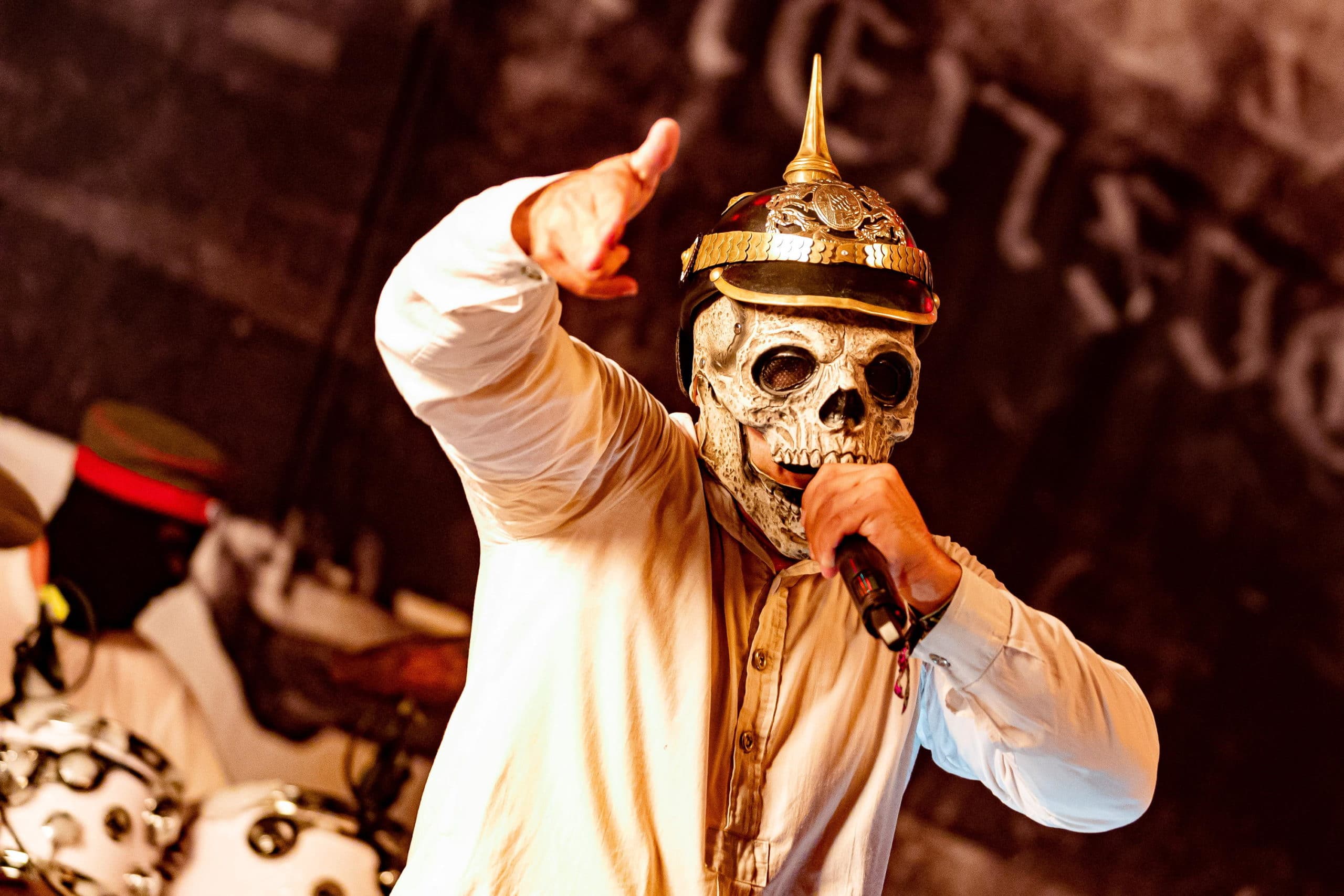
Noise: Hogy őszinte legyek, fogalmam sincs. Érdekes a téma, dallamos, eléggé fülbemászó death metal-lal és remek design-nal párosítva. A kezdeti, váratlanul nagyot durranó Menschenmühle után csak úsztam az árral: próbáltam a zenekart a választott téma köré felépíteni. Ez egy nagyon különleges, erősen színpadias élő előadást, több kiemelkedő, Daniel Bechthold által festett artworköt, és több olyan zenét jelent, ami az albumhoz hasonlított.
Idén megjelent egy kislemezetek, és a nyári fesztiválszezon után turnézni is fogtok. Számíthatunk később újabb anyagra?
Noise: Igen, egy teljes albumra! Szeptember 20-án fog kijönni a Die Urkatastrophe a Century Media gondozásában, a második kislemez, a Panzerhenker pedig nemrég jelent meg.
A dalszövegek mögött álló történetek konkrét történelmi kutatáson alapulnak? Elég részletesnek tűnnek, például a Die Schlacht bei Tannenberg esetében.
Noise: Igen, a Kanonenfieber álcája mögött sok történelmi munka folyik. Megszámlálhatatlan mennyiségű könyv, film és dokumentumfilm, múzeumlátogatás és régi levelek, fizikai dokumentumok szerepelnek mint információforrások a dalszövegek írásának folyamatában. És adott a jó barátom, Dani, a történész, aki kiemelkedő tudással rendelkezik a témában – együtt találjuk ki a fő vonalakat, és ő ad nekem anyagokat a kutatáshoz, majd mindezekkel felvértezve próbálok történelmileg minél pontosabb dalszövegeket írni.
A két black metal zenekarod, a Non Est Deus és a Leipa bizonyos szempontból hasonlít egymásra (a Kanonenfieber-hez képest) – mi az oka annak, hogy két külön black metal zenekart működtetsz? Az üzeneteik annyira különbözőek, hogy szükséges a black metal ötleteket két különböző zenekarban megvalósítanod? Másrészt említetted, hogy a Sisyphus és a Reue – a Leipa albumai – jelentősen különböznek egymástól: akkor miért ugyanazon zenekar anyagaiként jöttek ki?
Noise: Ahogy mondtad – a két zenekar nagyon különböző. A Non Est Deus esetében vallási témákról próbálok írni… vagy talán vallásellenes témákról… vagy anti-fanatikus témákról? Mindegy is. Nekem azzal van bajom, amit az emberek a vallásból csinálnak, ezért a Non Est Deus-szal ezek ellen szólalok fel. A Leipa pedig a dolgok katartikus oldala: a belső démonokról, a dühről, a kétségbeesésről és a szomorúságról szól. És még ha a Sisyphus zeneileg nem is azonos a Reue-val, mindkettő ezzel a bizonyos katartikus háttérrel íródott. A téma dönti el, hogy melyik album melyik zenekarhoz tartozik, nem csak a zene.
A dalszövegek mind németül (Leipa és Kanonenfieber), mind angolul (Non Est Deus) születnek – van ennek valami konkrét oka?
Noise: Német anyanyelvű vagyok, így a német szókincset és nyelvtant sokkal jobban ismerem, mint az angolt. Ez az oka annak, hogy Leipa szövegeit németül írtam. Azt akartam, hogy pontosan ki tudjam fejezni, ami eszembe jut – anélkül, hogy a fordítás helyességén gondolkodnék. A Kanonenfieber esetében meg adott az a tény, hogy a dokumentumokat és a leveleket németül, németek írták, és azt hiszem, hogy ez mindent megmagyaráz. A Non Est Deus angol szövegének egyik oka pedig az volt, hogy a Biblia angol fordítása sokkal fülbemászóbb; a német nyelvű Biblia nem olvasható olyan jól. A másik ok meg, hogy angol szöveget akartam adni a zenekarnak. Ennyi.
A bűn és a fájdalom nagyon gyakran témája a Non Est Deus és a Leipa szövegeinek – miért olyan fontosak ezek számodra?
Noise: A bűn és a fájdalom egyáltalán nem fontos számomra, hanem inkább valami olyasmi, amivel nekem és mindenki másnak ezen a bolygón szembe kell néznie. Számomra a zeneírás egy módja annak, hogy megszabaduljak ezektől a terhektől – akkor miért ne írhatnék magukról a problémákról?
A black metal mindig egyfajta valláskritika is – a Non Est Deus esetében mik a legfőbb érvek az egyház és a vallás ellen (az általad már korábban említett, hadd idézzem, „pedofília, gyermekek szexuális zaklatása és papok általi megerőszakolása” érveken túl)?
Noise: Szerény véleményem szerint nem maga a vallás a probléma, hanem azok, akik ezt mások irányítására használják. A vallás az idők során olyan eszközzé vált, amelyet arra használnak, hogy az embereket nevetséges normák és értékek mentális börtönébe zárják. Ez a gyökere sok olyan dolognak, ami nem működik ebben a világban. A magam részéről nem vagyok túl spirituális – legfeljebb egy kicsit. De a legtöbb jelenlegi vallással ellentétben az én spiritualitásom nem árt sem más embereknek, sem magamnak.
Említetted, hogy a Non Est Deus (ahogy a neve is jelzi) inkább vallásellenes, mintsem keresztényellenes – viszont az Utolsó vacsora album borítója egy alapvető keresztény szimbólum megszentségtelenítéséről szól. Számíthatunk-e hasonló témákra más vallások ellenében, vagy pedig számodra a kereszténység – annak európai dominanciája okán – áll a középpontban?
Noise: Katolikus városban születtem és nőttem fel, katolikus iskolába jártam, és katolikus templomba jártam. Nem mernék olyan dolgokról beszélni, amihez a magánéletemben semmi közöm. Nem tudom, milyen a Korán, a Tóra vagy a Tripitaka szabályai szerint élni, de azt pontosan tudom, mit jelent kereszténynek lenni.
Van rá esély, hogy a Non Est Deus-t vagy a Leipa-t láthassuk Magyarországon fellépni? Terveztek-e valamilyen európai turnét?
Noise: Őszintén szólva, fogalmam sincs, hová tart a Non Est Deus vagy a Leipa. A Non Est Deus-nak van pár lekötött fellépése néhány nagyobb németországi fesztiválra, szóval lesz pár koncertünk 2025-ben. De hogy lesznek-e koncertek Németországon kívül, azt még nem tudom. A fő hangsúly egyelőre a Kanonenfieber-en van. A Leipa a tervek szerint nem lesz élő zenekar, inkább szeretném a stúdió falain belül tartani, mivel olyan téma körül alakult ki, amit nem szeretnék mások előtt előadni…
Mi inspirál téged a zeneírás során?
Noise: Azt mondanám, hogy a mindennapi élet és minden egyéb, ami vele jár. Mindig van olyan zene, ami az aktuális élethelyzetemre rezonál. Valójában filmek, könyvek és nagy művészek zenéje inspirál, és amikor mindez találkozik az érzelmekkel és benyomásokkal, akkor születik meg a zene. Legalábbis valami ilyesmit mondott Rick Ruben, ha jól tévedek.
Minden zenéd metal, ebből kettő klasszikus black metal, melyek mégis különböznek egymástól. Hogyan döntöd el, hogy melyik zenei ötlet melyik zenekarhoz vagy projekthez legyen felhasználva?
Noise: Mint említettem, a zene mindig egy adott témát jár körbe. Ez nem olyan, hogy a gitáron szórakozom, hogy „na jó, akkor ez legyen egy Non Est Deus riff”. Ha elkezdek egy albumot, már tudom, hogy melyik projekthez fog tartozni. Elkezdek írni, és addig nem hagyom abba, amíg nem futok bele valami áthághatatlan akadályba – ez lehet három, de akár hét dal után is. Ha az album hangszerelésével is elkészülök addigra, akkor abbahagyom, és megírom a dalszövegeket. Ha nem, akkor később visszatérek, amint kedvem támad.
Mindent „élőben” veszel fel, vagy VST-ket / DAW-ot használsz a lemezek összeállításához?
Noise: Egyszerre komponálok és csinálom a felvételt, tehát minden egy DAW-ban kezdődik és végződik.
A lemezeken valódi dobosok munkáját halljuk – esetleg a Te dobolásodat –, vagy VST-ket?
Noise: Mindkettőt. Elfogadható dobos vagyok, de nem vagyok jó. Néhány projekthez elektromos dobot használok, és a MIDI-fájlt dolgozom fel VST-kkel. Más projekteknél az élő dobos, Hans végzi a munka oroszlánrészét – ő egy zseniális és szuper precíz dobos. Együtt állítjuk be a mikrofonokat, így én irányítom a dobfelvételek hangzását. Miután ez megtörtént, magára hagyom őt, és ő veszi fel a dobsávokat.
Ki végzi a hangmérnöki munkát? Te?
Noise: A Non Est Deus és a Leipa esetében igen. A legutóbbi Kanonenfieber EP-n és a következő albumon Kristian Kohle-vel dolgoztam együtt. Ő egy zseniális hangmérnök, sok szenzációs produkció került ki a keze alól. Szerettem volna a Kanonenfieber hangzását feljavítani – a keveréssel és a mastereléssel többé-kevésbé elboldogulok, de messze nem vagyok profi. És ha egy igazi zseni keveri a Kanonenfieber következő kiadványait, akkor én is sokkal jobban fogok aludni, haha!
Egy interjúban említetted a Menschenmühle album négyszeri átírását. Hogyan képzeljük ezt el – egy már meglévő anyagot javítottál és csiszolgattál, vagy a semmiből írtad újra és újra?
Noise: Kidobtam néhány dalt, csiszolgattam a meglévőket, meg persze írtam újakat is. Elég sok időbe telt, mire elkészültem a Menschenmühle számára megfelelő dalokkal. Azt akartam, hogy minden tökéletesen knappoljon – de ez nagyjából minden albumnál így van. Árulkodó fájlnevek, mint például „mixversion13.2.4.butwithlessbass.wav” találhatók a Macbook-omon – a dolgok néha sok időbe telnek.
Hét album kiadása hét év alatt rendkívüli kreativitást jelent – honnan jönnek ezek a zenei ötletek?
Noise: Őszintén szólva sokkal több, mint hét. Vannak más projektek, más nevekkel… Én csak szeretek zenét írni. Ez a hobbim, és igyekszem ezt csinálni amennyit csak tudom. Nem látok magamban semmilyen extra kreativitást, és nem szeretnék álszerényen sem lenni – csak azt csinálom, amit a legjobban szeretek. Mások madáretetőket építenek vagy bélyeget gyűjtenek. Én zenélek.
Milyen módon komponálsz? Egyenként írod meg a dalokat nulláról, vagy szisztematikusan reszelgeted őket?
Noise: Az albumokat úgy kezelem, mint egyetlen dalt. Az albumnak kell, hogy legyenek csúcspontjai, mélypontjai, szünetei – de mindig egy nagy egész kell, hogy maradjon. Ezért minden dalhoz először megírom a gitárt, a dobokat és a basszusgitárt. Ezek mind egyetlen projektben vannak a DAW-ben. Aztán előkeverem az albumot, és letöltöm a telefonomra, hogy nyugodtan megírhassam a dalszövegeket. Aztán az összes dalszöveget egy menetben felveszem, és befejezem az album keverését.
Te vagy az egyetlen, aki a zeneírásért és a dalszövegekért felelős, vagy Dani barátod is bedolgozik?
Noise: Dani segít ötleteket találni a Kanonenfieber-hez, és ellát minden olyan történelmi háttérismerettel, amelyre szükségem van a szövegek megírásához – de azok megírása az én dolgom. Szeretek egyedül dolgozni, de más zenészekkel is szívesen írok zenét – viszont a Noisebringer alatt futó projektek zenéit egyedül én írom.
A Kanonenfieber és a Non Est Deus élő zenészei ugyanaz a négy ember. Ők is őrzik az anonimitásukat? Mit lehet tudni róluk?
Noise: Igen, a fiúk is szeretnének névtelenek maradni. Szóval, nem sok mindent tudok róluk elmondani! Jól érezzük magunkat együtt, szeretünk együtt lógni és sokat bulizni. Ez minden, amit mondhatok, haha.
Mi az a pont, amikor ezt mondod, hogy kész vagy egy albummal? Miután egy adott számú szám dal elkészült?
Nosie: A legbiztosabb jelzés az, hogy annyira dühös vagyok, hogy nem bírom tovább folytatni a munkát. Jó, azért nem mindig ez a helyzet, de voltam már ezen a ponton. Rögtön leállok, amint érzékelem, hogy a változtatások – amiket a számokon végzek –, nem jobbá teszik a dalokat, hanem csak másmilyenné. Képesnek kell lennem végighallgatni az egész albumot anélkül, hogy arra gondolnék, hogy „na, ez már kezd unalmas lenni”. Ha ez a helyzet, és az egészet rendben érzem, akkor elengedem, mehet, amerre lát.
Zeneszerzőként – a színpadon vendégzenészekkel – az énekes szerepét vállalod magadra. Mi az oka annak, hogy nem hangszerrel lépsz fel, és nem másra bízod az énekes szerepét?
Noise: Őszintén szólva sokat gondolkodtam ezen. A turnézás sok időt emészt fel, és jobb lenne, ha több időm maradna a zenekaraim és a kiadóm menedzselésére, és több időm lenne dalokat írni és producerkedni. Nagyon világos elképzelésem van arról, hogy minek kellene történnie a színpadon, és nem tudom, hogy valaki más képes lenne-e úgy előadni, hogy elégedett legyek a végeredménnyel. Másrészt viszont félek, hogy az emberek csalódottak lennének, ha nem én lennék az, aki a saját dalaimat adja elő – hanem valaki más.
Említetted, hogy az iskolás éveid alatt – gyakorlatilag minden nap – dobon, gitáron és basszusgitáron gyakoroltál, a végeredményt meg a lemezeiden hallhatjuk. Mi történt az iskolás évek és az első kiadványok között? Említetted, hogy a Non Est Deus Last supper albuma előtt öt kiadványod is volt.
Noise: Nem volt érdemi szünet a tanulás és az első felvételek között. Azonnal elkezdtem felvételeket készíteni, amint öt hangot el tudtam játszani a gitáron. A tizenötödik születésnapomra kaptam ajándékba egy interfészt, amivel mindenféle rettenetesen rossz felvételt készítettem. Akkoriban itt-ott kiadtam néhány anyagot, de minden megváltozott, miután megtanultam, hogyan kell többé-kevésbé rendesen keverni. Ekkortól kezdtem el a kiadványaimat tényleges kiadványokként számontartani.
Három zenekar agyának és zeneszerzőjének lenni, egy kiadót vinni, valamint egy fesztivált szervezni rendkívül időigényes feladat. Hogyan tudod beosztani az idődet ezekre a tevékenységekre, és hogyan tudod emellett megőrizni a kreativitásodat ezekben a sűrű időszakokban?
Noise: Erre a kérdésre magam is próbálok választ találni. Jelenleg nincs elég időm a zeneírásra, és ez eléggé zavar. De sebaj, lesznek majd jobb napok is – legalábbis remélem.
Kaptál valaha formális zenei képzést (gitár vagy dob)?
Noise: A rövid válasz: nem. Fogalmam sincs a kottaírásról, a dalszerzésről vagy a zeneelméletről úgy általában.
Tematikájában a Kanonenfieber az első világháborúra fókuszál, és valami hasonló történik most Európa keleti felén. Mit gondolsz minderről?
Noise: Az ukrajnai háborúval kapcsolatos érzéseimet elég világosan kifejeztem a Stop The War című dalban. Ez a dal mindent elmond, amit tudnod kell.
Mit jelent számodra a zene?
Noise: Mindent.
Mit jelent számodra a metal zene?
Noise: Mindent.
Nagyon köszönöm, hogy időt szakítottál rám, nagyra értékelem!
Írta: Á
******** ENGLISH CONTENT ********
Last winter, I found Non Est Deus’s penultimate album, Impious, whose track Flagellation I listened to so many times that I think it has already been recognized by YouTube. This was followed by listening to the latest Legacy material, and then came the realization: this is done by the same person who made Kanonenfieber. All this happened a few months after the performance of Kanonenfieber in Budapest, so I took a deep breath, went through Leipa’s materials many times, and when they announced the 2024 gig of Kanonenfieber in Budapest, I contacted Noise, the brain behind these bands, for an interview.
Name of your home town, Bamberg, rings me the bell in terms of Rauchbier. Do you like it?
Schlänkerla and especially Spezial are in my beer Top 10 (and it’s quite a huge list, so I decently love it).
We’ll be in a fortunate situation to welcome you guys late this year (Kanonenfieber), and we also saw you last November with Batjushka. That time, have you had the chance to look around in Budapest?
To be honest, not even one second. People always think that touring the world means you see so many different things. I can assure you that all you see is: roads, gas-stops and stages. Though I’ve been to Budapest last year with friends of mine. A beautiful city indeed! It was a pretty wild trip so sadly don’t remember too much, haha.
Is touring a fun with friends for you, or is that an endless work? By the way, do you like touring at all?
I have a hate/love relationship with touring. On one hand I love to be with my band-buddies and crew. As I picked friends for my live band and we as band picked our crew at every concert, feels like a bachelor party. Shaningans, alcohol, a lot of foolish talking, it’s simply fun. On the other hand carrying around gear all day, wearing the same sweaty clothes on stage for x times, setting up the merch, having not enough sleep and being away from home can be exhausting. But in the end being on stage every evening is a good reward for all the work that has been done in advance.
You are running one ‘main band’, a quite well known one (Kanonenfieber) and two ‘side bands’ (Non Est Deus and Leipa) along the main one, but originally, Non Est Deus was your forst baby. What was the reason to start a second band (Kanonenfieber) with a significantly different topic, and later on returning (?) to black metal again with Leipa?
Non Est Deus actually was the third one-man-band I started. There’s been quite a lot going on before The Last Supper. Kanonenfieber’s Menschenmühle came along after another bunch of albums and suddenly blew up. Indeed mainly because of the topic you mentioned. World War One (WWI) always was a subject that horrified and interested me a lot. All this violence and suffering made me think what a musical soundtrack to that topic could sound like. Indeed there were great albums out already that cover the war-theme at the time I started writing Menschenmühle. A few of those inspired me indeed and helped me to shape the sound for Kanonenfieber. To sum this up, Kanonenfieber has this modern blackened death metal sound to it because of its topic and would not fit to a more blackmetal-esque band like Non Est Deus.
In terms of war and the name of your country, Germany, the first association can easily be the 2nd World War rather than the first one. Why WWI is affecting you so deep to form a band focusing on it?
I don’t know if I could say WWII does affect me less than WWI. My grandfather died in WWII and left us a little diary filled with experiences from his life as a soldier. This diary grew my interest in war history overall. What I find interesting is that WWI marked the beginning of modernized warfare. It was the first time that much research went into technologies with the sole purpose of killing humans. Because of those technologies (artillery, mortars, machine guns) trench-warfare came into being. And this must have been the most cruel way of warfare one can imagine. I still can’t believe what these men have gone through in the mud-, rat- and corpse-filled trenches. The suffering, the anger and the sadness. As I read a lot of letters from WWI soldiers, given to me by a friend who is a hobby historian, I was pretty much overwhelmed. Me and the historian came to the conclusion that there has to be a band that is historically correct covering war related topics. And indeed make it an anti-war-band.
There is a band from Ukraine, 1914, targeting the same topics. Was 1914 an inspiration for you, or having the same themes happened simply by accident?
Actually the idea for a WWI themed project came up like twelve years ago. I started a death metal project with Sickfried (the rythm guitarist of Kanonenfieber) that was themed around World War One. We even have asked Gunnar (bassist of Kanonenfieber) if he wants to join in. But then I moved to another city and we stopped the project. Indeed that was years before the band 1914 came into being. But then again, there is a connecting point between the birth of Kanonenfieber and 1914. In the year 2021 I listened to Blind leading the blind by 1914 for the first time. It kind of reminded me of that first WWI themed project I had back in the days. There are many reasons for Kanonenfieber’s existence, haha.
After the fist full album, Kanonenfieber quickly gained a significant popularity, in a good term, within the scene. What do you think, what was the reason behind this success?
To be honest I don’t have a clue why it became that big. It’s an interesting topic, paired with melodic, quite catchy death metal and great cover arts. After the initial, very unexpected blow up of Menschenmühle I just kept going. I tried to evolve the band around the chosen topic as much as possible and make everything fit together. That means a very special, theatrical live-performance, more outstanding artworks painted by Daniel Bechthold and more music that felt like the debut album. Step by step the band gained more recognition.
A single came out this year, and you are also touring after the summer festival season. Can we expect any new material to come out later?
Yes, a full album! 20th of September I’ll release Die Urkatastrophe via Century Media. The second single Panzerhenker just came out.
The stories behind lyrics are based on a historical research? They are looking to be quite detailed like in the case of Die Schlacht bei Tannenberg.
Yes, a lot of historical research goes into Kanonenfieber. Uncountable amounts of books, movies and documentaries, museum visits and old letters/documents are involved in the process of writing the lyrics. And then indeed my good friend Dani, the historian, with an outstanding knowledge. Together we come up with the topics and he gives me materials for my research. With that given I try to write as historically accurate lyrics as possible.
Two black metal acts, Non Est Deus and Leipa, are similar to each other (relative to Kanonenfieber) – what’s the reason keeping the separate? Is their mean message so different to needed keep black metal ideas in two different bands? On the other hand, you mentioned that Sisyphus and Reue are significantly different from each other – so why under the same moniker?
Exactly as you said – the two bands meanings are very different. With Non Est Deus, I try to write about religious topics. Or maybe anti-religious topics? Or anti-fanatic topics? Whatever. I have a problem with what people make from religion. So I speak up against it with Non Est Deus. Leipa is on the cathartic side of things. It’s about inner demons, anger, despair and sadness. And even if Sisyphus is musically not identical with Reue, they were both written with this particular, cathartic topic in mind. The topic decides which album belongs to which band, not just the music.
Lyrics both in German (Leipa and Kanonenfieber) and in English (Non Est Deus) – is there any specific reason behind?
I am a native German speaker so I know my German vocabulary and grammar way better than in English. This was the reason for Leipa being German. I wanted to be able to articulate exactly what came to my mind without thinking about translating it. For Kanonenfieber it’s the fact that the documents and letters are written in German, by Germans. I think that should explain it all. One of the reasons for the English lyrics of Non Est Deus was the fact that the English translation of the Bible is way more ear pleasing. The German bible does not read as good. The other reasons? I wanted to give the Band English lyrics. That’s it. Haha.
Sin and pain is very often in the focus of Non Est Deus and Leipa – whey they are so important for you?
Sin and pain are not important to me, but something I and everyone else on this planet has to face. For me, writing music is a way to free myself from all these problems. So why not to write about the problems themselves?
Black metal is a way of criticism – what are your points against church and religion in the case of Non Est Deus (on the top of, let me cite, ‘pedophilia, sexual abuse and rape of children by Catholic priests’)?
In my humble opinion, religion itself is not the problem but the ones who use it to control others. Religion has become a tool used to lock people into a mental prison of ludicrous norms and values. It is at the root of many things that are not working in this world. For my part, I am not very spiritual – at maximum a little bit. But in the very opposite to most current religions, my spirituality does not harm other people or myself.
You mentioned Non Est Deus (as the name also states) is an anti-religion act instead of anti-Christian, but the artwork of Last supper is about desecrating a key Christian symbol – can we expect similar themes ‘against’ other religions, or Christianity, because its presence in Europe, is in focus?
I was born and raised in a catholic city, I was a student in a catholic school and went to a catholic church. I wouldn’t dare talk about things I have nothing to do with in my private life. I don’t know what it’s like to live according to the rules of the Koran, the Torah, or the Tripitaka. but I do exactly know what it means to be Christian.
Is there any chance to see Non Est Deus or Leipa live in my country? Is there any Europe tour planned?
Honestly, I have no clue where Non Est Deus and Leipa are going. Non Est Deus was booked for a few major festivals in Germany, so we indeed are going to perform some shows in 2025. But if there will be shows outside of Germany, I don’t know yet. The main focus for now is Kanonenfieber. Leipa is not planned to be a live-band. I’d rather keep it in the studio. It evolved around a topic I would not like to perform in front of people, you know.
What is inspiring you regarding music and other inputs?
I’d say it’s everyday-life and what comes with it. There is always a soundtrack that plays along with my perception of life. Indeed movies, books and music from great artists is inspiring, but as it all comes together with emotions and impressions, music is forming. At least that is pretty much what Rick Ruben said, haha.
All of your projects are metal, two ones are classic black metal ones, but also different from each other. How can you decide, which musical idea goes to which band / project?
As mentioned my music is always written around a topic. It’s not like I am noodling around on my guitar and be like: ‘yup, that’s a Non Est Deus riff’. If I start an album I already know which project it will belong to. I start to write and won’t stop until I have a blockade. That can be after 3 songs or after 7. If the instrumentals for the album are finished at that point I call it a quit and write the lyrics. If not, I come back to it later as soon as I feel like it.
Are you composing and recording everything ‘live’ or you are using VST’s / DAW’s to put the records together?
I compose and record at the same time. So it all starts and ends in a DAW.
On the records, you have human drums (by yourself perhaps) or VST’s like Superior Drummer?
I use both. I am a decent drummer but far from being really good. For some projects I use my e-drums and use the MIDI file to trigger a VST. Indeed that way you can switch some things up. For other projects my live drummer Hans does the job. He is a brilliant and a super-tight drummer. We set up the mics together so I have control over the sound of the drum recordings. Once this is done I leave him on his own and he records the drum takes.
Who is doing the sound engineering part of the job? That’s also yourself?
Non Est Deus and Leipa are engineered by myself. For the latest Kanonenfieber EP and coming album I worked together with Kristian Kohle. He is a well respected mixing genius and had his hands on many huge productions. I wanted to upgrade the sound of Kanonenfieber, as I am okay-ish in mixing and mastering but far from being a professional. Having a real pro mixing the upcoming Kanonenfieber releases, makes me sleep way better, haha.
In an interview you mentioned rewriting of Menschenmuhle four times. How can we imagine that – you fixed / polished an already existing material, or it was re-written from scratches again and again?
I threw some songs away, polished songs and wrote new ones. It took quite some time to have the right songs for Menschenmühle. I wanted everything to be fitting. But that’s pretty much the case with every album I release. Sometimes file names like: „mixversion13.2.4.butwithlessbass.wav“ can be found on my Macbook. Things take time sometimes.
Releasing 7 full albums in 7 years means an extreme creativity – where these musical ideas are coming from?
Yeah, honestly it’s way more than seven. But indeed other projects, other names, other interprets… I just like writing music. It’s my main hobby and I try to do it as much as I can. I don’t see something like extreme creativity in me. That’s not meant to sound overly humble. I just do what I like to do best. Other people build birdhouses or collect stamps. I make music.
What is your way of music writing? Doing songs one by one from scratch to the end, or you are systematically polishing them?
I treat albums like a single song. The album has to have highs, lows, pauses to take a deep breath, but always remain one big whole. So I write the guitar, drums and bass for all the songs first. These are all in a single project in my DAW. Then I pre-mix the album and download it to my phone so I can write the lyrics in peace. Then I record all the lyrics in one go and finish mixing the album.
Are you the only member who is responsible for music writing and lyrics, or Dani is also involved?
Dani helps me to find ideas for Kanonenfieber and provides me with all the historical knowledge I need for my lyrics. But writing the lyrics is my job again. I like to work alone, but I also like to write music with other musicians. But at least the projects that run under Noisebringer are written by me alone.
Kanonenfieber and Non Est Deus live musicians are the same four people. Are they also keeping their anonymity? What can we know about them?
Yes, the boys will remain anonymous as well. So, not much I can tell you! We have a good time together, we love hanging out and we party a lot. That’s all I can tell you, haha.
What’s the point when you are releasing an album? After having a given number of tracks ready, or what’s the ‘stop signal’ when you say it’s done?
The stop signal is, when I am totally overdone with an album and so annoyed that I can’t stand to keep working on it, haha. Yeah, not at all but I’ve been at that point. I stop myself right after I notice that the changes I do to the tracks don’t make the songs better but just different. I have to be able to listen through the whole track without thinking ‘now it’s getting boring’. If that’s the case and the production feels okay, I release.
As a composer behind many acts, you are taking the role of vocalist on stage with ‘guest’ musicians. What’s the reason behind not performing, and leaving the role of singer for someone else?
Honestly I thought about this a lot. Touring costs a lot of time. It would be nice to have more time for managing my bands and label, and to have more time for writing and producing songs. Though I have a very clear vision of what has to happen onstage. I don’t know if someone else would be able to perform in a way I would be satisfied with. Then again I am scared that people would be disappointed if it was not me being on stage performing my songs but someone else. No idea!
During school years, you mentioned to practice drum, guitar and bass basically every day, and now, we can listen to your records. What musically happened between your school years and the first releases? You mentioned to have five releases before the Last supper of Non Est Deus.
There was no gap between me learning the instruments and recording myself. I started recording as soon as I could play 5 notes on the guitar. I got a tascam interface for my 15th birthday as a gift and abused it for some horribly bad recordings. Back then I released some stuff here and there but it all changed after I learned how to mix music. That’s when I started to count my releases as actual releases.
Being a driver, initiator and composer of three bands, running a label/record company, also organizing a festival in your home town Bamberg, are extremely time consuming tasks. How can you time manage these activities like creating the music, recording and releasing it while preparing for live events? How can you keep your creativity in these busy periods?
That’s a question I try to find an answer for myself. I don’t have enough time for writing music at this moment. And that bothers me quite a lot. But hey, there will be better days (I hope).
Have you ever had any formal musical education (guitar or drum)?
Short answer: nope. I have no idea of notation, songwriting or music theory overall.
In its thematic, Kanonenfieber is focusing the Great War, and there is something similar happening in the Eastern side of Europe now. How do you feel about that?
I expressed my feelings towards the war in Ukraine pretty clear in the song Stop The War. This song should tell you everything you need to know.
What music means to you?
Everything.
What metal means to you?
A lot.
Many thanks for your time, much appreciated!
Written by Á