*** FOR ENGLISH PLEASE SCROLL DOWN ***
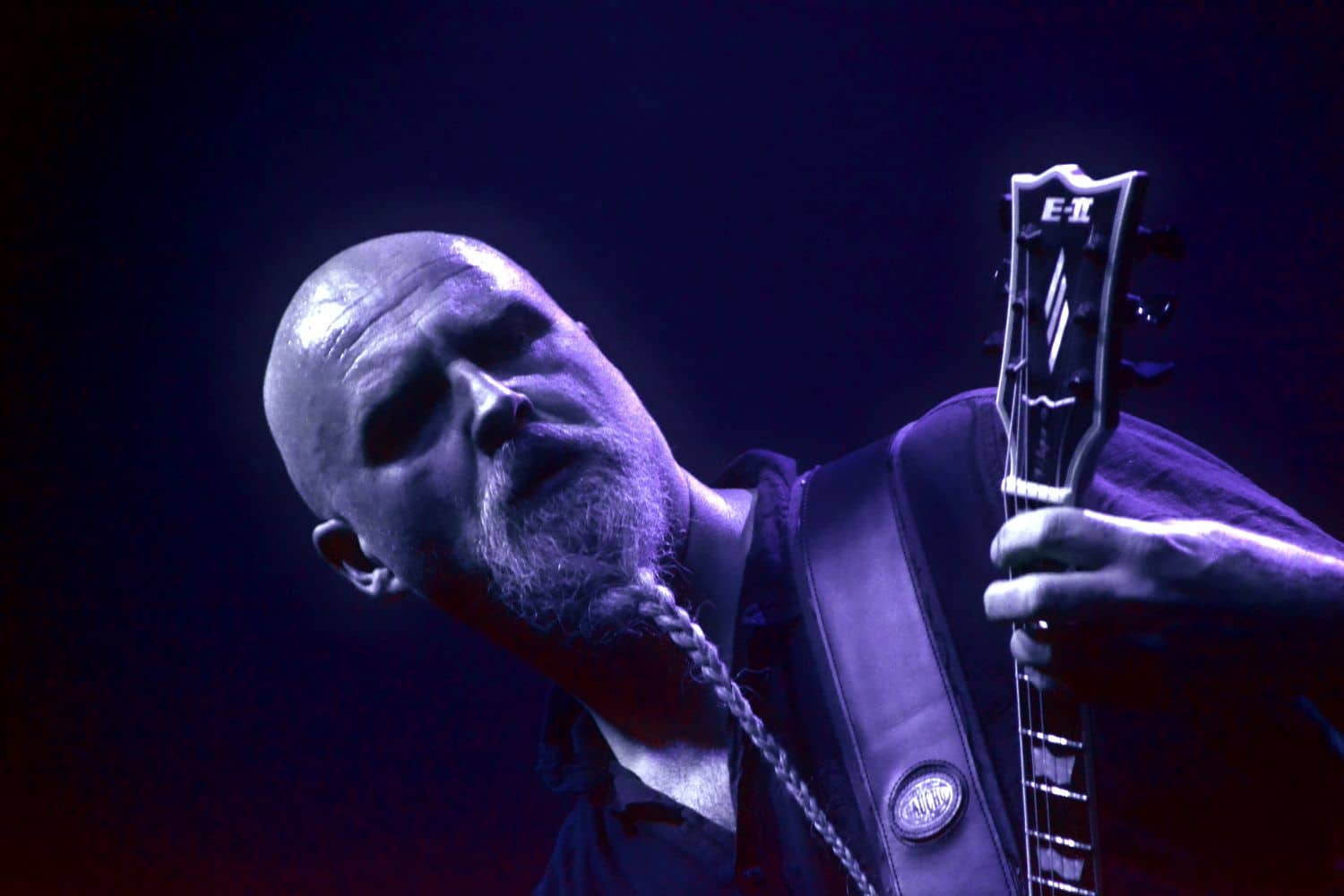
A budapesti fellépésük előtt lehetőségünk nyílt beszélgetni Øystein Garnes Brun-nel, a Borknagar egyik agyával – szó esett zeneszerzésről, analóg kompresszorokról és Erik Brødreskift-ről is.
Hogy tetszik Budapest?
Nos, őszintén szólva nem is tudom, hányszor voltunk már Budapesten… szeretünk ide járni. Ez egy olyan dolog, amit már határozottan vártam, és a zenekar többi tagja is. Minden alkalommal finom a kaja, bár ezúttal nem volt időnk felfedezni a várost, mondjuk korábbiakban már sétáltunk Budapesten. Már ilyen régóta csinálom, és nagyon fontos dolog, amikor turnézunk vagy fesztiválozunk, hogy a várost is megnézzük – Budapest pedig egy igazán gyönyörű város. Igen, és emlékszem, hogy többször is voltunk egy étteremben… nem most, és nem is legutóbb, egy étteremben, amit… azt hiszem, Sir Lancelotnak hívták, egy középkori stílusú étterem… finom ételekkel. Szóval, mindig jól éreztük magunkat Budapesten, és ez mindig olyasmi, amit már nagyon várunk. Ezen a turnén is úgy voltam vele, hogy király, megyünk Budapestre – már alig várom! Szóval kedves emberek, finom ételek – és a backstage-ben mindig van egy torta a zenekar logo-jával!
Tizenegy koncertet adtatok egymás után tizenegy nap alatt. Mennyire vagy most fáradt?
Minden rendben van. Úgy értem, érzem, hogy már nem vagyok 20 éves, és persze a turnézás azzal jár, hogy egy kicsit túl sok a sör időnként, későn jutok ágyba, meg minden ilyesmi, ami a turnézással jár. De azért jól aludtunk, és van egy turnébuszunk, ami kényelmes, ez rendben van. Egy kicsit fáradt vagyok, igen, határozottan, és kezd hiányozni a családom, a feleségem és a gyerekeim, ahogy mindig is szokott. De még mindig jól érezzük magunkat, még van töltés az akksiban, hogy úgy mondjam. Szóval semmi gond – még öt-hat fellépésünk van hátra, szóval már látom a végét. Májusban volt egy USA-turnénk a Rotting Christ-tal, na az öt hétig tartott, és az amerikai turnézás, azt mondanám, bizonyos szempontból kevésbé kényelmes – majdnem olyan, mint Európában turnézni a 90-es években. A helyszínek egy kicsit…nem mindig a legjobbak, hogy úgy mondjam. Szóval csináltunk már hosszabb és nehezebb turnékat, ám ez a turné jól szervezett, rengeteg jó fej ember van, minden simán megy.
Legközelebb nem is kell nyaralásra indulnotok, csak szervezzetek még egy turnét!
Igen, ez igaz. Annyi, de annyi helyet látunk most Európában és pár hónapja az USA-ban is… és annyi mindent szeretnénk még látni és körbeutazni, de persze nem mézhetünk meg mindent a világon. Szóval van egy határ, hogy mennyi mindent láthatunk, és ma nem igazán tudtunk elmászkálni – tettünk egy sétát a folyó [Duna – a szerk] mentén, és ennyi volt mára.
Megnéztem a Facebook-oldaladat, amin egy nagyon szép, a hóval borított erdő közepén álló ház a háttér. Ez az otthonod, vagy a stúdiód?
A stúdióm. Magam építettem. Ez volt az alapötlet a stúdióval kapcsolatban: az alapoktól magma akartam felépíteni. Szóval én ástam ki a földet, én építettem az alapot… minden szöget, minden fadarabot én magam csináltam a stúdióban. És persze, miután felépítettem az épületet, készítettem egy hangszigetelt szobát, meg minden ilyesmit. Szóval ez sok évnyi munka volt – de vidéken nőttem fel, gyerekkorom óta mindig is ezt csináltam; számomra az, hogy létrehozzak vagy felépítsek valamit, az mondhatni a génjeimben van az őseimtől fogva. Ja, és nagyon király, mert egy dombon van, így képeslapszerű kilátás nyílik a fjordokra meg a magas hegyekre, szóval gyönyörű.
Nézegettem azt a képet, és azt mondtam magamnak, hogy milyen jó lenne egy ilyen helyen lakni – de ha belegondolok, hogy ez itt alapvetően a munkahelyed…
Igen, ez a stúdió, nem ott lakom. Van egy vendégeknek fenntartott hálószobám a stúdióban, de a saját egész házam kb. 50 méterre van a stúdiótól. Nos, ez egy gyönyörű hely, és őszintén szólva egy álom vált ezzel valóra. De még mindig dolgoznom kell, hogy elérjem a célomat, egy mastering minőségű stúdiót. Szóval most, mielőtt elmentem volna erről a turnéról, vettem egy a gyönyörű új analóg mastering felszerelést, és már nagyon várom, hogy hazaérjek és kipróbálhassam egy kicsit. Nem hinném, hogy például 65 éves koromban a színpadon kellene álljak… szóval akkor jó lenne valami mást is csinálni.

Oké, akkor beszéljünk néhány szót a stúdiódról. Jelenleg ez a fő foglalkozásod, ha jól értem?
Attól függ, mikor kérdezed. Jelenleg a zenekar és a turnézás, most ez a foglalkozásom és a megélhetésem. Amikor otthon vagyok, igen, akkor leginkább a stúdió. Olyan fickó vagyok, aki nagyon hamar elkezd unatkozni, ezért muszáj csinálnom valamit, mindig aktív vagyok. A lezárások alatt dolgoztam egy kicsit az egészségügyi rendszerben is – Norvégiában regisztrált egészségügyi dolgozó vagyok, így injekciókat is adhatok. Szóval heti két napot ezzel töltöttem, valakinek ezt is csinálnia kell. Mindig is több lovat akartam egy seggel megülni, ha érted, mire gondolok. Valószínűleg meg tudnék élni a zenéből és minden másból, de nagyon félek attól, hogy a szenvedélyemet feláldoznám a munkáért, és nem akarok a lemezeladásoktól vagy egy turné sikerétől függeni – azt akarom, hogy a zeném bizonyos értelemben független legyen, és ez fontos számomra, a kreativitásom szempontjából, hogy ne kényszerítsenek arra, hogy létrehozzak valamit. Mondhatom azt, hogy “nem, bocsi srácok, nem akarok albumot készíteni, most nem érzem ezt, várjatok, majd jövőre”. Ezt megtehetem, mert nem a pénztárcámmal játszom. Szóval nem akarom érezni a nyomást, fontos, hogy azt csináljam, amit szeretek csinálni – és ez egyben a zeneipar brutalitása is. Úgy értem, dolgozhatok heti két napot az egészségügyben, és az sokkal könnyebb módja annak, hogy pénzt keressek. Ezzel pénzt keresni… persze, van némi bevétel, de sokkal több a munka. Szóval ez mindig egy kérdés: milyen életet akarsz élni? Ha kizárólag a zenéből akarnék megélni, az nem lenne probléma, de akkor mondjuk évente három hónapig kellene turnéznom, nyáron nagyjából minden fesztiválon ott kellene lennem. Családom van, a nyarat a családommal akarom tölteni és nem vagyok benne biztos, hogy három vagy négy hónapig úton akarok lenni. Teljesen jól elvagyok egy ilyen turnéval, mint ez a három hét… amit az USA-ban öt hétig csináltunk, az is elment, de nincs szükségem többre. És hogy őszinte legyek… talán ez is a brutális oldala ennek a szakmának… nem akarok túl sokat játszani. Azt akarom, hogy amikor fellépünk, az emberek azt érezzék, hogy oké, ez aztán megéri a pénzt, mert már évek óta nem látták a zenekart. Elég zenészt ismerek, akik valahogy a sarokba szorultak, évi 500 fellépést kell adniuk… nem olyan sokat, de évente 150 koncertet kell adjanak, hogy megéljenek, és alig kapnak érte valamit. Így aztán beragadnak… és ezek nagy zenekarok, állandóan játszanak és turnéznak, és szinte semmi pénzt nem keresnek. Szerintem ez a dolgok egyensúlyának megtalálásáról szól, a zenéről szól, a zenélésről. És ragaszkodnom kell ehhez a szinte gyermeki szenvedélyhez, különben egyszerűen feladom. Szükségem van erre a mentális szabadságra, mert ha úgy érzem, hogy sarokba szorítanak, vagy valaki kényszerít, hogy ezt meg kell tegyem – akkor valószínűleg abbahagynám.
A legutóbbi albumotok 2019-ben jelent meg – mik a tervek, dolgoztok valamin?
Igen, elég sok anyagunk készen van, és szerintem fantasztikus lesz. Nagyon jó előérzetem van ezzel kapcsolatban. Olyan lesz, mint… nem tudom, hogy magyarázzam el, de szerintem azok az rajongók, akik szeretik a Winter Thrice-t vagy a True North-ot, biztosan szeretni fogják a következő albumot is. Ugyanazon a vonal lesz, azt hiszem, de bizonyos értelemben mégis új. Továbbra is arra akarunk haladni, amerre az elmúlt három albumon tettük… nagyjából. Meg persze új dolgokat kitalálni és mindig egy lépéssel továbblépni. De tényleg úgy érzem, hogy például a True North a zenei karrierünk csúcspontja. Mindent, amit megpróbáltunk, vagy amit az évek során elértünk, ebben az albumban foglaltunk össze… ám zeneileg mindig egy lépéssel tovább akarunk lépni. Szóval igen, rengeteg új anyagunk van, az elmúlt évben nagyon elfoglaltak voltunk… a Covid alatt rengeteg munkám volt a stúdióban, és ez hozott némi pénzt a konyhára. Nem vagyok az a faszi, aki képes lenne egy turnébuszon ülni, dalszövegeket vagy zenét írni. Szükségem van arra, hogy a stúdiómban legyek egy egymagam, csendben, a saját kis buborékomban, hogy kreatív lehessek és zenét írhassak. Szóval most azt várom a legjobban, hogy befejezzem ezt a turnét, hazatérjek, és elkezdjek dolgozni az új anyagon. Még mindig úgy érzem, hogy van még néhány dal, amivel kapcsolatban vannak ötleteim, és ezeket szeretném papírra vetni, hogy úgy mondjam.
Borknagar lemezek a Metal.hu shop-ban:
[products tag=”borknagar” columns=”4″ limit=”12″ orderby=”date”]
Ebben az esetben úgy gondolom, hogy a Covid-időszak egy lehetőség volt az számodra, és nem két elvesztegetett évről beszélünk.
Igen, de tudod, ez egy eléggé zűrös időszak volt számunkra minden értelemben… elég zűrös és melós, mert pont a Covid előtt kellett volna világkörüli turnéra menjünk. Úgy volt, hogy headliner turnéra indulunk Európában, egy rakás fesztiválon kellett volna fellépnünk, aztán pedig egy amerikai turné volt a következő – rengeteg pénzt öltünk vízumokba, repülőjegyekbe. Majd három nappal azelőtt, hogy az USA-ba kellett volna repüljünk, jöttek a lezárások – és egy rakás pénzt veszítettünk. Aztán meg kellett próbálnunk úszni az árral – megpróbáltuk elhalasztani a turnét. Szóval a Covid számomra hihetetlenül sok feladatot hozott, mert nem akartuk megkockáztatni, hogy olyan helyzetbe kerüljünk a hogy a Covid végeztével csak ülünk, és nincsenek koncertjeink, nincsenek fesztiválok, nincsenek turnéink. Szóval bizonyos értelemben előre kellett menekülnünk, és megpróbáltunk alkalmazkodnunk a helyzethez. Nekem különösen… valószínűleg sok más embernek is… de számomra ez egy hihetetlenül munkás időszak volt. Szóval igen, írtam valamennyi zenét, de eddig nem voltam képes leülni mondjuk egy hónapra vagy egy hétre, és azt mondani, hogy most csak erre koncentrálok. Ez akkor fog bekövetkezi, ha hazaérek. Már nagyon várom – az elmúlt három év meg egy őrültekháza volt, mondjuk így.
Hogyan írsz zenét? Otthon ülsz egyedül és ötletelsz, vagy ez egy csoportos munka?
Alapvetően mindkettő. Úgy értem, a zenekar fő zeneszerzője én vagyok, de Lars és Simen is írt pár dalt – ők is kreatív fiúk. Az én munkamódszerem az, hogy ülök a stúdiómban a kávémmal vagy bármi mással, és csak a zenei ötleteken dolgozom, hangokat, riffeket próbálgatok, és apránként építem fel a dalokat. Aztán készítek egy elnagyolt mixet, egyfajta dalvázlatot, ami nem áll messze a kész daltól, de csak egyfajta vázlata a dalnak. Aztán megkérem a többieket, hogy hallgassák meg, mondják el a véleményüket, mondjuk hogy hosszú-e, vagy bármi mást. Nekik is van stúdiójuk, így felvehetnek néhány versszakot, próbálgathatnak amit csak akarnak. És persze a kezdetek kezdetén oda-vissza küldözgetjük a fájlokat. A True North esetében elég sok pénzt költöttünk arra, hogy együtt legyünk a stúdióban, sokkal többet, mint korábban. Manapság ez az egész stúdiózás nagyon más, mint a 90-es években volt, mert mindenkinek, akinek van gitárja, annak általában van számítógépe is, és ha van számítógéped, akkor valószínűleg akad egy interfész is arrafelé, és innentől felveheted a saját demóidat is – nagyon egyszerű ez. Manapság nagyon könnyű a gitárokat felvenni, és természetesen mi is sokat csináltuk ezt hosszú éveken keresztül. Felvettem a saját cuccaimat a saját stúdiómban, Lars is a saját stúdiójában vette fel a cuccait – de a True North esetében egy kicsit vissza akartunk menni az időben, és megpróbáltuk mindent old school módon csinálni, együtt lenni az alkotás során. A True North esetében például volt hosszú hetünk, amikor én, Simon és Lars beköltöztünk a stúdiómba, bezártuk az ajtót, vettünk egy kis sört és kaját, majd három-négy napig csak ültünk ott egy mikrofonnal – jól éreztük magunkat, az éneken dolgoztunk, ötleteket teszteltünk. És csodálatos folyamat volt, hogy tényleg együtt voltunk, akár egy zenekar – hogy őszinte legyek, ezt már évek óta nem csináltuk, és azt hiszem, hogy sok zenekar már egyáltalán nem így működik. Csomó pénzt költöttünk arra, hogy Bergenbe repüljenek a srácok, mivel ebben az egészben minden pénzbe kerül – és persze időbe. Na ez olyasmi, amit újra meg akarunk tenni, sokszor beszéltünk róla – varázslatos volt. Amikor Jostein, az új gitáros belépett a zenekarba, meghívtam őt a stúdiómba, mondván: „Gyere, maradj itt egy hétig, ja, és hozd a gitárodat”, csak bezárkóztunk és ismerkedtünk. Szóval ez olyasmi, amit a következő albumon valószínűleg még komolyabban fogunk csinálni, hogy még inkább old school zenekarként működjünk.
Az imént említetted a felvételeket és a demókat. Cubase-t és VST-ket használsz, ugye?
Igen, Cubase-t használok, igazából a Steinberg támogat, így megkapom az összes cuccot. Ez király, nagyon nagyra értékelem, mert megkapom ezeket a dolgokat… bár nem ingyen, de persze kedvezményesen. Én is próbálok visszajelzést adni nekik, hogy van-e valami, amit javíthatnak a Cubase-en. Szóval ez egy szimbiózis, hogy úgy mondjam. De tudod, elég old school vagyok, szükségem van az analóg cuccokra. Szóval egy rakás pénzt költöttem régi kompresszorok, kézzel készített kompresszorok vásárlására, hogy elérjem a csöves hangzást, rakásra vásároltam tranzisztorokat, transzformátorokat, DCA kompresszorokat, igazán rendes cuccokat. Így tulajdonképpen most már van egy igazi high end analóg stúdióm. De természetesen az analóg világ legjobbjait a digitális világ legjobbjaival együtt használom. Mert nincs olyan plugin a világon, ami képes lenne arra, amire egy igazi analóg kompresszor képes. Talán azért, mert 47 éves vagyok – de én szeretem ezt a régi analóg hangzást. Úgy gondolom – és ez különösen igaz a masterelésnél hogy – tisztában kell lenned a frekvenciaspektrum bizonyos frekvenciáival, mert bizonyos frekvenciák taszítják a hallgatót, akár tetszik neki a zene, akár nem. Meghallgatok… nem akarok albumokat vagy neveket mondani… de meghallgatok egy nagyon fasza albumot, fantasztikus zenét nagyszerű zenészeket, akiket még ismerek is, és olyan a végeredmény, hogy „jaj istenem, mit csináltál”, olyan, mint a gyereksírás hangképe… nagyjából ugyanabban a tartományban. Miért idegesít minket egy baba sírása? Mert valami ösztönös dolgot vált ki bennünk! De a gitárhang ugyanebben a tartományban kellemes. A zene nem mindig objektív dolog – lehet objektív, mert bizonyos mértékig tudjuk, mi az, ami tetszik a fülünknek, mi az, amit szeretünk hallani, és mi az, ami valahogy zavarja a hallgatót. Különösen a metalban annyi fantasztikus zene, annyi fantasztikus album… és én csak azt kívánom, bárcsak több albumon lenne jó a mastering. Mert a norvég black metal-nak például, igen, annak élesen kellene szólnia, a gitárt 3000 hertz körül kell kiemelni, hogy égesse a füledet. De mégis, tisztában kell lenned azzal a frekvenciával, ami taszítja a hallgatót – mégha ez egy nagyszerű album is, akkor is kisebb a statisztikai esélye, hogy a hallgató visszahallgassa azt az albumot a hangkép különböző frekvenciái miatt. Ez egy érdekes dolog, és én teljesen kocka vagyok ebben a dologban.. de őszintén hiszem, hogy a hallgatót nem lehet becsapni. Sok zenekedvelővel beszélek, mert mindenki a szenvedélye miatt van a zenei életben, és például az én határozott véleményem az, hogy nem lehet, mondjuk, a dobokat programozni. Volt néhány ügyfelem, akik azt mondták, hogy „a dobok pontosan olyanok, amilyet mi szeretnénk”. De hé, ez programozott! Igen, de senki sem fogja hallani’. És valószínűleg a hallgatók fognak tudatosan arra gondolni, hogy ‘ó várj csak, a dobok programozva vannak, nem hallgatom meg’, de tudat alatt viszont igen. A ritmusérzék számunkra, emberi lények számára a szívből jön – és ez nem digitális. Az máshogy dobog, és néha talán ki-kihagy. Ez biológia, analóg, a testünkben történik. A ritmusérzékünk bizonyos értelemben analóg, nem digitális, nem lehet tökéletes, csak egy példa… és szerintem néha ez különbözteti meg azokat a zenekarokat, amelyeknek igazán nagy közönségük van, azoktól, amelyeknek kisebb a közönségük. Évekig programozhatod a dobokat a Superior Drummer-ben, ami egyébként remekül szól, fantasztikus sok szempontból – de túl jól hangzik, túl tökéletesen.
Kérlek, mesélj a zenei hátteredről! Alapvetően egy született tehetség vagy, vagy “csak” megtanultál játszani?
Ha az emberek megkérdezik tőlem… őszintén szólva, lehet, hogy furcsán hangzik, de nem tekintem magam sem zenésznek, sem előadóművésznek. Én csak önmagam vagyok, aki a saját dolgaimat játszom. Nem tudok eljátszani egyetlen olyan riffet sem, amit mások írtak, csak a saját dolgaimat tudom játszani. Nem érdekel, hogy a Metallica-t vagy az Iron Maiden-t játsszak – nem fog meg.
Oké, de ezzel a hangszerrel fejezed ki magad.
Igen, amikor elkezdtem, mindig is nagyon szerettem az akusztikus gitárokat. Szóval amikor 15 éves koromban megkaptam az első akusztikus gitáromat, tulajdonképpen így kezdtem el játszani [elkezdek egy hangot játszani egyetlen húron pengetve]. Számomra a gitározás több, mint egy hang – a rezonancia, a gitár hangja. Szóval számomra a zenélés több, mint egy riff elkészítése, engem jobban érdekelt a gitár hangzása, mint maga a gitár. Nem igazán érdekel, hogy milyen márkájú… egyébként ez nem az én gitárom. Nem igazán érdekel, hogy hogyan van megépítve, ez vagy az a fa, hogy ilyen vagy olyan a hangszedője van-e. Őszintén szólva nem is érdekel, amíg érdekesnek találom a hangzását. Soha nem volt gitártanárom. Soha nem tanultam zenét zeneiskolában. Az iskolában rossz tanuló voltam, és a korai időkben, amikor gyerek voltam, fuvoláztunk az órákon… és emlékszem, hogy az akkori zenetanárnő mondta, hogy igen, néhány évvel ezelőtt volt egy srác, aki nem volt oda a zenéért, és rossz jegyet kapott folyamatosan – és legnagyobb meglepetésemre tíz évvel később már a Bergeni Filharmonikusokkal játszott, és én azt gondoltam, oké, na ez király! És manapság ez elég vicces, mert egy én is kicsit ugyanebben a helyzetben vagyok. Az általános iskolában nagyon rossz voltam a zeneórákon. De igen, azt hiszem, valamit jól csinálok – sokkal-sokkal több lemezt adtam el, mint bárki más a környéken. Szóval megkaptam meg a gitáromat, próbálgattam, évekig játszottam rajta, és ez az akusztikus, fából származó hang emlékeztet a gyerekkoromra, amikor késsel vagy fejszével vágtam fát az erdőben. Nem volt semmilyen képzésem, vagy tanárom, vagy bármi ilyesmi, csak próbáltam megtalálni a saját hangomat.
Kérlek, mondd el, hogy ki kicsoda ezen a képen, mert teljesen elvesztem.
Igen, ez én vagyok itt, ez Infernus a Gorgorth-ból, ez Ivar az Enslaved-ből, ez Garm az Ulver-ből, és ez Erik, az eredeti dobosunk.

Egy kérdés Erikről: ő drog-túladagolásban hunyt el. Mit gondolsz, a műfajban mennyire komoly probléma a drog?
Mit mondhatnék…? Hát persze, hogy az. Veszélyes dolog lehet a drog és az alkohol – bár azt mondanám, hogy az alkohol a nehezebb ügy. Rengeteg szomorú történetet láttam zseniális zenészekkel, akik a drogokkal és az alkohollal küzdöttek. A probléma legfontosabb része az, hogy a pia ingyen van. Amikor ilyen turnéra megyek, akkor annyit ihatok, amennyit csak tudok; minden este teljesen szétcsúszhatok, ha akarok, és nem fizetek érte egy fillért sem. Azt hiszem, a probléma egy része – különösen a turnézás során – az, hogy fegyelmezettnek kell lenned, mert néha nincs meg a nyolc óra alvás… és három óra alvás után már talpon kell lenned. Rövid időt töltesz a hotelben, például korán reggel van felszállás, majd nem tudsz aludni a repülőn. És persze a drogok és az alkohol az élvezet, a szórakozás és a buli részei is egyben. Néha a drogok és az alkohol arra kellenek, hogy szabályozd a szervezeted, mert egyszerűen csak aludnod kell. A fellépés után tele vagy adrenalinnal, szárnyalsz, nagyszerű koncertek, csomó rajongó – aztán fél órával később már a szállodában találod magad, és azonnal aludnod kell. Hogy csinálod ezt? Nos, néhányan füvet szívnak, mások bevesznek egy-két tablettát, hogy elaludjanak. Szóval a drogok is, vagy az alkohol is egyfajta túlélést jelentenek a turnén, ha érted, mire gondolok – persze rossz értelemben. De néha… nézd, én magam is voltam már ilyen helyzetben. Én nem használok drogokat, és nem is iszom sokat, próbálok a lehető legtisztább maradni. De néha a kemény turnékon ez hihetetlenül megterhelő, mert nincs energiád… egy óra múlva színpadra kell állnod, és az egész tested fáj, de ennek ellenére ott kell lenned a színpadon, a legjobbat kell nyújtanod, ki kell szakadnod magadból, és nyomni, nyomni, nyomni, megállás nélkül – te meg úgy érzed, hogy csak aludni akarsz, ez az egyetlen dolog, amit akarsz. Persze, ha valaki ilyen helyzetben van, akkor csábító, hogy az amfetamin vagy a kokain segítségével felpörgesse magát, aztán este, hogy egy kicsit aludni tudjon, fűvel tompítja be magát. Alkoholt akkor iszom, amikor megvan egyfajta hangulat, amikor jól akarjuk érezni magunkat, amikor van időnk jól érezni magunkat – néha van egy szabadnapunk, oké, ma remek volt a fellépés, bulizzunk, szórakozzunk egy kicsit. És ez fasza, mindenki ezt csinálja. De azt hiszem, hogy ha túl sokat használod a drogokat és az alkoholt, hogy kontrolláld az alvási ciklus, az szerintem nagyon veszélyes. Sok olyan embert láttam már, aki nem tudott megbirkózni ezzel, és Erik is közéjük tartozott. Nem akarok túlságosan belemenni ebbe a személyes dolgok miatt, de neki egyéb gondjai is voltak a háttérben a családi helyzettel. Hosszú történet ez, úgyhogy nem egyszerű a válasz. 20 éves korom óta csinálom ezt… persze 20 évesen máshogy mennek a dolgok. Most, hogy 47 éves vagyok, tudom, hogy az élet nem tart örökké, és eljön majd az idő, amikor már nem tudom ezt tovább csinálni. Egy kicsit jobban kell vigyáznom az egészségemre, mert már nem vagyok képes olyan olajozottan működni. Amikor 20 éves voltam, három napig ébren tudtam lenni, fellépni, mindezt alvás nélkül, gond nélkül. Nehéz volt, de képes voltam rá – manapság már nem tudom ezt megtenni. Azt hiszem, ez a korból adódik, és emiatt próbálunk egy kicsit tudatosabbak is lenni. És ha látom, hogy valaki a zenekarban túlment a határon, akkor azt mondom, hogy oké, talán meg kellene próbálnunk kivenni egy szabadnapot, talán kevesebbet piálni, és egy kicsit kitisztulni. Próbálunk vigyázni egymásra, mert amikor turnézol, akkor a csatatéren vagy. Rendkívül intenzív… amikor néha felébredek a buszban, reggel a szemüvegem sincs rajtam, nem látok semmit, de ki kell mennem a mosdóba, meg kell mosakodnom, majd kiszállok a buszból, és hirtelen egy csomó rajongóval vagyok körülvéve. És az egyik oldalról fantasztikus dolog, hogy a rajongók találkozni akarnak veled, látni akarnak, aláírásokat, fényképeket, meg mindent – de ott a másik oldal is, hogy “ember, előbb vécére kell menjek, szarnom kell… kérlek, értsd meg, hogy azért nem tudok mosolyogni, mert még nem ébredtem fel”. Szóval állandóan reflektorfényben vagy, és az emberek elvárják, hogy mindig a topon legyél – persze, király dolog a rajongókkal és az újságírókkal beszélgetni, de néha túl sok lehet.
Mit jelent számodra a metál és mit jelent a zene?
A zene számomra egy életstílus. A zene számomra az életet jelent, az életről szól az, ahogyan kifejezem magam a zenében. Azt hiszem, minden emberi lény, legalábbis a legtöbbünk, az agyunk kapacitása miatt nem csak legel vagy vadászik, hogy aztán bezabáljon, és csak lélek szuszogjon… ennél egy kicsit összetettebb a legtöbbünk. Emberek vagyunk a tudattal és elmével, és azt hiszem, hogy valamennyire kreatívnak kell lennünk. Akár házat építünk, akár zenélünk, akár túrázunk – valamilyen fontos célt kell találnunk az életben, azt hiszem. Ez egy nagyon emberi dolog, és számomra ez a zene. Míg mások építészek, van, aki hegymászó, más sportboltban dolgozik – nekem a zene a munkám. Az életem a zenéről szól, a zenei alkotásról. Bizonyos értelemben mérnök vagyok, ha a zenéről van szó. Amikor a metálról van szó, számomra – és ez csak az én szubjektív véleményem – a metál az emberiség legkifejezőbb művészeti formája bizonyos értelemben. És számomra az igazi zenének, a jó zenének tükröznie kell az életet. Az élet jó és rossz periódusait, a kihívásokat, az élet szépségét és csúfságát kell tükröznie – így az élet minden aspektusa, a halál, a szerelem, a béke, a háború, minden dolog bizonyos értelemben a metál tárgya. Számomra ez az emberi kifejezés szent grálja bizonyos értelemben. Nem látok semmilyen más művészeti formát, zenei stílust vagy bármi hasonlót, ami képes lenne az emberi életet olyan teljességgel megragadni, mint a metal. Tapasztalatból beszélek: beutaztam a világot, számos emberrel találkoztam a földkerekségen, és mindannyian megértjük egymást. A metálban nincs háború, ha érted, mire gondolok – nincs konfliktus. Vannak tudósok, akik azt próbálják kideríteni, hogy miért nincsen erőszak egy metal fesztiválon? Miért nincsenek gyilkosságok? Miért nincs egyáltalán erőszak? Van néhány szívinfarktus, de itt a vége. Ha van egy meccs 120000 emberrel, biztos lehetsz benne, hogy lesz néhány nemi erőszak, néhány gyilkosság, vagy bármi ilyesmi. Van valami nagyon egyedi a metálban – ez egy mindenen átívelő egyesítő erő, ami szerintem hihetetlenül erős. Ezért csinálom ezt. Természetesen a zenélés öröme is számít, az elégedettség is. A metal-ban nincsenek határok, nincsenek, mondhatni, konfliktusok. Persze, mindig történik valami, de mi egy nagy, hatalmas család vagyunk, egy világméretű család, és számomra ez egészen különleges és félelmetes dolog. Szóval ez az aspektusa az egésznek egyre fontosabbá vált számomra. Látni az emberek arcán az örömöt, beszélgetni a rajongókkal… volt az amerikai turnénk, és valószínűleg több száz emberrel beszéltem. Az egyik helyen ott volt egy csomó nagydarab fickó, motorosok, aztán az egyik odajött hozzám, és azt mondta: “A főiskola óta hallgatlak titeket…”, majd sírni kezdett. És mit is mondhatnék erre? Ha bármilyen egészen apró változást is el tudok érni a zenémmel ebben a világban… az nekem már elég, elvégeztem a munkámat, boldogan halhatok meg.
Köszönöm szépen.
Írta: Á
**********************************************************************
Right before their Budapest gig, we had an outstanding opportunity to talk to Øystein Garnes Brun, mastermind behind Borknagar of three, about composing music, about analog compressors and we also had some words about the past Erik Brødreskift.
How do you like this place?
I’m honestly not sure how many times we have been in Budapest. We love coming to Budapest, to be honest. It’s definitely something I’ve been looking forward to, and the rest of the guys. Every time it’s good food, and it’s lovely. This time, we didn’t have the time to explore the city and stuff like that, but in the past we have been walking around in Budapest. I’ve been doing this such a long time, and it’s a very important thing while being on tour or doing festivals, to also be able to see the town. And Budapest is a really beautiful city. Yes, and I remember we have been several time in a restaurant… not this time, and not the last time, but in a restaurant called… I think it was called Sir Lancelot, lovely food and stuff. So, we’ve always had a good time in Budapest. And it’s always something we look forward to. Also during this tour I was like, yeah, sure, cool, we are going to Budapest – I’m looking forward! Very nice people, nice food here, and in backstage we always this cake with the band name on there.
You did 11 gigs in row in 11 days. How tired you are now?
It’s all good. I mean, I feel like I’m not 20 years anymore, and of course, going on tour means there is a little bit too much beer, the late evenings and all that stuff that comes with touring. But still, we have had some good sleep and we have a tour bus which is comfortable and it’s pretty okay. I’m a bit tired, yeah, definitely, and I’m starting to miss my family, my wife and my kids as I always do… but we still have a good time. We still have a lot of battery life left on the phone, so to speak. So no problem, and we have five or six shows left so I can see the end, and it’s doable. In May we did a USA tour with Rotting Christ, and that was five weeks. And touring US is, I would say, less comfortable in a way, because it’s almost like touring in Europe in the 90’s. The venues are… not always top notch, so to speak. And this tour is well organized, there are a lot of cool people, everything runs smoothly… so to be quite honest, this tour has been quite pleasant, not too tiring.
Next time you don’t need to travel for a holiday, just make the next tour!
Yeah, that’s true. We see so many places now in Europe, and a couple of months ago in the US, and there are so many things we would like to see and travel around… but we can’t see everything in this world. So it’s a limit how much we can see of, and at this time, we didn’t have really. We just had a walk down along the river [Danube – the editor], and that’s about it today, actually.
I just checked your Facebook page, which starts with a very nice lodge right in the middle of the forest covered by snow. It’s your home, or it’s your studio?
It’s my studio. I built it by myself actually. And that was kind of the idea with the studio: I wanted to build it from ground up. So I dug the soil, I built the foundation… every nail, every piece of wood on that studio is done by myself. And of course, after I built the building, I made an isolated sound proof room and all that stuff. So it’s been many years of work, but I’ve grown up on the countryside, and I’ve always done that since I was a kid. To me, to create something or to build something that has been in my genes since my forefathers, so to speak. It’s really cool because it’s in a hill, so I can have the postcard view over the fjords and the high mountains and other things… so it’s beautiful.
I just checked this picture and I told myself that it would be great to have a home at a place like this. But just considering this one is basically your office…
Yeah, it’s my studio, I don’t live there. I have a sleeping room in the studio for guests organized, but my house is like 50 meters away from the studio. Well, it’s a beautiful place, and it’s a dream come true, to be honest. I’m still building my way up to my goal… that was to make a mastering grade studio. So now before left of this tour, I bought a beautiful new analog mastering box therefore I’m so much looking forward to get back home to try it a little bit more. At some point, I don’t see myself being on stage when I’m 65 for example. So then it could be cool to have something else to do.
Okay, then let’s have some words about your studio. Currently, that’s your main occupation, if I’m right?
It depends when you ask. Right now it’s the band and touring. That’s my occupation and my living and all that. And when I’m home, yes, that’s mostly the studio. I’m a guy who can very soon get bored, and I need to do things to get something done, so I’m always active. Actually during Corona, I also worked a little bit in the healthcare system because I’m kind of a registered health worker in Norway, so I’m allowed to do injections. So I spent two days a week doing that just because somebody has to do it. I always wanted to ride more than just one horse, if you get my point. I could probably could just live from music and all that stuff, but I’m really afraid of doing my passion only to my work, if you get my point. I don’t want to depend on record sales or success of a tour in order to make a living – I want my music to be independent in a sense. That’s important for me, for my creativity, to don’t be forced to create something. I can say that ‘no, sorry guys, I don’t want to make an album, I don’t feel it right now, wait for next year or whatever’. I can do that because nobody can really nail me to the wallets. So I don’t want to feel the pressure to do what I love to do, if you get my point – and also that’s the brutality of the music business: I can work two days a week in the region healthcare system, and it’s much easier way for me to earn money. Earning money on this… of course, we have some money on this, but it’s a lot more work, so to speak, in music. So it’s always a question: what kind of life do you want to live? If I wanted to live from music solely, that would be not a problem, but then I had to go touring for, let’s say, three months a year, I need to do pretty much all festivals during the summer time. But I have a family, I want to spend time with my family during the summer. I’m not sure if I want to be on the road from three months, four months, you know. I’m perfectly fine doing one tour like this now in three weeks, and I’m fine with that, I don’t need to do more. And to be quite honest also… that’s maybe the brutal side of this business… I don’t want to play too much. When we play in a town, I want people to feel that ‘okay, this is something that’s worth the money’ because it’s actually some years since they haven’t seen the band. I’ve seen enough bands, and I know enough musicians who are stuck in a corner somehow. They have to play like 500 shows… not that much, but they have to play 150 shows a year to make it, and they get nothing paid. So they are stuck… and those are big bands, they’re playing and touring all the time and they earn almost no money. I think doing this music business is all about finding the balance of things. And for me, it’s all about music… all about creating music. And I need to cling on to that almost childish passion, otherwise, I’m just quitting. If this actually was my work and I’m tired of it and I don’t want to do this, I wouldn’t be able to make that music that I’m making. I need to have that mental freedom, that’s completely necessary for me. If I feel to be forced to do something, or I feel kind of forced in a corner, or somebody forces me like ‘you have to do this’, I would probably quit doing it.
Your last album came out in 2019 – what about your plans, are you working on something?
Yeah, we have quite a lot of material ready, and it will be awesome, I think. I’m really good feeling on it. It will be like… I don’t know how to explain it, but I think those people who like Winter Thrice or True North will also love next album for sure. Along the same lines, I guess, but even more diverse in a sense. We want to keep on moving the way we have done on the past three albums, I think… roughly. Of course, doing some new things and always taking a step further on all that. But I really feel that, for example, True North was the kind of perfect culmination of our musical career. It holds everything what we have tried to do, or we have done through the years in one album… and I always want to take a step further musically. But even more important almost sometimes, is to keep on to our musical heritage. So yeah, we have a lot of new material, we have been busy last year, we have had the Corona thing going. I had got a lot of work in my studio to do stuff and that brought me some money and income. I’m not a guy who’s able to sit on a tour bus, writing lyrics or music. I need to be in my studio in piece, quiet, just myself in my own bubble to be creative and make music. So now, what I’m looking most forward is to finish doing this tour, get back home and start working on some material. Already have some, but I still feel that I have a couple of more songs… I have some ideas with that I want to put on paper, so to speak.
In this case, I think the COVID period was an opportunity for you and it was not a lost period.
Yeah, but it was kind of a messy period for us in a sense… it became quite messy and busy for us, because just before Corona hit, we were supposed to do a world tour, a headliner tour in Europe. We were supposed to do a shitload of festivals and then we were supposed to do this US tour, and we spent a lot of money on visas, booking flight tickets and all that, and lock down came three days before we were supposed to fly to US, and we lost shit loads of money. And then we had to just try keep the wood spinning – we had to try to delay the tour, try to figure out what’s going on, what can we do about this? So Corona, for me, has been incredible busy on so many levels because we didn’t want to risk coming in a situation when we are done with Corona and we sit there and okay, we have no shows, we have no festivals, we have no tours. So we had to lean forward in a sense, and just try to adapt to the situation. And to me, especially… probably to a lot of other people as well… but to me, it has been a credible busy time. So yeah, I’ve written some music, but I haven’t been able so far to sit down for, let’s say, a month or a week to say yes, I’m only focused on. I will do that when I’m going to get back home now. I’m really looking forward to that, but the past three years have been crazy, let’s just put it like that.
What’s the way, how are you creating music? So you are sitting at home on your own in your bubble, and you are making ideas or that’s a group effort?
Both, basically. I mean, the main composer in the band is me, but also Lars and Simen wrote a couple of songs – they are creative guys as well. What I basically do is to sit in my bubble in my studio with my coffee or whatever, and just working my way through my musical ideas, trying things, trying sounds, riffs, whatever, and build brick by brick, and then I make a rough mix, a kind of a sketch of song, and it’s not far from finished one, but this is kind of the framework of a song. And then I ask the other guys to listen to it and get inputs; they also have studio at home so they can record some vocals, testing and stuff. And we send files back and forth in the start of the process. But with True North, we actually spent some money and time also being together in studio, much more than we have done before. The whole thing with studio nowadays is very different than it was in the 90’s because everybody who has a guitar, usually has a computer. And if you have a computer, you probably have an interface, so you can record your own demos – it’s very simple. It’s very easy for people nowadays to record guitars at least, and of course, we have also done that a lot through the ages. I’ve just recorded my stuff in my studio and Lars recorded his stuff in his studio and we just came together and send it to a studio, whatever. But on True North, we actually wanted to go a little bit back in time and try to do it a little bit more on the old school way actually being together during the creative phase of things. So for example, with True North, we had a long week and we, me and Simon and Lars, in my studio almost locked the door, bought some beer and some food, and we just sat there for three or four days with a microphone, and had a good time working on vocals, producing vocals, testing ideas. And it was an amazing process to actually be together as a band during the creative process. We haven’t done that for quite many years to be honest, and I think a lot of banks don’t do that anymore. But we spent extra money in flying guys into Bergen as everything in this costs money – and time of course, and that’s something we want to do again. I mean, on the next album, we’re also going to do, we talked about it many times. That session, or those sessions we had doing that, that was magical. When Jostein, a new guitarist came into the band, I have just invited him over to my studio, saying ‘Come on, stay here for a week, bring your guitar’, and we just lock ourselves in the studio, and just get to know each other. So that’s something we’re going to do probably even more on next album, to work more as an old school band.
You just mentioned recording interface and demos. I think you’re using Cubase and VST’s, aren’t you?
Yeah, I use Cubase, I’m actually endorsed by Steinberg, so I get all that stuff. I’m kind of an official artist for Steinberg. That’s cool, I appreciate it a lot because I get those things… not for free though, but a lot cheap of course. I also have tried to give them feedback on is something they can improve with Cubase. So it’s a trade-off, so to speak. But also I’m old school, so I started out when I built my studio, got my computer in there and my monitors and all that stuff. But you know, I’m old school, I need the analog heat. So I’ve spent shit loads of money buying old compressors, handmade compressors to get that tube sound, to get transistors, transformers, DCA compressors, really proper stuff. So actually now I have a real high end analog studio. But of course, I use the best of the analog world together with the best of the digital world. Because I mean… there is no plugin in this world that can do what a proper analog compressor can do. Maybe it’s because I’m 47, but I love this old analog sound of things. I think that, and especially when mastering stuff, you have to be aware of some frequency in the frequency spectrum because some frequencies will turn the listener away whether the listener likes the music or not. I don’t want to name any productions or any name… but I’ll listen to a killer album, awesome music, great musicians who I even know, and it’s like, ‘oh gosh, what did you do’, because it’s like the frequency range of a baby cry… pretty much in the same range. Why does a baby cry make us as grassy and almost angry? Because it triggers something instinctual in us. But the guitar sound in the same range is pleasant! You know, music or sound production isn’t always an objective thing. It can be an objective thing because we know to some extent what pleases your ears, what tickles your ears, what you like to hear, and what will push the listener away. Especially in metal, there is so much awesome music, so much awesome albums going on… and I just wish that there was more kind of better mastering for a lot of albums. Because Norwegian black metal as an example, it should sound sharp. It should be a lot of your guitar on a 3000 hertz, that kind of burns your ears a little bit. But still, you need to be aware of this frequency that also will turn the listener away. Even if it’s a great album, the statistic possibility for that listener to listen back on that album is less because of various frequency in frequency spectrum. It’s an interesting stuff, and I’m kind of nerd on that thing, so I kind of go a little bit into that. But I honestly believe that you can’t fool a listener. I talk a lot of music lovers because everybody are in the music scene for the reason of a passion, and my strong opinion is that you can’t, let’s say, program drums, for example, on an album. I’ve got some of the clients there, and they said ‘drums are just exactly how we want’. But hey, it’s programmed! ‘Yeah, but nobody will hear’. They will probably not think of that, ‘oh wait, drums are programmed, I don’t listen to it’, but they will, unconsciously. People don’t want to get the same connection to the music because it’s not natural. The sense of rhythm for us, human beings, comes from the human or heart – and that’s not digital. That beats on different levels, and sometimes it even maybe skips a bit. It’s biological, it’s analog what happens in our body. Our sense of rhythm is analog in a sense, it’s not digital, it shouldn’t be perfect, just as one example… and I think that sometimes differs the bands that really get the big audience and the bands that doesn’t really get the big audience. Because statistically, people will turn back to music that in all other aspects is a great music, it’s great cool riff, great playing, great vocal, everything is cool, but there is something about it that cannot catch people in the right way, I think. I mean, you can spend years programming drums on Superior Drummer, which by the way sounds great, fantastic in so many ways, but it sounds too great, it sounds too perfect.
Please tell me about your musical background because you are playing guitar and basically are your natural born talent or you just learn playing?
I don’t know. If people ask me… honestly, it might sound weird to some people, but I don’t see myself as either a musician or as an entertainer. I’m just doing my stuff. I can’t play one riff that other people have written, I can only play my own stuff. I have no interest in playing whatever Metallica or Iron Maiden, that doesn’t catch me.
OK, but you’re expressing yourself with that instrument.
Yeah, when I started, I have always been very fond of acoustic guitars. So when I got my first acoustic guitar when I was 15 years old, I started actually playing like this [start playing one single note on one single string repeatedly]. Because to me, in a guitar, especially in acoustic guitar, there is so much sound, and to me, playing guitar is more than just a note. It’s the resonance, it’s the sound of the guitar, it’s the way you treat the signal. So for me, making music is more than just making a riff. It is hard to explain, but that’s just the way I’ve always done it. I’ve been more interested in the sound of guitar than actually the guitar itself. I don’t really care what brand it is… actually, that’s not my guitar, by the way. But I don’t really care how it’s built, this and that wood, if it’s this pick up or that. I couldn’t care less to be honest, as long as I found the sound interesting. So I have never had any guitar teacher. I’ve never learned music on school or anything like that. I was miserable on school, but we had in the early days, when I was a kid, playing flute and stuff like that in class. And I remember actually the music teacher we had a back then, she said, yeah, some years ago we had one guy that he wasn’t into music at all and he did get a bad grade in everything, and to my surprise, ten years after he was playing in a Bergen Philharmonic Orcestra, and I was like, okay, cool! And nowadays it’s kind of funny because I’m a little bit in the same situation. I was really bad at music lessons in the primary school. But yeah, I guess I did something right with my music. I have sold shit loads more records than anybody in my area. I just got my guitar, I tested sounds, I played through years, and that acoustic wooden sound remind me about my childhood when I had a knife or an axe cutting wood in the forest, this wooden feeling, resonance of things. I haven’t had any official training or a teacher or anything like that – I’m just trying to find my sound with the guitar.
Please tell me who is who on this picture because I was basically lost. It is from the middle age.
Yeah, it is me of course, this is Infernus from Gorgorth, that’s Ivar from Enslaved, that is Garm of Ulver, and that’s Erik, the original drummer.
One question about Erik, he passed away because drug addiction. What do you think in the genre or in the metal scene how common this problem is?
What can I say…? Of course. It can be a dangerous business in regards to drugs and alcohol. I would say alcohol is a bigger thing, though. I’ve seen a lot of people and sad stories about brilliant musicians who struggled with drugs and alcohol. And some of the problem is that it’s free. When you go on tour like this, I can drink as much as I can, I can be shipped wrecked every night if I wanted to, paying not a single penny. I think some of the problems are during touring, you have to have some discipline because sometimes you don’t gather the eight hours of sleep, and you have to be up and running after three hours of sleep. You have short stayovers and hotels, for example, you have to capture early the flight, and you aren’t able to sleep on the plane. I think sometimes of course drugs and alcohol is for pleasure and fun and party. But sometimes also drugs and alcohol can be a way of adjusting your course, because sometimes you just need to go to sleep. Now after the show, you are full of adrenaline, you are kind of sky high, great concerts, lot of fans, and then half an hour after you find yourself in hotel and you need to sleep. How do you do that? Well, some people smoke weed, other people take a pill or two to get the sleep. So it’s a drugs is also, or alcohol is also for kind of a survival on tour, if you get my point, in a bad way, of course. But sometimes… I’ve been in the situation myself. I don’t use drugs or much of alcohol at all, I try to stay as clean as possible. But sometimes on tough tours, it’s an incredible demand because you don’t feel any energy, you’re supposed to go on stage in one hour and your whole body’s aching. And you have to be on stage, you have to do your best, be outside of yourself and just go, go, go. And you feel you’re like, I just want to sleep, this is the only thing, what I want. Of course, for somebody in such situation, it’s tempting to use amphetamine or cocaine to get up and then in the evening maybe to get some sleep, you down yourself again with weed. So it’s a kind of two edges word, I think. I try to use it first and foremost, for a specific reason. I drink alcohol when a mood is there, when we want to have a good time, when there is time to have a good time. Sometimes we have a day off, okay, we had a great show today, let’s have a party, let’s have some fun. And that’s cool, that’s something what everybody does. But I think on tour, if you use drugs and alcohol too much as a way of controlling your sleep, I think that’s very dangerous. And of course, I’ve seen lots of people who haven’t been able to cope with this in a good way, and Erik was one of them. I don’t want to go too much into that because of personal things, but he also had some troubles in the background, I would say, with the family situation. There is a long story behind it, so it’s not a simple answer to that, I would say. In my age, I’ve been doing this since I was 20 years old… of course, you have a different scope of things when you’re 20 years old. Now, as I’m 47, I realized that life is not going to last forever. There is a time when I can’t do this anymore. I have to take a little bit more care of my health. I’m not able to function as good when I was 20, I can work around doing shows for three days without sleep, no problems. It was tough, but I was able to do it – but nowadays, I can’t do that. I think that comes from the age, but we tried to be a little bit conscious about it. And if I see some of the guys in the band is like, okay, maybe we should try to take one day off now and not drink that much and clean up a little bit. We are trying to take care of each other, because you are kind of in the battlefield when you’re on tour. It is extremely intense… when I wake up sometimes in a bus, and even don’t have my lenses on, I don’t see anything, but I have to go to the toilet, and I have to wash up and stuff, and go out of that bus, and suddenly you are surrounded with a lot of fans. And on one side of it, it’s awesome that fans, people want to meet you, see you, signatures, photographs, and all that. But the other side like ‘man, I need to go to the toilet first, I need to get shit… please understand, I’m not able even to smile yet because I haven’t waked up’. So you are kind of in the focus all the time, and people expected you to always be on, be willing to talk with you. Of course, it’s cool to talk to fans and to journalists, but sometimes it can also be too much for you.
What does metal and what does music mean to you?
Music to me is a lifestyle. Music to me is living a musical life. It’s about living, expressing myself through music. It’s my way of living. I think every human being, at least most of us, because of our brain, because of our capacity of our brain, we don’t only go around eating grass or hunting animals to fulfilling and then just breathing and stuff; we are a little bit more integrated than that. We are humans with our conscious mind, and I think we need to be creative somehow. Whether it’s building houses or whether it’s making music, or whether it’s walking out – we have to find some sort of important goal in life, I think. That’s a very human thing, I think, and for me, that is music. Other people are architects, someone’s are mountaineers, somebody working a shop for sports, whatever you know. To me, I work in music. My life is about music, creating music. I’m an engineer when it comes to music in a sense. When it’s about metal, to me, and that’s only my subjective opinion though, but to me, metal is the most expressive art form of humanity in a sense. And to me real music, proper music, generally good music should mirror life. It should involve the good times, the bad times in life, the challenges, the beauty, the ugliness of life. All these facets of life, death, love, peace, war, everything is a subject to metal in a sense. And I think to me, it’s the best way of mirroring life. To me it’s the holy grail of human expression in a sense. I can’t see any other art form or musical style or anything like that to be able to capture and project human life so complete as metal can do. I would say I talk a little bit from experience. I played around the world meeting people throughout the whole world, and we all understand each other. There was no war in metal if you get my point – there was no conflict in metal. There are even scientists that are trying to find out why is there no rapes? Why is there no killings? Why is there no violence at all? They have a few heart attacks and stuff like that, but nothing happens. If you had a football stadium with 120,000 people, you can be sure there will be a couple of rapes and a few killings or whatever, so there is something very unique with metal. It’s a unifying force that is so incredibly powerful in my opinion, and that’s why I guess I do this. Of course, the pleasure of making music, but also the satisfaction, the value I find in doing this, and also a little contribution to this world to connect everybody together. I mean, in metal, there is no borders, there is no, I would say, conflict. Of course, there is always something going on, but we are a big, giant family, a worldwide family, and to me that’s quite special, and that’s an awesome thing, really. So after all this year, this aspect of the whole thing has been more and more important to me, actually. To see the joy on the face of people, to talk with fans… we did a US tour, and I’ve talked with probably hundreds. There were a lot of big guys, bikers, and then one came to me saying ‘I have been listening to you since the college…’ and then started crying. And what can I say? It gets me this feeling that music is so powerful. And if I can, with my music, make a little change in this world… that’s enough for me. I’ve done my job, and I can die happy.
Thank you very much for that.
Written by Á